

We may earn a commission when you buy through links on this page, at no extra cost to you. Learn more.
What is dosage in wine? Dosage is the small amount of wine-based sugar mixture added to traditional-method sparkling wine after disgorgement and before final corking, helping determine its sweetness and balance. It is particularly important in Champagne, where producers use dosage to adjust the relationship between natural acidity, fruit flavors, and sweetness. The amount added helps establish familiar classifications such as Brut Nature, Extra Brut, Brut, Extra-Dry, Sec, Demi-Sec, and Doux.
Dosage is one of the final decisions a sparkling wine producer makes before a bottle is ready for sale. Although the quantity of sugar involved can be relatively small, even a slight adjustment can influence how a wine feels on the palate. Understanding dosage makes Champagne labels easier to interpret and helps explain why two sparkling wines made from similar grapes can have noticeably different styles.
What Dosage Means in Sparkling Wine Production
Dosage is the addition of a measured mixture of sugar and wine to sparkling wine after disgorgement. It serves two purposes: replacing liquid lost during the removal of yeast sediment and adjusting the finished wine’s sweetness and balance.
In Champagne, this mixture is traditionally called liqueur de dosage or liqueur d’expédition. It generally consists of cane sugar dissolved in wine. The producer determines the quantity and composition according to the desired character of the finished cuvée.
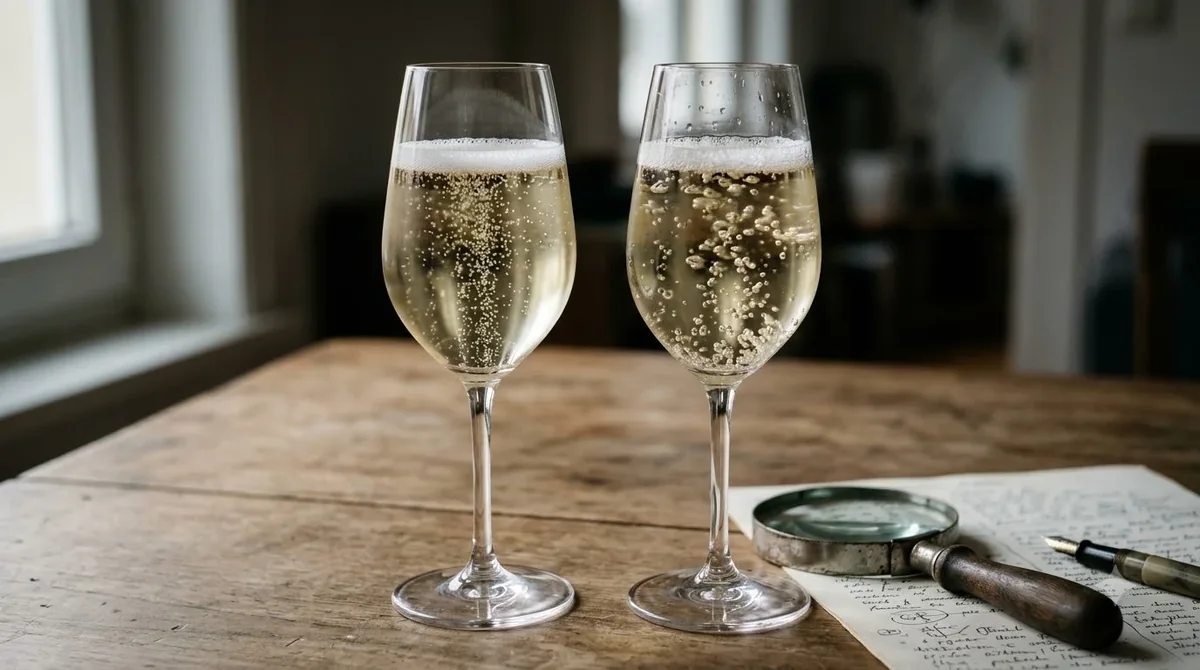
Dosage belongs to the traditional method of sparkling wine production, in which the second fermentation takes place inside the bottle. This fermentation creates the carbon dioxide responsible for the wine’s bubbles. After the wine has matured, the producer removes the yeast sediment through a process called disgorgement. Dosage follows this operation, just before the bottle is sealed with its final cork.
According to Comité Champagne’s explanation of dosage, approximately 1 centiliter of dosage mixture is used for a 75-centiliter bottle of Brut Champagne. That quantity illustrates why dosage is often described as a finishing adjustment rather than a major ingredient in the wine.
However, the exact amount varies according to the producer’s intentions. Some wines receive no added sugar, while others receive enough to create a distinctly sweeter style. The finished wine’s classification depends on its sugar concentration, expressed in grams per liter, rather than simply the volume of dosage liquid used.
The addition can also influence the impression of acidity. Champagne generally has naturally high acidity, and a carefully selected dosage can make its sharpness feel more balanced without removing the wine’s refreshing character.
When Dosage Is Added During Champagne Production
Dosage is added after secondary fermentation, maturation, riddling, and disgorgement. It is one of the last winemaking operations before the producer inserts the final cork and secures it with a wire cage.
To understand the timing, it helps to follow the main stages of traditional-method sparkling wine production.
- Base wine production: Grapes are harvested and fermented into still wines. Producers may make separate wines from different vineyards, grape varieties, or harvest selections.
- Blending: The winemaker combines selected base wines to create the intended style. Champagne blends may include wines from different harvest years.
- Tirage: A mixture containing yeast and sugar is added before bottling to initiate the second fermentation inside the bottle.
- Second fermentation: Yeast consumes the available sugar and produces alcohol and carbon dioxide. Because the carbon dioxide remains trapped, it creates the sparkling wine’s pressure and bubbles.
- Lees aging: The wine rests in contact with spent yeast cells, developing additional aromas and texture.
- Riddling: The bottles are gradually turned and tilted to collect the yeast sediment near the neck.
- Disgorgement: The accumulated sediment is removed, leaving a small amount of empty space in the bottle.
- Dosage and corking: The producer adds the dosage mixture, adjusts the final volume, and closes the bottle with its permanent cork.
The distinction between tirage and dosage is particularly important. Tirage introduces sugar and yeast to initiate secondary fermentation. Dosage happens much later, after that fermentation and the removal of the yeast sediment.
These two additions therefore have different jobs. Tirage helps create the bubbles, while dosage adjusts the finished wine’s sweetness and balance.
According to the Union des Maisons de Champagne, the dosage mixture can be prepared several months in advance using reserve wines at least two years old. These wines are carefully filtered to remove yeasts and bacteria that could cause unwanted fermentation.
The producer then uses a dosing machine to carry out the final adjustment. This equipment allows the winemaker to add a controlled amount of liquid to each bottle, helping maintain consistency across a production run.
Champagne Dosage Levels and Their Sugar Content
Champagne dosage classifications describe the finished wine’s sugar concentration in grams per liter. Brut is the familiar everyday reference point, while Brut Nature represents the driest end of the scale and Doux represents the sweetest category.
The following figures show the standard Champagne classifications described by Comité Champagne and the Union des Maisons de Champagne.
| Champagne classification | Sugar content | Typical sweetness impression |
|---|---|---|
| Brut Nature | Less than 3 g/L | Very dry |
| Extra Brut | 0–6 g/L | Very dry |
| Brut | Less than 12 g/L | Dry |
| Extra-Dry | 12–17 g/L | Off-dry impression |
| Sec | 17–32 g/L | Noticeably sweeter |
| Demi-Sec | 32–50 g/L | Sweet |
| Doux | More than 50 g/L | Very sweet |
One important detail is that these categories do not form a perfectly exclusive mathematical sequence. For example, Brut Nature and Extra Brut overlap numerically because Brut Nature has its own additional requirement: no sugar is added during dosage. Extra Brut allows a broader sugar range.
Brut is generally the easiest category to find in Champagne shops and restaurant wine lists. Its maximum permitted sugar concentration is below 12 grams per liter, giving it a dry profile that works across many occasions and food pairings.
Extra Brut is a useful choice for drinkers who prefer a particularly dry sparkling wine. Brut Nature takes that preference further by eliminating added sugar at the dosage stage.
Extra-Dry can be confusing because its name sounds drier than Brut. In fact, it contains more sugar. Sec, Demi-Sec, and Doux progress toward increasingly sweet styles.
These classifications are useful shopping clues, but they do not describe every aspect of a wine. Two Brut Champagnes can have different levels of acidity, fruit concentration, texture, and aromatic complexity even when both fall within the same sugar category.
How Dosage Changes Flavor, Acidity, and Texture
Dosage affects the balance of a sparkling wine rather than simply adding a sweet flavor. A carefully chosen quantity can soften the impression of acidity, complement fruit character, and make the finish feel more harmonious.
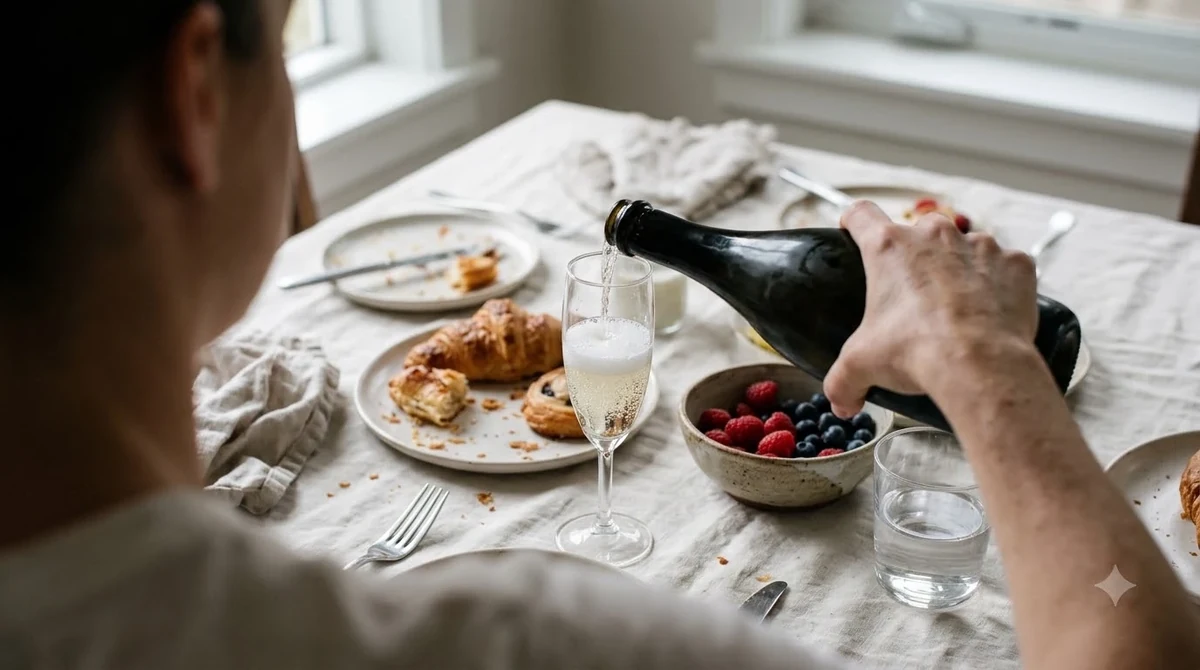
Champagne is known for its naturally refreshing acidity. This characteristic makes the wine lively, but a producer must decide how much sweetness is appropriate to the particular base wine. A very acidic wine may benefit from a small dosage adjustment, while a ripe, rounded wine may require less.
Think of dosage as seasoning in cooking. A small amount can make existing flavors seem more complete without turning the dish into something fundamentally different. The same principle applies to sparkling wine.
Very low dosage and Brut Nature
Very low-dosage wines can emphasize freshness, sharp acidity, and precise fruit expression. Depending on the grapes and winemaking, drinkers may notice citrus, green apple, pear, chalky mineral impressions, and a crisp finish.
However, low dosage does not automatically make a Champagne superior or more complex. A poorly balanced Brut Nature can feel excessively sharp, particularly if the underlying wine lacks sufficient fruit concentration or texture.
Moderate dosage and Brut
Brut offers a broader balance between freshness and softness. A small amount of sweetness can make lemon, apple, white peach, and other fruit characteristics seem more integrated.
This category is popular because it can accommodate different winemaking styles. A Chardonnay-dominant Champagne may emphasize citrus and freshness, while a blend containing more Pinot Noir may show greater body and red-fruit character.
Higher dosage and sweeter styles
Higher dosage levels produce a sweeter overall impression. Sec, Demi-Sec, and Doux can show more obvious sweetness alongside ripe fruit, honey, and pastry-like characteristics, depending on the wine’s production and aging.
Sweetness also changes how people experience acidity. A wine with substantial acidity can remain refreshing even with a higher sugar concentration because the two sensations provide contrast.
However, additional sugar cannot repair every imbalance. Too much dosage can make a wine seem heavy or obscure its fruit expression. The producer’s objective is to achieve harmony, not simply to increase sweetness.
Decanter’s examination of dosage at Rathfinny Wine Estate provides a useful example. Its winemaking team compared samples from 0 to 6 grams per liter and found meaningful differences even between adjustments of 0.5 grams per liter. The final choices were 3 grams per liter for the 2019 Blanc de Blancs and 3.5 grams per liter for the 2019 Blanc de Noirs. The Decanter report on Rathfinny’s dosage decisions describes how the team evaluated the samples.
That example demonstrates why experienced producers pay close attention to small dosage adjustments. The best level depends on the character of the wine being finished.
Dosage Versus Residual Sugar: Understanding the Difference
Dosage and residual sugar are related, but they are not interchangeable terms. Dosage describes the mixture added during the finishing stage, while residual sugar describes the sugar remaining in the finished wine.
During fermentation, yeast consumes sugar and converts it into alcohol and carbon dioxide. In traditional-method sparkling wine, the second fermentation takes place inside the bottle. Most of the sugar added for that fermentation is consumed during the process.
Once disgorgement has removed the yeast sediment, the producer decides whether to add a dosage mixture. This mixture introduces additional sugar and contributes to the final sugar concentration.
However, a small amount of natural residual sugar may remain from earlier stages. Consequently, the finished wine’s sugar concentration is not necessarily identical to the amount of sugar introduced through dosage.
Brut Nature illustrates this distinction particularly well. Under the Champagne classification, it must contain less than 3 grams of sugar per liter and receive no added sugar through dosage.
Therefore, a Brut Nature Champagne does not necessarily contain absolutely zero sugar. It can have a small quantity of naturally occurring residual sugar while still meeting the classification requirements.
This is why terms such as Zero Dosage, Pas Dosé, and Dosage Zéro are useful when describing wines made without the addition of a sugar-containing finishing mixture.
The distinction also explains why a wine labeled Extra Brut may taste different from another Extra Brut. Both may meet the same sugar limit, but their acidity, grape composition, ripeness, and aging can produce different sensory impressions.
For shoppers, the practical lesson is simple: the dosage category tells you something important about sweetness, but it does not tell you everything about the wine.
How to Choose Dosage Levels for Food Pairings
The best dosage level depends on the food, the wine’s acidity, and the sweetness of the dish. Brut and Extra Brut are versatile choices for savory meals, while Demi-Sec and Doux can work especially well with sweeter dishes and desserts.
For salty appetizers, fried foods, and seafood, a dry sparkling wine can provide refreshing contrast. The bubbles and acidity help cut through rich textures, while moderate dosage can soften the overall impression without making the wine taste sweet.
Brut Champagne is a particularly flexible option for a meal that includes several different courses. It can accompany oysters, shrimp, fried chicken, salty cheeses, and many vegetable appetizers.
Pairing dry Champagne with savory food
Extra Brut and Brut Nature can work well with oysters, fresh seafood, and simply prepared shellfish. Their crisp profiles complement the natural salinity of these foods.
Brut also pairs comfortably with fried appetizers, potato dishes, and creamy cheeses. The wine’s acidity provides contrast to fat, while its moderate sugar concentration helps maintain balance.
For dishes with pronounced acidity, such as salads with lemon dressing or tomato-based preparations, choose a sparkling wine with equal or higher acidity. Otherwise, the food can make the wine seem flat.
Pairing sweeter Champagne with desserts
Demi-Sec and Doux are more suitable for desserts than very dry Champagne when the dish has substantial sweetness. A useful rule is that the wine should be at least as sweet as the dessert.
For example, Demi-Sec can accompany fruit tarts, lightly sweet pastries, and some creamy desserts. Doux can work with particularly sweet preparations where a Brut would seem overly sharp or thin.
Chocolate desserts require more consideration because cocoa bitterness and sweetness can change the impression of a wine. The specific dessert recipe matters, particularly its sugar concentration and intensity.
Sweetness should not be considered separately from acidity. A Demi-Sec Champagne with lively acidity can feel more refreshing with a fruit dessert than its sugar level might initially suggest.
Serving temperature and dosage
Temperature also influences the way sweetness is perceived. Sparkling wine is generally served at 40–50 degrees Fahrenheit, which helps preserve its refreshing character and lively bubbles.
Serve Brut Nature, Extra Brut, and Brut within this range, adjusting slightly according to the wine’s structure and serving conditions. Avoid serving a bottle so cold that its aromas become difficult to appreciate.
For a gathering, planning the quantity of sparkling wine is just as important as selecting its sweetness level. A standard 750-milliliter bottle provides approximately five 5-ounce glasses. If you are organizing a larger celebration, the calculation in how much wine for 100 guests can help estimate the number of bottles required.
Tip: If you are uncertain which dosage level to buy, start with Brut. It offers a useful middle ground for savory food, appetizers, and general celebrations. Choose Extra Brut for a drier profile or Demi-Sec when serving a genuinely sweet dessert.
How to Read Dosage Information on a Wine Label
The easiest way to identify a sparkling wine’s sweetness is to look for its dosage classification on the label. Champagne producers commonly use terms such as Brut Nature, Extra Brut, Brut, Extra-Dry, Sec, Demi-Sec, and Doux.
These terms provide a practical indication of the finished wine’s sugar concentration. They are especially useful when comparing bottles from different producers or selecting a style for a particular meal.
Comité Champagne identifies dosage as one of the required elements of Champagne labeling. The classification is therefore more than a casual tasting description; it communicates a defined sugar category.
Here is how to interpret the main terms when shopping:
- Brut Nature: Choose this when you want a particularly dry wine with no added sugar through dosage.
- Extra Brut: Look for this when you prefer very low sweetness but want a category that permits a slightly broader sugar range.
- Brut: Choose this for a versatile dry sparkling wine.
- Extra-Dry: Expect more sugar than Brut, despite the name.
- Sec: Choose this for a noticeably sweeter profile.
- Demi-Sec: Look for this when you want a sweet sparkling wine for pastries or desserts.
- Doux: This is the sweetest Champagne classification.
It is also important to distinguish Champagne from other sparkling wines. Champagne must come from its designated region in France and follow its appellation requirements. Other traditional-method sparkling wines may use similar terminology, but the precise rules and permitted sugar ranges can vary by jurisdiction.
Prosecco, for example, is generally produced using the tank method rather than the traditional bottle-fermentation method. Its sweetness classifications are governed by separate production and labeling rules. A shopper should therefore avoid assuming that every sparkling wine follows the exact same dosage regulations as Champagne.
Another useful detail is that the word Extra-Dry does not mean less sugar than Brut. The numerical classifications demonstrate the opposite. Remembering this distinction can prevent confusion when comparing sparkling wines in a store or restaurant.
Producers may also provide additional information about disgorgement dates, grape varieties, vintage, and food recommendations. These details can help explain the wine’s character beyond its dosage category.
If a bottle has an unfamiliar closure or damaged cork, proper handling is also important. The guide to how to open a wine bottle with a broken cork covers an unrelated but useful part of enjoying and serving wine safely.
Frequently Asked Questions
Does dosage affect the alcohol content of Champagne?
Dosage is primarily intended to adjust sweetness and replace liquid lost during disgorgement, not to increase the wine’s alcohol level. The amount of sugar involved is small, and the finished alcohol concentration is principally established during fermentation. Alcohol content is normally displayed separately on the bottle label.
Can sparkling wine have dosage made with something other than cane sugar?
Yes. Depending on the producer and applicable production rules, dosage mixtures can use different permitted sources of sugar or grape-based sweetening ingredients. The composition of the finishing mixture is a winemaking decision, although Champagne’s traditional dosage is commonly described as cane sugar dissolved in wine.
Does disgorgement change how much dosage a bottle needs?
Disgorgement removes yeast sediment and leaves a small space that must be filled before final corking. The producer uses this stage to make the dosage adjustment. The amount selected depends on the intended wine style and the producer’s assessment of its balance, rather than being identical for every bottle.
Can two bottles of Brut Champagne have different sugar concentrations?
Yes. Brut is a classification with an upper sugar limit, not a requirement that every bottle contain exactly the same amount. One Brut Champagne might contain 6 grams per liter while another contains 10 grams per liter. Both can qualify as Brut, although their sweetness impressions may differ.
Is dosage adjusted for different Champagne bottle sizes?
Yes. Dosage is calculated in relation to the wine volume and the desired finished composition. A magnum holds 1.5 liters, twice the volume of a standard 750-milliliter bottle, so production adjustments account for the larger quantity. The target sugar concentration remains expressed in grams per liter rather than simply as a fixed amount per bottle.
Dosage is a small but important part of traditional-method sparkling wine production. It determines the finished wine’s sweetness category while helping producers balance acidity, fruit, and texture. Once you understand the difference between Brut Nature, Extra Brut, Brut, and sweeter classifications, choosing Champagne becomes much easier. Start with Brut for versatility, then explore lower or higher dosage levels to discover the sparkling wine style you prefer.
More in Wine Basics
 What Is The Best Wine For Mimosas? Choose Bubbly That Balances Orange JuiceUpdated Nov 20, 2026
 Which Prosecco Is Best for Your Taste and OccasionUpdated Nov 20, 2026
 Which Wine Is Best For Health? Understand the Risks and BenefitsUpdated Nov 20, 2026
 Which Champagne Is Best for Your Taste and OccasionUpdated Nov 20, 2026
 What To Put In A Wine Gift Basket For A Thoughtful, Memorable GiftUpdated Nov 20, 2026
 What Is the Best Wine for Mulled Wine? Choose a Smooth, Fruity RedUpdated Nov 20, 2026