

We may earn a commission when you buy through links on this page, at no extra cost to you. Learn more.
A wine fridge making noise is usually caused by its compressor, cooling fan, refrigerant circulation, or normal temperature changes inside the cabinet. Occasional humming, clicking, bubbling, and gentle gurgling are common operating sounds. However, persistent rattling, grinding, scraping, or unusually loud buzzing can indicate a loose component, poor installation, or a failing fan. Identifying the type of noise and when it occurs helps determine whether a simple adjustment or professional repair is necessary.
A wine refrigerator is designed to maintain a stable environment for storing bottles, but it is not completely silent. Its cooling system must circulate refrigerant, move air, and regulate temperature, creating sounds that can become noticeable in a quiet kitchen, dining room, or home bar. Understanding the difference between normal operating sounds and warning signs makes troubleshooting easier while helping protect the wine collection inside. The following guide explains common noise sources, practical checks, and situations that require professional attention.
Normal Wine Refrigerator Sounds and What They Mean
Most wine refrigerator sounds come from ordinary cooling operations rather than damaged components. A compressor cycling, a fan running, or refrigerant moving through the pipes can produce several distinct noises throughout the day.
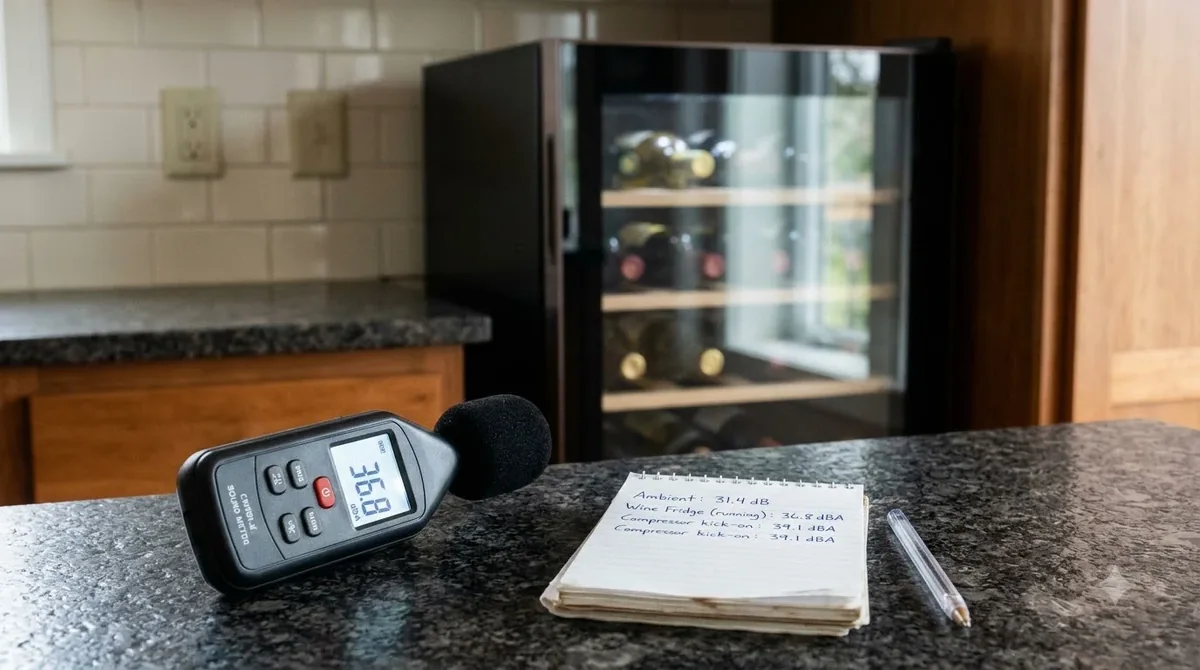
A low humming sound is one of the most common noises. In a compressor-based wine fridge, the compressor motor starts when the cabinet needs cooling and stops when the required temperature is reached. The humming may become slightly louder during startup before settling into a more consistent operating sound.
Clicking is another familiar sound. A thermostat or control system can produce a click when it activates or deactivates the compressor. Occasional clicking associated with these cycles is generally normal. However, repeated clicking every few seconds without sustained cooling deserves attention because the compressor may be struggling to start.
Gurgling, bubbling, and soft hissing usually come from refrigerant moving through the cooling circuit. These sounds can resemble water flowing through narrow pipes, even though the noise does not necessarily mean water is leaking inside the cabinet. Miele identifies humming, clicking, gurgling, hissing, and fan whirring as normal refrigeration sounds in its refrigeration noise explanation.
Some refrigerators also make occasional cracking or popping noises as interior materials expand and contract during temperature changes. A brief pop after a cooling cycle starts or stops is not automatically a reason for concern.
The important distinction is whether the sound follows an ordinary cooling pattern. A consistent low hum with occasional clicks is different from a sudden metallic grinding noise or a vibration that becomes progressively louder. Paying attention to changes in sound is more useful than expecting complete silence from an operating wine refrigerator.
Compressor and Fan Noise: Two Common Sources
The compressor and cooling fan are two major sources of mechanical noise in wine refrigerators. A compressor generally produces a deeper hum, while a fan creates a higher-pitched whirring or airflow sound.
A compressor-based wine cooler uses a refrigeration system to remove heat from the cabinet. The compressor operates in cycles rather than running at exactly the same intensity all the time. When the internal temperature rises above the control setting, the system activates and produces a noticeable hum. After the desired temperature is restored, the compressor stops or reduces its activity, depending on the model.
This cycling explains why a wine refrigerator can seem noisy for several minutes and then become quieter. It may also explain why the appliance is more noticeable after adding several bottles at room temperature or opening the door repeatedly. The cooling system needs to remove the additional heat introduced into the cabinet.
Fans serve a different purpose. Depending on the design, a wine fridge may have an internal circulation fan, an external condenser fan, or both. The internal fan helps distribute cold air throughout the storage compartment, while an external fan helps remove heat from the cooling components.
When a fan is working correctly, it usually produces a smooth, relatively consistent airflow sound. A rattling, ticking, or scraping noise can indicate that the fan blade is contacting another component, debris has accumulated near the fan, or a fan motor is wearing out.
The type of cooling system also affects the noise pattern. Vinotemp explains that compressor models have more moving parts and produce sounds comparable to a standard household refrigerator. Its thermoelectric models have fewer moving parts and are described as whisper quiet.
Thermoelectric coolers still use fans, however, so they are not necessarily silent. A steady fan hum can continue for extended periods, particularly when the surrounding room is warm. This difference is useful when identifying whether the sound comes from a compressor cycle or a continuously operating fan.
Common Noise Types and Their Likely Causes
The sound itself often provides the first clue about what is happening inside a wine refrigerator. Comparing the noise with its timing, intensity, and location can help narrow down the likely cause before attempting any adjustments.
The following table summarizes common sounds and practical first steps. These are general troubleshooting guidelines rather than a diagnosis of a specific appliance model.
| Noise type | Likely explanation | Recommended first step |
|---|---|---|
| Low humming | Compressor operating | Monitor the cooling cycle |
| Soft clicking | Thermostat or compressor switching | Observe how often it occurs |
| Gurgling | Refrigerant circulation | Check cooling performance |
| Light whirring | Cooling fan operating | Check ventilation openings |
| Rattling | Loose shelves, bottles, or cabinet vibration | Secure removable components |
| Buzzing | Vibration, fan, or electrical component | Check placement and inspect for warning signs |
| Grinding | Possible fan or motor damage | Stop and arrange professional inspection |
| Scraping | Fan contact or an obstructed moving component | Disconnect power and request service |
| Cracking or popping | Materials expanding or contracting | Monitor for unusual frequency |
Sound timing is just as important as sound type. A single click when the compressor starts is different from rapid clicking that continues without a cooling cycle. Likewise, a gentle gurgle during normal operation is less concerning than a new grinding sound accompanied by a rising cabinet temperature.
Pay attention to whether the noise occurs immediately after startup, during a cooling cycle, when the door opens, or continuously. These details help distinguish ordinary refrigeration activity from a mechanical problem.
It is also useful to listen from outside the appliance rather than repeatedly moving or pressing against the cabinet. A short recording can help a technician identify whether the noise resembles a compressor hum, fan vibration, or mechanical contact.
How to Stop Rattling, Buzzing, and Excessive Vibration
Rattling and vibration frequently come from installation problems or loose items rather than a defective refrigeration system. Checking the cabinet, shelves, bottles, and surrounding furniture can resolve many annoying sounds without replacing any components.
Start by checking whether the wine refrigerator stands evenly on the floor. An uneven cabinet can rock slightly whenever the compressor or fan operates. This movement can transfer vibration into shelves, bottles, nearby furniture, and the surrounding floor.
Use a spirit level to check the appliance from front to back and from side to side. If the model has adjustable feet, make small adjustments until the cabinet sits firmly without rocking. A solid, level surface is especially important for freestanding models.
Next, inspect the bottle arrangement. Bottles that touch one another can produce a metallic or glass-like clinking noise when the appliance vibrates. Move neighboring bottles slightly apart and make sure they sit securely on their shelves.
Removable shelves can also become noisy if they are not fully seated in their supports. Take out any shelves that can be safely removed according to the owner’s manual, inspect their mounting points, and reinstall them correctly. Do not force a shelf into position if it appears misaligned.
Another possible source is contact between the refrigerator and nearby furniture. A wine fridge pushed tightly against a wall, cabinet, or countertop can transfer ordinary compressor vibration into the surrounding structure. Even a small amount of contact can make the sound seem much louder.
Check the rear and side clearances against the installation instructions. For example, Vinotemp specifies at least 6 inches of rear clearance for its freestanding models with rear exhaust. This figure is not a universal requirement for every wine fridge, so the specific appliance manual takes priority.
Tip: Before arranging a repair visit, remove loose items from the top of the wine fridge, separate bottles that touch, secure removable shelves, and check that all adjustable feet rest firmly on the floor. These simple checks can eliminate several common vibration-related noises.
Do not attempt to tighten internal compressor mounts, electrical connections, or sealed refrigeration pipes yourself. These components require appropriate technical knowledge and may be covered by the manufacturer’s warranty.
Cleaning and Ventilation Problems That Increase Noise
Dust accumulation and restricted airflow can make a wine refrigerator work harder than necessary. A fan may operate for longer periods, cooling performance may decline, and the appliance may become noticeably louder.
Ventilation is particularly important because the refrigeration system must release heat from the cabinet. If the rear or side ventilation openings are blocked, heat can accumulate around the cooling components. The appliance may then need longer cooling cycles to maintain its selected temperature.
Check the space around the wine fridge first. Make sure curtains, boxes, kitchen items, and other objects are not covering ventilation openings. A freestanding model with rear exhaust should not be installed in a tightly enclosed cabinet unless the manufacturer specifically permits that installation.
Built-in models require different considerations. Some are designed to release heat through a front ventilation grille and can operate inside appropriate cabinetry. A freestanding model with rear exhaust should not automatically be treated as suitable for the same installation.
Dust around accessible ventilation grilles can also restrict airflow. Before cleaning, switch off the appliance and disconnect its power supply. Use a soft brush or vacuum attachment to remove loose dust from accessible exterior openings without damaging the grille or touching electrical components.
If the manufacturer’s instructions allow access to a condenser area, follow those instructions carefully. Do not remove protective covers or reach into electrical compartments to clean internal parts. A qualified technician should handle cleaning that requires disassembly.
Door seals deserve attention as well. A dirty, damaged, or poorly aligned gasket can allow warm air to enter the cabinet. The cooling system may respond with longer operating periods, making compressor and fan sounds more frequent.
Clean the accessible gasket with a suitable soft cloth and inspect it for visible cracks or gaps. Check that bottles and shelves do not obstruct the door. If the seal is damaged or the door remains misaligned, request the appropriate replacement or service.
For a broader inspection of operating problems, the Wine Fridge Troubleshooting resource can help organize checks involving installation, cooling performance, ventilation, and maintenance.
Safe Troubleshooting Steps Before Calling a Technician
A systematic inspection can resolve simple problems and provide useful information if professional service becomes necessary. Start with external checks, avoid opening electrical compartments, and monitor whether the refrigerator continues to cool correctly.
Step 1: Identify the cooling system
Determine whether the appliance uses a compressor or thermoelectric cooling. Look for the cooling-system description in the owner’s manual or model specifications. Compressor units typically produce cycling motor sounds, while thermoelectric units commonly produce fan noise.
This distinction matters because a continuous fan sound may be expected from one design but unusual for another. Do not assume that a refrigerator has a damaged compressor simply because its fan operates frequently.
Step 2: Check the cabinet and surroundings
Make sure the appliance is level, firmly supported, and not touching surrounding furniture. Check that all accessible ventilation openings remain unobstructed and that removable shelves are correctly installed.
Separate bottles that are touching and remove loose objects resting on the cabinet. If the sound changes after these adjustments, the original problem may have been vibration rather than an internal mechanical failure.
Step 3: Check the temperature and cooling performance
Compare the displayed temperature with the selected setting. A wine fridge that makes noise but maintains its intended temperature may simply be operating normally. A noisy appliance that gradually becomes warmer needs closer attention.
For wine storage, approximately 55 degrees Fahrenheit is a commonly recommended long-term target. Avoid changing the setting repeatedly while diagnosing noise because frequent adjustments can make it harder to identify the normal cooling cycle.
If the refrigerator has recently been loaded with room-temperature bottles, allow the cooling system time to stabilize. Thermoelectric models can take several hours to respond to temperature adjustments, depending on the room conditions, bottle quantity, and ventilation.
Step 4: Listen for changes during operation
Observe the appliance during a normal cooling cycle. Record whether the noise starts with the compressor, continues while the fan operates, or appears only when the cabinet vibrates.
Note whether the sound is intermittent or continuous and whether it has become louder over time. A short video can be especially helpful because it captures both the sound and the operating conditions.
Step 5: Stop if there are electrical or mechanical warning signs
Disconnect the appliance if you notice a burning smell, smoke, a damaged power cable, or an unusually hot electrical plug. Do not continue operating an appliance that shows signs of electrical damage.
Grinding, scraping, squealing, and repeated hard knocking should also be investigated by a qualified service professional. Avoid removing panels, touching moving fan blades, or attempting to repair the sealed refrigeration system.
For models that show cooling problems alongside unusual sounds, the Allavino wine fridge not cooling troubleshooting guide provides a more focused starting point for investigating temperature-related symptoms.
When a Noisy Wine Fridge Needs Professional Repair
Professional service becomes important when noise is persistent, unusually loud, or accompanied by a loss of cooling performance. A technician can inspect internal components without risking damage to the electrical system or sealed refrigeration circuit.
A grinding sound may indicate a worn fan motor, damaged bearing, or contact between a fan blade and another component. If the noise comes from the rear ventilation area or inside the cabinet, the location can help narrow down the source, although a proper inspection is still necessary.
Repeated clicking without successful compressor operation is another warning sign. An appliance may click as the control system attempts to start the compressor, but repeated failed starts can indicate a problem with the starting components, compressor, or electrical supply.
Persistent buzzing also deserves attention if it is substantially louder than the appliance’s usual operating sound. A buzzing noise may come from a vibrating panel, loose component, fan assembly, or electrical part. Because these possibilities require different repairs, replacing a component without diagnosis can create additional problems.
Cooling performance is an important part of the decision. A wine fridge that suddenly becomes noisy and cannot maintain its selected temperature should not be treated as having an isolated sound problem.
Other warning signs include:
- A compressor that repeatedly clicks but does not run normally.
- A fan that produces scraping or grinding sounds.
- Persistent vibration after the cabinet has been leveled and removable components secured.
- A sudden increase in operating noise accompanied by a warmer interior.
- Visible damage to electrical wiring, the plug, or the power outlet.
- A refrigerator that runs continuously but cannot reach its temperature setting.
Before requesting service, record the model and serial number, the selected temperature, the displayed temperature, and the approximate room temperature. Describe when the noise occurs and whether it started suddenly or became louder gradually.
Check the warranty before authorizing repairs or ordering replacement parts. Some manufacturers require approved service providers, and unauthorized disassembly can affect warranty coverage. The Allavino wine fridge repair resource is a useful next reference for owners investigating model-specific service options.
Professional repair is particularly important for compressor, refrigerant, and electrical problems. These systems should not be opened or modified as part of routine home troubleshooting.
Frequently Asked Questions
Why does my wine fridge make more noise at night?
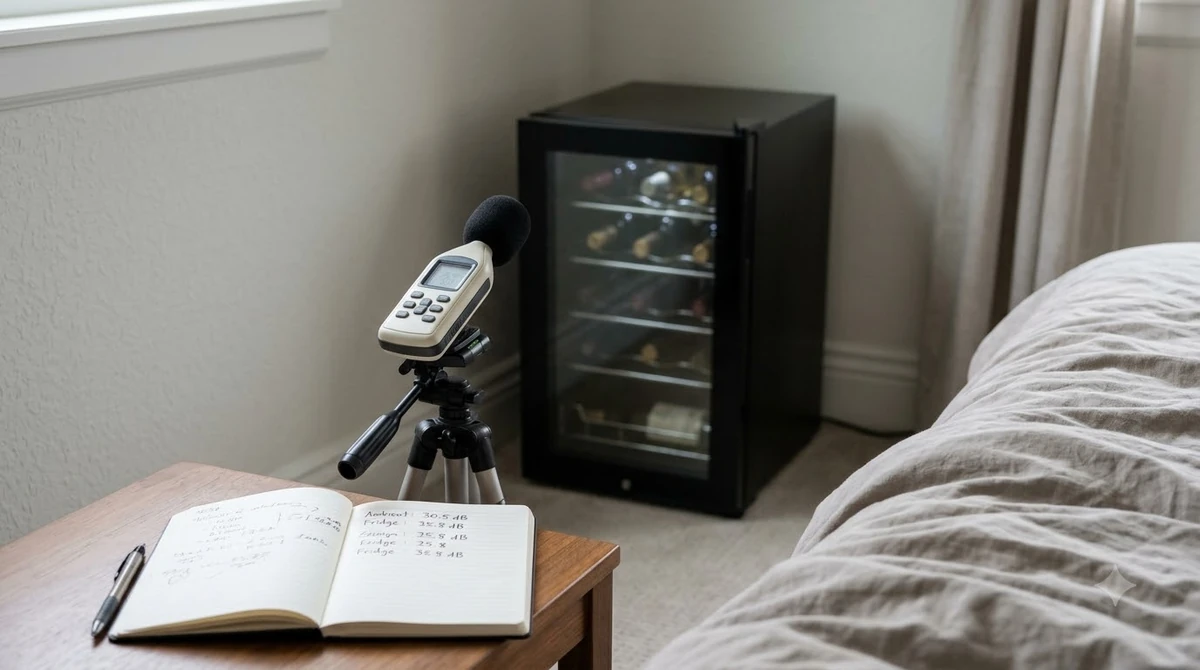
The appliance may sound louder at night because background household noise is lower. A compressor or fan that is barely noticeable during the day can become obvious in a quiet bedroom or dining area. The appliance does not necessarily become mechanically louder after dark.
Can a wine fridge make noise after being transported?
Yes, an appliance can produce unfamiliar sounds after transportation if removable shelves, bottles, or other components have shifted. Vinotemp advises allowing its coolers to stand upright for 24 hours before connecting them to power so the coolant can settle. Follow the transportation and startup instructions supplied with the specific model.
Does the number of bottles inside affect refrigerator noise?
Yes, loading many room-temperature bottles can increase the amount of heat the cooling system must remove. The refrigerator may consequently operate for longer periods while restoring its internal temperature. An overloaded shelf can also create physical contact between bottles and contribute to clinking or vibration.
Can a wine fridge be placed in a bedroom?
A wine fridge can be installed in a bedroom if its design, ventilation requirements, electrical supply, and surrounding conditions permit it. A thermoelectric model may be preferable for a quieter room, although its fan can still produce continuous operating noise. Check the manufacturer’s installation requirements before choosing the location.
Should I unplug a wine fridge every time it makes a clicking sound?
No. An occasional click associated with a normal thermostat or compressor cycle does not usually require disconnecting the appliance. However, repeated rapid clicking without normal cooling, burning odors, smoke, or electrical damage are reasons to stop operation and arrange an inspection.
A wine refrigerator does not need to be completely silent to operate correctly. Low humming, gentle fan noise, occasional clicking, and refrigerant gurgling are generally normal, while persistent grinding, scraping, and excessive vibration deserve investigation. Start with leveling, bottle placement, and ventilation before considering professional repair, and always follow the appliance manufacturer’s instructions to protect both the refrigerator and the wine stored inside.
More in Storage & Fridge Care
 How Long Can You Store Wine in a Wine Fridge? Protect Bottle QualityUpdated Nov 20, 2026
 Can You Store Beer in a Wine Fridge? Keep Both Drinks FreshUpdated Nov 20, 2026
 Is It Worth Repairing a Wine Fridge? Spot the Cheap Fixes Before You ReplaceUpdated Nov 20, 2026
 Wine Fridge Condensation: Identify Causes and Fix Moisture ProblemsUpdated Nov 20, 2026
 Wine Fridge Too Cold: Protect Your Wine and Fix the TemperatureUpdated Nov 20, 2026
 How to Reset Wine Fridge: Restore Cooling and SettingsUpdated Nov 20, 2026