

We may earn a commission when you buy through links on this page, at no extra cost to you. Learn more.
Vinho tinto wine is Portuguese red wine, made by fermenting red grape varieties and extracting color from their skins and other grape solids. The term covers many styles rather than one particular grape or flavor profile. A Douro red can be dark, structured, and tannic, while an Alentejo red is often rounder and fruitier. Dão, Bairrada, and even the Vinho Verde region offer distinct alternatives.
Portugal is known for its indigenous grapes, regional blends, and wine traditions that vary considerably from north to south. Learning a few regional names and grape varieties makes it easier to choose a bottle that suits a meal, a preferred level of body, or a particular flavor. The key is to look beyond the general description of red wine and understand the place and grapes behind it.
What the Portuguese Term Vinho Tinto Means
Vinho tinto means red wine in Portuguese. It describes the wine’s color and broad production category, not a specific grape, sweetness level, or region. Portugal has more than 250 native grape varieties, so two bottles carrying the same basic term can have very different aromas, textures, and structures.
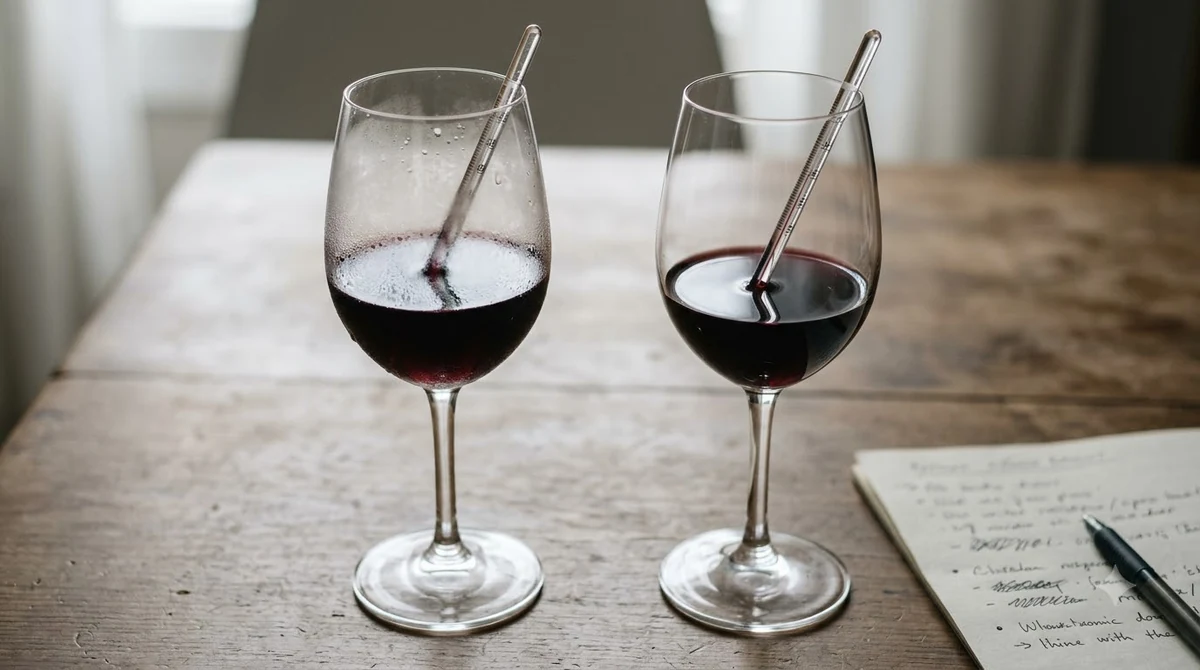
Red wine gets its color primarily from contact between fermenting grape juice and pigmented grape skins. During maceration, the juice extracts color compounds, tannins, and aromatic components from the solid grape material. The amount of skin contact, the varieties used, and the winemaker’s choices all influence the result. Wines made with shorter maceration can be lighter in structure, while longer extraction can produce deeper color and firmer tannins.
The Portuguese term also does not tell you whether a wine is light or full-bodied. A young red made from a fresh, aromatic grape can feel lively and easy to drink, while a concentrated blend from old Douro vineyards may have firm tannins and considerable depth. Both are vinho tinto. For a more basic explanation of the term and its place in Portuguese wine vocabulary, see what is vinho tinto.
It helps to distinguish still red wine from Portugal’s other famous wine styles. Port, for example, is a fortified wine, not simply another name for ordinary dry red wine. Portuguese producers also make white, rosé, and sparkling wines, each with its own terminology. The official Wines of Portugal overview of wine styles explains how the country’s red, white, rosé, and fortified categories differ.
Portugal’s Main Red Wine Regions
Portugal’s red wines are shaped by geography, climate, and local grape traditions. The Douro is a leading source of concentrated reds, Dão is associated with freshness and elegance, Alentejo makes many generous fruit-driven wines, and Bairrada is known for its distinctive Baga grape.
Douro: The Douro Valley in northern Portugal is famous for Port, but it also produces substantial quantities of unfortified red wine. Its steep vineyard slopes, varied elevations, and schist-rich soils contribute to wines with concentrated fruit and firm structure. Touriga Nacional, Touriga Franca, and Tinta Roriz are among the grapes used in regional blends. Some wines are approachable when young, while more structured examples can develop in bottle. Wine Enthusiast notes that summer temperatures in the Douro frequently reach 100°F, a reminder of the heat and exposure that vines can experience in this inland valley.
Dão: Farther south and inland, Dão is surrounded by mountain ranges that influence its growing conditions. Higher vineyard elevations, granite soils, and a cooler climate can help preserve freshness as grapes ripen. Touriga Nacional, Alfrocheiro, Jaen, and Tinta Roriz appear in many of the region’s reds. Compared with a powerful Douro blend, a Dão wine may show more lifted aromas, brighter acidity, and a more restrained sense of fruit. It can be a useful starting point for someone who enjoys structured red wine but prefers balance over sheer weight.
Alentejo: This large southern region is known for warm conditions, broad plains, and areas of higher ground that offer cooler vineyard sites. Its reds are often full-bodied, generous, and fruit-forward, with grapes such as Aragonez, Trincadeira, Alicante Bouschet, and Touriga Nacional appearing in blends. Ripe plum, dark berries, and spice are common flavor associations. Many Alentejo reds are relatively approachable because their tannins can feel softer than those in a young, firm Douro or Bairrada wine.
Bairrada and the coastal regions: Bairrada, closer to the Atlantic, is especially associated with Baga. The grape can give wines pronounced acidity and firm tannins, with savory and dark-fruit character. On the Setúbal Peninsula, Castelão is an important traditional variety, producing reds that can combine red fruit, freshness, and balanced tannin. Lisbon and Tejo also produce a range of styles, from easy-drinking blends to more concentrated wines.
Vinho Verde: Although the northwestern Vinho Verde region is much better known for white wine, it also makes a distinctive red style. Vinhão is a leading local red grape, known for its intense color and lively acidity. The regional red style is deeply connected to local food traditions, even though red wine represents only a small share of the region’s production. Readers curious about the region’s geography can explore where Vinho Verde is from, while the separate guide to Vinho Verde alcohol content explains why the name alone does not specify a wine’s strength.
Portuguese Red Grapes and Blends to Know
Native grapes are central to the identity of Portuguese red wine. Some contribute color and firm structure, others add fragrance, acidity, or softer fruit, and many of the country’s best-known wines combine several varieties rather than relying on one grape alone.
Touriga Nacional is one of Portugal’s most recognizable red grapes. It can produce deeply colored wines with concentrated fruit, floral aromas, and substantial structure. It is especially important in the Douro and Dão, but it is also used in blends from other regions. The grape’s intensity means that a wine made mostly from Touriga Nacional can feel powerful, especially when grown in a warm site and aged in oak.
Touriga Franca is a key Douro variety. It contributes fruit and aromatic character to regional blends and can help balance the structure of Touriga Nacional. Tinta Roriz, also known as Aragonez in much of southern Portugal, is the Portuguese name for the grape known internationally as Tempranillo. It can contribute red and dark fruit, spice, body, and tannin. The name on the label may change with the region, so recognizing both names is useful.
Baga is the signature red grape of Bairrada. It is known for high acidity and firm tannins, particularly in wines built for aging. A young Baga can seem tightly structured, with dark fruit and savory notes, while bottle age can soften its edges and bring out more complex flavors. Alfrocheiro, associated with Dão, can bring color and red-fruit character to regional blends. Trincadeira, prominent in Alentejo, adds aromatic fruit and spice, while Castelão is important in the south, especially around Setúbal.
Vinhão deserves separate attention because its very dark color makes it different from many other Portuguese reds. Its pigmented flesh as well as its skins contribute to the deep red appearance. It is closely tied to traditional Vinho Verde food culture. Portugal’s regional wine body also identifies Alvarelhão, Pedral, and Padeiro among the grapes used by newer producers seeking fresher red styles in the region.
Portugal’s grape diversity is easier to understand with a few useful figures. Wines of Portugal identifies more than 250 native varieties across the country, while its regional overview gives some perspective on how specific red styles fit into the wider picture.
| Wine fact | Figure | What it tells you |
|---|---|---|
| Native grape varieties in Portugal | More than 250 | There is considerable variety beyond familiar international grapes. |
| Red wine share of Vinho Verde production | About 2 percent | The region is principally known for other wine styles, even though its reds have a strong local tradition. |
| Typical summer heat in the Douro | Frequently 100°F | Inland heat is one factor shaping ripeness and concentration in the valley’s wines. |
| First Barca Velha wine | 1952 | The historic wine is an important landmark in the development of dry Douro red wine. |
The figures come from Wines of Portugal, Wine Enthusiast, and Decanter. They are useful reference points rather than a ranking of quality. A wine’s final character still depends on its vineyard, vintage conditions, grape blend, and production decisions.
How Body, Acidity, Tannin, and Flavor Differ
Portuguese reds cover a broad spectrum, from fresh and aromatic wines to dense, structured bottles. Body, acidity, tannin, and fruit concentration are more useful clues than color alone when deciding which style will suit your preferences.
Body describes how substantial a wine feels in the mouth. A lighter red can feel fresh and relatively delicate, while a full-bodied wine has greater weight and concentration. Many Alentejo reds sit toward the fuller end of the spectrum, with ripe fruit and a rounded texture. Some Douro reds are also full-bodied, but their tannins and acidity can make them feel more firmly structured. A Dão red may combine substantial flavor with a more lifted, balanced impression.
Acidity gives wine freshness and makes the mouth water. Baga is particularly associated with high acidity, which helps its wines stay lively even when their tannins are pronounced. Vinhão also has an energetic acidic profile. A fresh red with good acidity can work well with foods that include tomatoes, vinegar, or citrus, because the wine is less likely to seem flat beside the dish.
Tannin creates a drying or gripping sensation, especially on the gums and inside of the cheeks. A young Baga or structured Douro red may have firm tannins, while many Alentejo reds feel softer and rounder. Tannin can become more integrated with bottle age, and the amount extracted during winemaking also influences its intensity. Oak aging may add texture and spice, but it does not automatically make a wine better or more balanced.
Flavor descriptions are useful as broad guides, not strict formulas. Douro wines often bring dark berries, plum, spice, and sometimes herbal or mineral impressions. Dão reds can show red fruit, floral notes, and savory character. Alentejo reds are often associated with ripe plum, blackberry, and warming spice, while Baga can show darker fruit with earthy or savory details. The same grape can taste different depending on soil, altitude, climate, harvest decisions, and the way the wine is made.
A blend is not necessarily less distinctive than a single-variety wine. Portuguese producers have long combined local grapes to create balance and complexity. Touriga Nacional may provide fragrance and structure, Tinta Roriz may add fruit and body, and Touriga Franca may contribute aromatic depth. A single-grape wine can be expressive too, but a well-made blend can show the character of a region more clearly than any one variety alone.
Serving Temperature and Food Pairings
Serving temperature can change how a Portuguese red feels. A slightly cool light red often shows its freshness more clearly, while a fuller wine benefits from being served cool rather than warm, which can make alcohol seem more prominent.
For lighter reds, aim for 55–60°F. This range works well for fresher styles, including some lighter Dão reds and fruit-forward coastal wines. Full-bodied reds are generally best at 60–65°F. This is a useful range for structured Douro wines, fuller Alentejo blends, and more concentrated Baga. A bottle stored at a warmer room temperature may need a short spell in the refrigerator before serving.
Pouring a standard 5-ounce glass helps keep servings consistent. A 750 ml bottle provides about five such glasses. Use an appropriately sized red-wine glass, leaving room in the bowl for aromas to collect. For a young, structured red, giving the wine a little time in the glass can help its aromas become more apparent. There is no need to treat every Portuguese red as a bottle that requires extended aeration.
Food pairing starts with the wine’s structure. A tannic Douro red often works well with grilled beef, lamb, roasted game, or slow-cooked meat. Protein and fat can soften the perception of tannin, making a young wine feel less astringent. A full-bodied Alentejo blend can pair with roast pork, sausage, grilled vegetables, or dishes with rich sauces. The food should have enough flavor to stand alongside the wine rather than being overwhelmed by it.
For a fresh Dão red, consider roast chicken, pork tenderloin, mushroom dishes, or moderately seasoned cheeses. Its acidity and balance can complement meals that would be overwhelmed by a very powerful red. Baga can suit roasted pork, duck, grilled meat, and savory dishes with enough richness to meet its tannin and acidity. A high-acid red can also work with tomato-based sauces, since acidic food needs a wine with equal or higher acidity to keep the pairing balanced.
Vinhão is an interesting regional match for northern Portuguese food. Wines of Portugal recommends it with pork, lamprey, and fatty seafood such as sardines, and notes that serving it chilled is suitable for the local style. That specific pairing should not be generalized to every Portuguese red: oily fish can clash with tannic reds, so a firm Douro or Baga wine is usually better with meat than with rich fish.
Spice deserves a little care. Chili heat can seem stronger beside wine with noticeable alcohol and tannin. A softer, fruitier red is often a better choice for spicy pork or grilled dishes with chili, while a powerful, tannic red can make the heat more pronounced. Salt and fat tend to soften the perception of tannin, so cured meats and savory dishes can be useful partners for more structured bottles.
Tip: When choosing a bottle for dinner, match the wine’s weight to the meal. Try a fresh Dão with roast chicken, a fuller Alentejo red with grilled pork, or a structured Douro with beef or lamb. Serve lighter reds at 55–60°F and fuller reds at 60–65°F.
How to Read Portuguese Red Wine Labels
Portuguese labels often identify a region, a protected designation, a grape variety, or a production category. These terms help explain where a wine comes from and how it was made, but they are not all direct measures of flavor or quality.
DOC is the traditional Portuguese abbreviation for Denominação de Origem Controlada, while DOP is the corresponding European designation for Protected Designation of Origin. These categories operate under rules tied to a particular region. Those rules can cover permitted grape varieties, production methods, and alcohol requirements. A Douro DOC wine, for example, must meet the requirements associated with that designation rather than simply being a red wine made somewhere in Portugal.
Vinho Regional is the Portuguese term associated with the broader European IGP category. It gives producers more flexibility in grape selection and winemaking than a region’s DOC/DOP rules. That flexibility can be useful when a winemaker wants to include varieties or techniques that fall outside the stricter regional designation. A Vinho Regional wine can still be carefully made and distinctive; the broader category does not automatically indicate lower quality.
Reserva is a designation that signals a wine has been certified as having superior quality under the relevant DOP rules. It is not a universal guarantee that every Reserva will taste richer, have more oak, or age longer than every non-Reserva wine. The meaning depends on the applicable regional requirements and the wine itself. A useful label-reading habit is to consider the region, grape varieties, and producer together rather than relying on a single word.
Names such as Touriga Nacional, Baga, Trincadeira, and Castelão offer further clues. A label that names Baga and Bairrada points toward a different style from one naming Aragonez and Alentejo. A blend may list several varieties, or it may use a regional designation without listing every grape. The grape names help narrow down expectations, but they should be read alongside the place of origin.
For a broader introduction to wine categories and the differences between styles, the Wine by Type resource offers a useful next step. Once the label’s region and category are clear, it becomes easier to decide whether the wine is likely to be fresh and light, aromatic and balanced, or full and structured.
Frequently Asked Questions
These questions cover a few label terms and serving details that can be useful after choosing a Portuguese red. They also clarify how vinho tinto differs from fortified wine and what additional information some traditional Portuguese designations provide.
Does vinho tinto always mean dry wine?
No. Vinho tinto describes red wine, not its sweetness level. Portugal’s wine glossary defines the term seco as having less than 4 grams of sugar per liter and doce as having more than 50 grams per liter of reducing sugars, so sweetness is a separate characteristic from color.
Is vinho tinto the same as Port?
No. Port is a fortified wine made by adding grape spirit during fermentation, which stops fermentation and leaves residual sugar in the wine. Wine Enthusiast describes Port and Madeira as generally around 20 percent alcohol, considerably stronger than many ordinary still red wines.
What does colheita mean on a Portuguese wine label?
Colheita means harvest or vintage. On a wine label, it refers to the year the grapes were harvested, helping distinguish the wine’s vintage from its bottling or release date.
What does Garrafeira mean for Portuguese red wine?
Garrafeira is an official designation with minimum aging requirements. For red wine, the Portuguese glossary specifies at least 30 months of aging, including a minimum of 12 months in glass bottle. The designation therefore provides information about maturation as well as the wine’s origin category.
Should a young full-bodied Douro red be decanted?
Many young, full-bodied reds benefit from 30–60 minutes in a decanter before serving. This gives a firm wine time to open up and can help its aromas become easier to identify. Older bottles may need gentler handling because extended exposure to air can diminish delicate aromas.
Vinho tinto is a broad category, and Portugal’s regional differences are what make it interesting to explore. Start with the contrast between Douro, Dão, and Alentejo, then try distinctive grapes such as Baga, Touriga Nacional, and Vinhão. With a little attention to region, structure, serving temperature, and food, it becomes much easier to find a Portuguese red that suits the occasion.
More in Wine Types & Grapes
 What Does Mourvèdre Taste Like? Flavor Profile, Regions, and PairingsUpdated Nov 20, 2026
 What Does Marsanne Taste Like? Flavors, Styles, and Food PairingsUpdated Nov 20, 2026
 What Does Malvasia Taste Like? Styles, Flavors, and Food PairingsUpdated Nov 20, 2026
 What Does Grenache Blanc Taste Like? Flavor Profile, Styles, and PairingsUpdated Nov 20, 2026
 What Does Garnacha Taste Like? Key Flavors, Styles, and Pairing TipsUpdated Nov 20, 2026
 What Does Fruit Wine Taste Like? A Complete Flavor and Style BreakdownUpdated Nov 20, 2026