

We may earn a commission when you buy through links on this page, at no extra cost to you. Learn more.
Good sake tasting notes describe four things in order: how the sake looks, what its aroma reveals, how it tastes, and how the finish lingers. Most premium sake appears clear and nearly colorless, so the useful information sits in aroma, flavor, and texture rather than color. Once you know a few core terms, you can read a label, compare two bottles, and explain exactly what you enjoyed.
Sake can feel intimidating because labels use Japanese terms and the drink looks deceptively simple. The underlying logic is more approachable than most people expect. Decanter explains that all sake is made from just four ingredients: rice, water, yeast, and koji, the rice-derived mold that breaks down starch into sugar during fermentation. Because the recipe is so short, most of the differences you taste come from brewing technique, the type of rice, and how far the rice was milled before brewing. Good sake tasting notes therefore start with those basics of style rather than with a long list of fruit names. The guide below moves from observation to judgment, so you can use it at a restaurant counter, in a bottle shop, or at a small tasting with friends.
What Sake Tasting Notes Actually Describe
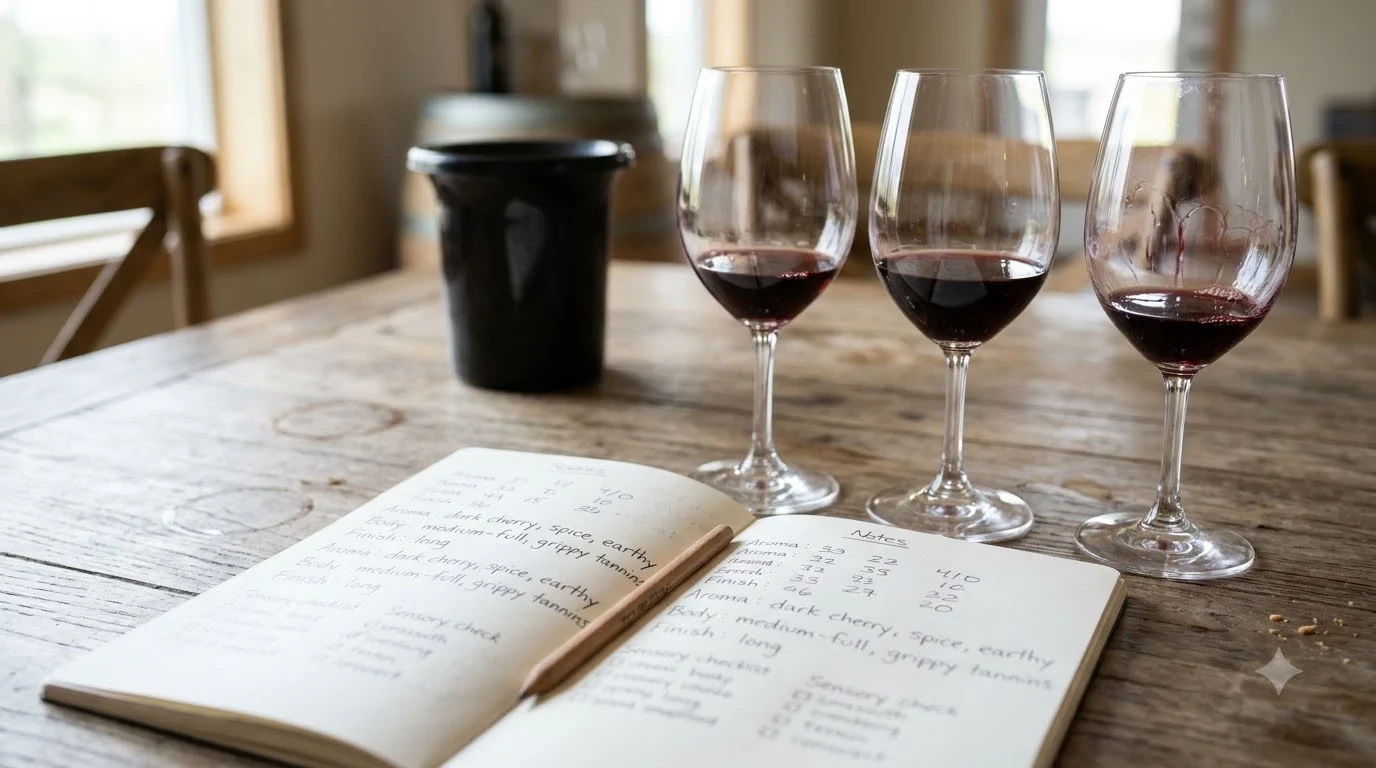
A tasting note is a short record of the sensory features that matter most, not a complete inventory of every flavor in the glass. Professional tasters work through the same categories each time, which keeps notes comparable across bottles and across months of tasting. The categories below are the ones you will see again and again.
Milling is the first big variable. Decanter describes the seimaibuai, or polishing ratio, as the percentage of rice remaining after milling. The more rice that is milled away, the more expensive the sake is to produce, and the more aromatic, fruity, and delicate in texture it tends to be. Rice milled less often yields more savory styles with notes of rice or earth rather than primary fruit. That single number is often the fastest way to predict what a bottle will taste like before you open it.
Flavor has its own vocabulary. Nippon.com lists the components of good sake as a balance of sweetness, acidity, astringency, bitterness, and umami, the rich, savory quality linked to certain amino acids and recognized as one of the five basic tastes. Overall impact is then described as either rich and full-bodied, a style called nōjun, or light and refined, called tanrei. Those two words give you a quick answer to the question most drinkers ask first: is this bottle heavier or lighter? Starting there makes the rest of your notes easier to organize.
Think of a complete note as three layers: what you smell before the first sip, what you taste as the sake moves across your palate, and how the finish behaves after you swallow. The sections below follow that sequence. If you learn only one habit, make it describing a sake in broad categories before naming specific fruits or flowers. Categories keep your notes useful when you revisit them weeks later.
Start with Sight: Clarity, Color, and Viscosity
Sight is the quickest check, and it tells you whether a sake is clean, cloudy, or unusually textured before you bring the glass to your nose. Takara Sake USA recommends pouring, swirling gently, and holding the glass up to the light to look for three things: transparency, color, and viscosity.
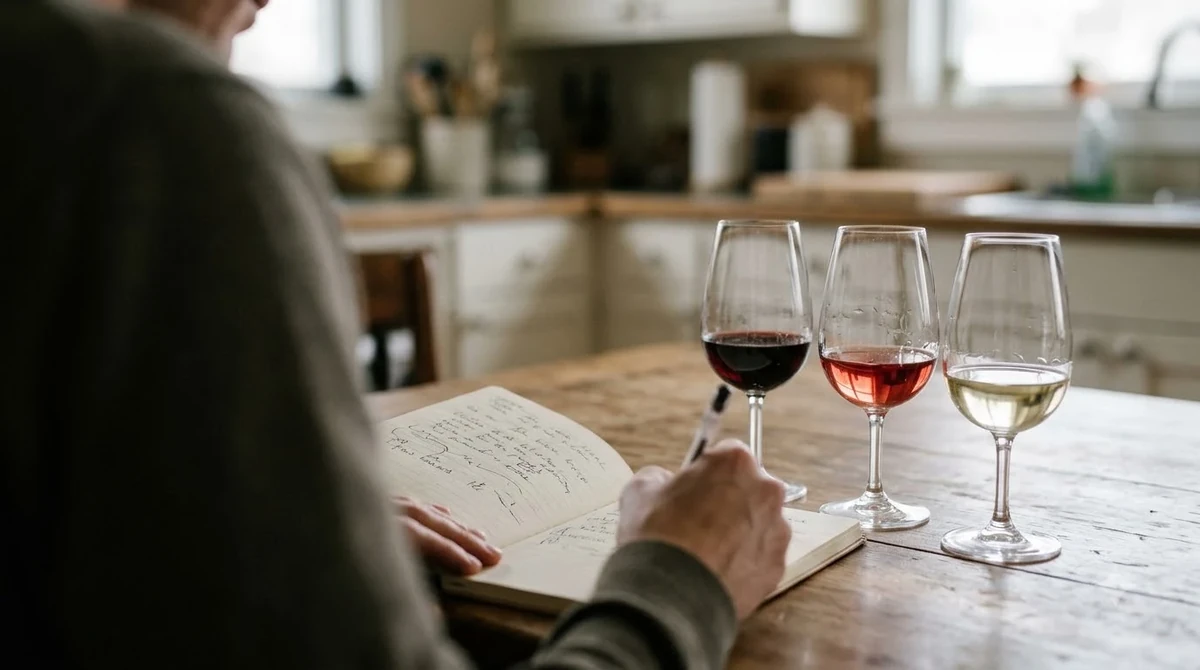
Clarity comes first. Most sake should look clear, without floating sediment or haziness, and that baseline tells you a great deal about how carefully a bottle was finished. Nigori is the expected exception, since it is meant to be cloudy. Color is more subtle than clarity. A typical clear sake shows a slight straw-yellow or greenish tint, while nigori usually appears pale and white. When a clear sake looks noticeably deeper in tone, note it, because that can point to aging or a different style, which you will meet later with koshu.
Viscosity completes the visual check. Swirl the glass and watch how the sake clings and runs back down the sides. Takara notes that sweeter sakes tend to look thicker and more syrupy because they contain more sugar, while drier sakes usually look thinner and more fluid. This is a rough clue rather than a measurement, but it offers an early hint about sweetness before you have tasted anything. Write that hint down first, then test it on the palate, so your note records whether the look and the taste agree.
Reading the Aroma: Fruit, Floral, Grain, and Intensity
Aroma carries most of the information in a sake, and it is where premium bottles tend to separate themselves from everyday ones. Describing aroma well means noting both what you smell and how strongly you smell it.
In its sake tasting primer, Nippon.com describes how the fragrance of good sake can combine apple, pear, banana, lychee, and lemon with floral, herbal, grainy, or woody notes. Some notes are faint and others strong, so the overall profile can be classified as either highly fragrant, called hanayaka, or subdued, called odayaka. Deciding which word fits is a quick way to anchor your note before you list any specific flavors. Sake that has matured for three years or more can add the scent of oranges, plums, or nuts, which makes an older bottle read very differently from a fresh one.
Aroma also changes as you spend time with a glass. Experienced tasters separate the top notes that rise from the cup when you first lift it, the in-mouth aroma you detect while the sake is on your palate, and the finish that lingers after you swallow. Nippon.com suggests tasting slowly and deliberately: sniff first, hold the sake in your mouth, and then swallow, so you can savor the aroma at each stage. Rushing the process tends to flatten the differences between bottles.
For a practical shortlist, Takara Sake USA lists fruity, floral, caramel, nutty, earthy, smoky, and spicy as the aromatic families you may detect, depending on the style. Use the list as a prompt rather than a checklist. Choose one or two notes you can defend in a sentence, because a specific, honest description is far more useful than a long string of guesses. If you pick up a melon note in a ginjo, write down melon and whether it sits near the top of the glass or deeper in the aroma.
Palate: Sweetness, Acidity, Umami, and Body
The palate is where you decide how the sake balances, so focus on sweetness, acidity, umami, and texture before you attempt to name specific flavors. Takara Sake USA gives a clear vocabulary for these elements, and it works well alongside the balance categories Nippon.com uses.
Start with dryness and sweetness, which Japanese tasters call karami and amami. Takara explains that a drier sake contains less residual sugar and more acid, which produces a cleaner, shorter finish and a lighter mouthfeel. A sweeter sake is higher in sugar and lower in acid, and that combination lets delicate fruit flavors come through more clearly. The sake meter value, or nihonshudo, places each bottle on a scale from positive 15 for the driest to negative 15 for the sweetest, so a higher number means a drier sake. Knowing that scale lets you translate a label into an expectation before you pour.
Acidity is the next question. Takara notes that the more acidic a sake is, the lighter it tastes, and a sake with less acid reads as sweeter and richer. Wine drinkers already know this logic from crisp whites. If you have read the sancerre tasting notes for a lean, bright white, you already have a reference point for the kind of lively acidity many ginjo sakes show.
Umami is the savory dimension that many newcomers overlook. Nippon.com describes it as a rich, savory quality that comes from certain amino acids, and Takara adds that a higher concentration of amino acids such as glutamic acid boosts it. A sake with clear umami can taste fuller and linger longer, even when it is dry. Finally, judge body and mouthfeel. Nippon.com says sake may feel as light as water on the tongue or silkier in texture, and sparkling sake adds the sensation of effervescence. Mark where your sake falls on that range, since texture often shapes how a sake pairs with food more than flavor alone does.
Grade by Grade: Junmai, Honjozo, Ginjo, and Daiginjo
The label grade signals how much rice was milled and whether distilled alcohol was added, and both decisions shape what you taste. The table below gives a typical profile for each category, so you can predict a bottle’s character from its label before the first sip.
| Category | Rice remaining after milling | Added distilled alcohol | Typical tasting notes |
|---|---|---|---|
| Junmai | No grade threshold | None | Rich, savory, rice and earth; silken finish |
| Honjozo | 70% or less | Up to 10% | Crisp, light, smooth, often neutral |
| Ginjo | 60% or less | Possible (non-Junmai) | Fruity, floral, richer perfume, delicate texture |
| Junmai Ginjo | 60% or less | None | Fruity and floral with a pure-rice texture |
| Daiginjo | 50% or less | Possible (non-Junmai) | Explosively fruity, ebulliently perfumed |
| Junmai Daiginjo | 50% or less | None | Very fragrant, concentrated fruit, often served cool |
Decanter supplies the thresholds behind this table. Honjozo is made with up to 10% added distilled alcohol from rice milled to 70% or less, and it is typically crisp, easy-drinking, and often neutral rather than lavishly perfumed. Ginjo rice is milled to 60% or less of the original grain and tends to offer more concentrated fruit and floral flavors, richer perfume, and a delicate texture. Daiginjo uses rice maintaining 50% or less, and it is often explosively fruity. Decanter also notes that anything not labeled Junmai is typically made with added distilled alcohol, and that the alcohol gives a lift to fruity, floral aromas and adds sharpness on the palate.
Junmai is pure rice sake, made from rice, water, yeast, and koji with no added distilled alcohol. Decanter says it tends to have a luscious palate and a silken cling on the finish, while aromas range from bright and fruity to savory notes of freshly steamed rice and earth. If you already organize wines by style, the wine by type guide offers a similar map for comparing categories side by side.
Special Styles Worth Recognizing
Several styles appear often enough to deserve their own notes. Nigori is coarsely filtered, so rice particles remain in the bottle. Decanter describes its mouthfeel as pleasantly lactic, with delicately fruity, yogurt-laced flavors. Sparkling sake ranges from lightly fizzy styles made with added carbon dioxide to traditional-method bottles refermented in the bottle, which can show fine, persistent mousse and flavors from fruit and flowers to mineral, pastry, and earth.
Koshu is sake aged intentionally for a minimum of three years after bottling. Decanter says traditional amber-hued styles show delicately sherried, pleasantly oxidative notes. Kimoto and yamahai, two traditional starter methods, yield the sturdy, earthy profile that Nippon.com describes. When you encounter these styles, use the same aroma and palate steps, but expect the structure to reflect age, brewing method, or milky texture as well as polishing ratio.
How Serving Temperature Changes the Notes
Temperature is the variable most drinkers underestimate, because the same bottle can shift in aroma, flavor, and texture as it warms. Decanter notes that sake can be served across a range of roughly 0 to 55 degrees Celsius, and each part of that range highlights different qualities.
Cool service suits fragrant styles. Decanter says fruit-focused, perfumed Daiginjo is typically served at cool white-wine temperatures to maximize its fruity and floral aromas. Takara makes a similar point, advising that delicate ginjo, daiginjo, and nigori should remain chilled to preserve their flavors. If your note describes a sake as fruit-forward, taste it cold first, since that is the temperature it was most likely built to show.
Gentle warmth reveals a different side. Decanter argues that heating can highlight umami and sweetness across a wide range of sake, and it calls the idea that only cheap sake should be heated a myth. Most junmai and savory styles, including honjozo and the higher-acid kimoto and yamahai, can be enjoyed across the full temperature spectrum. Decanter recommends heating gently, never to a boil, using a water bath or a microwave. That range gives you enough contrast to compare what the sake does at each point.
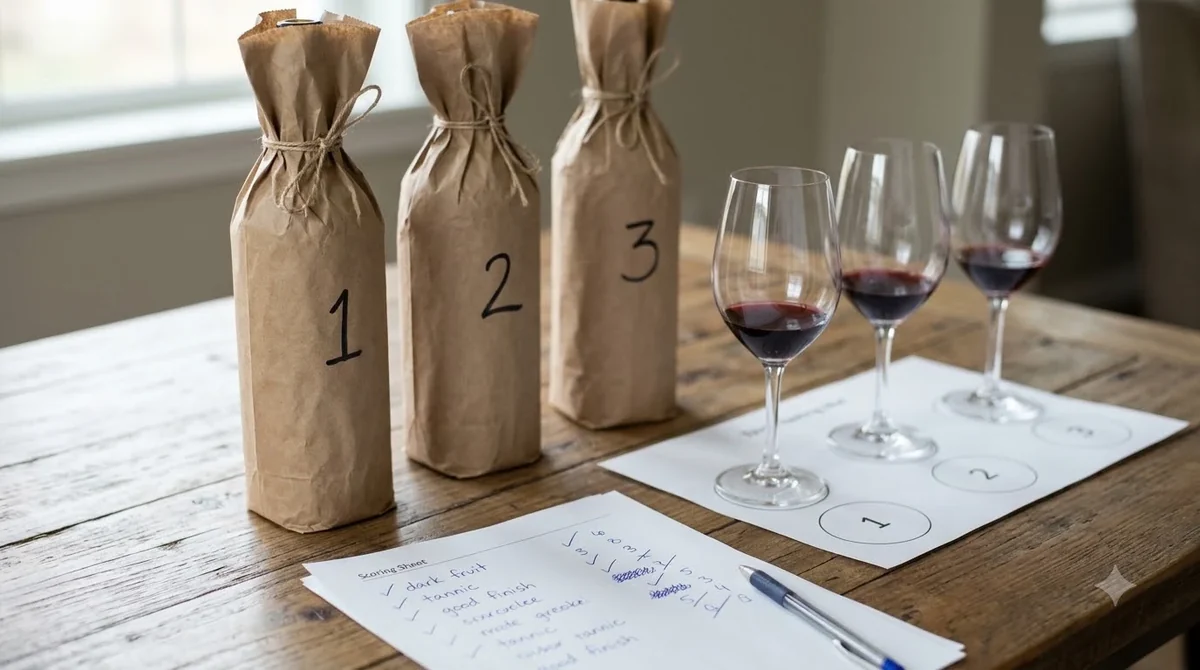
The most useful exercise is to test the same junmai three ways. Takara suggests tasting it straight from the fridge, again after warming to room temperature, and once more after heating. Write a short note at each stage and compare the changes in aroma, sweetness, and texture. You will likely find that the same sake reads as crisp at one temperature and rich at another, which gives your notes a more precise character.
Writing Notes You Can Use Again
A good tasting note works as a record, so consistency matters more than vivid language. Takara Sake USA recommends writing down your conclusion for each sake so you know which bottles to buy again, and it even suggests a tasting journal if you plan to go deeper.
Glassware changes what you notice. Takara says many sommeliers recommend sampling chilled sake in white wine glasses, because the taller bulb lets the sake express its aromas fully. Traditional ceramic cups suit the occasion, but a glass with a wider bowl gives you more to smell, which matters when you are writing notes. Use the same glass every time so your comparisons stay fair.
Pace matters as much as the glass. Takara recommends limiting a tasting to six sakes at most, since too many samples blur the differences between them. Pair each sake with small plates, because beginner-friendly bottles often work with many dishes beyond Japanese cuisine. Keep the structure of each note the same, moving from sight to aroma, palate, finish, and overall impression. Takara’s overall impression prompts are complexity, balance, and enjoyment. The same structure works for grenache tasting notes, so your journal stays consistent across both drinks.
Tip: Write your aroma description before you taste. Takara notes that flavor usually matches aroma, and that more complex sakes can show flavors you cannot detect from aroma alone, so a mismatch between nose and palate is worth recording.
Frequently Asked Questions
These answers cover the questions that come up most often when people start writing their own notes.
Is sake brewed more like beer or wine?
Decanter describes the brewing process as more similar to beer than wine. Koji plays a central role, breaking down rice starch into sugar during fermentation. That is why milling and koji management shape so much of the final flavor.
Is a higher polishing ratio always better?
Decanter notes that most experienced drinkers see the polishing ratio as an indicator of style more than actual quality. Futsushu, the basic everyday category, can offer exceptional value when it is made by outstanding brewers. Judge each bottle by what you taste rather than by a single number.
How do I describe a sake when I cannot name any fruit?
Start with broad categories, such as whether the aroma is highly fragrant or subdued, and whether the sake tastes rich or light. Takara Sake USA also notes that more complex sakes can show flavors you cannot detect from aroma alone. A category-based note is still a useful record even without a specific fruit name.
Does cold-stored koshu taste different from traditional amber koshu?
According to Decanter, the two styles differ in character. Traditional amber-hued koshu is sherried and oxidative, while modern koshu matured in cold storage keeps the freshness of fruit and develops depth and weight. Tasting the two side by side is an effective way to sharpen your palate.
What sake should a beginner taste first?
Takara Sake USA suggests that beginner sakes are typically more versatile, with many possible pairings outside traditional Japanese cuisine. That flexibility makes them a practical starting point for learning the vocabulary. Once you can describe those bottles clearly, move on to ginjo and daiginjo to test the fragrance differences.
Good sake tasting notes improve through repetition rather than memorization. Use the same sequence of sight, aroma, palate, and finish with every bottle, and your descriptions will sharpen quickly. Over time, that consistency makes it much easier to buy, pair, and serve sake with confidence.
More in Wine Types & Grapes
 What Does Mourvèdre Taste Like? Flavor Profile, Regions, and PairingsUpdated Nov 20, 2026
 What Does Marsanne Taste Like? Flavors, Styles, and Food PairingsUpdated Nov 20, 2026
 What Does Malvasia Taste Like? Styles, Flavors, and Food PairingsUpdated Nov 20, 2026
 What Does Grenache Blanc Taste Like? Flavor Profile, Styles, and PairingsUpdated Nov 20, 2026
 What Does Garnacha Taste Like? Key Flavors, Styles, and Pairing TipsUpdated Nov 20, 2026
 What Does Fruit Wine Taste Like? A Complete Flavor and Style BreakdownUpdated Nov 20, 2026