

We may earn a commission when you buy through links on this page, at no extra cost to you. Learn more.
What does vermentino taste like? It usually tastes dry, bright, and lightly savory, with flavors of lemon, grapefruit, green apple, and Mediterranean herbs. Many bottles add a salty or stony impression, plus a faint bitter-almond note on the finish. The wine is generally light to medium in body, with refreshing acidity and enough texture to work at the table as well as before a meal.
Vermentino is a white grape most closely associated with Sardinia, Liguria, and coastal Tuscany, although it also grows in southern France and other warm regions. Its flavor can move from crisp citrus and green fruit to ripe peach, flowers, and tropical notes, depending on where the grapes grow and how the wine is made. Here is how to recognize the grape, choose a style, and pair it with food.
The Core Flavor Profile: Citrus, Apple, Herbs, and Salinity
Most Vermentino tastes dry and refreshing, led by lemon, lime, grapefruit, and green apple. A herbal edge and a subtle saline or mineral impression often distinguish it from simpler, fruit-only white wines.
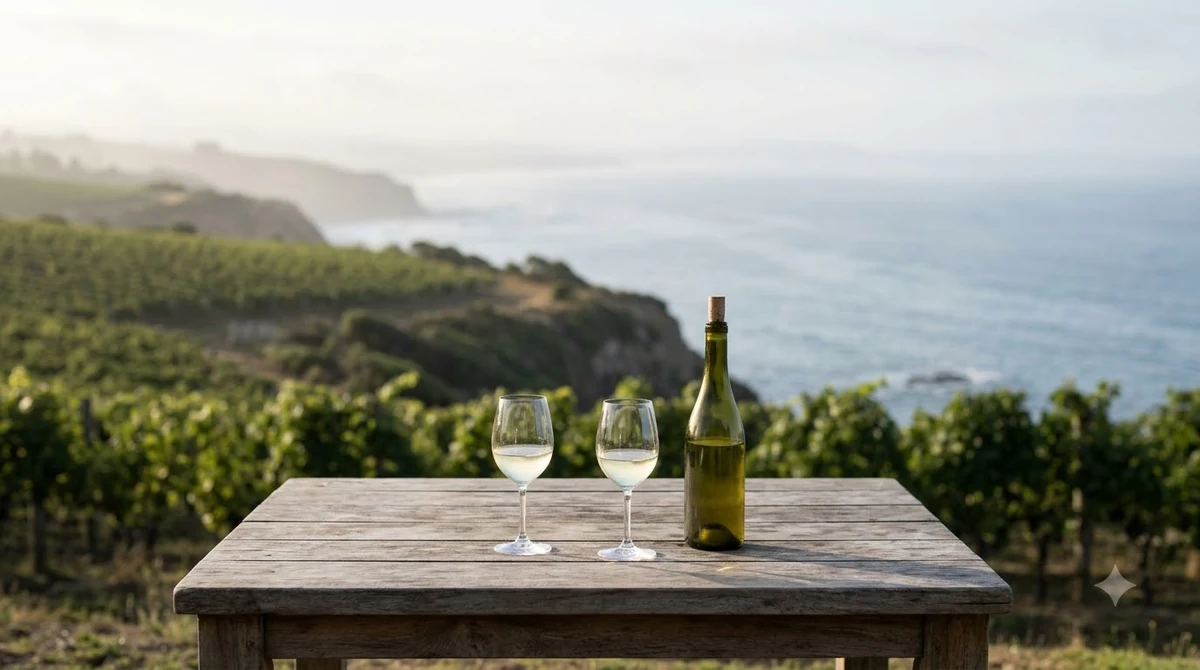
On the first sniff, look for lemon peel, lime zest, grapefruit, green apple, and sometimes ripe pear or white peach. Warmer sites can bring melon or tropical fruit, while floral notes may suggest jasmine or acacia. The aromas are usually fresh rather than heavily perfumed. Dry describes the wine’s lack of noticeable residual sugar, not the absence of ripe fruit: a peach-scented Vermentino can still finish completely dry. That distinction helps explain why a glass can smell generous yet feel crisp rather than sweet.
Herbal aromas may suggest wild fennel, thyme, rosemary, sage, or the dry scrub around Mediterranean vineyards. The exact herb matters less than the savory green note that balances the fruit. Breezy coastal sites often emphasize citrus and herbs; riper examples lean toward peach, melon, and yellow fruit.
The finish often has a lightly salty, chalky, or stony character. This is a sensory impression, not proof that seawater or minerals have entered the wine. Decanter describes a mineral, saline note as a common thread across Vermentino styles, while the Alghero DOC Wines Consortium links the grape’s coastal identity with sapidity, Mediterranean scrub, and citrus aromas. Some wines also leave a gentle almond-skin or pleasantly bitter note at the end, which can make the next bite of food taste especially appealing.
Acidity, Body, and Texture in the Glass
Vermentino usually has medium to high acidity and a light-to-medium body, creating a combination of freshness and some palate weight. Its texture can feel crisp and direct or rounded and faintly waxy, depending on ripeness, lees contact, and oak use.
Acidity keeps the wine refreshing even when its fruit is ripe. Lemon and grapefruit reinforce the bright sensation, while a medium-bodied frame gives it more weight than very light coastal whites. Some warm-climate examples carry generous alcohol, but freshness can preserve a juicy finish, as Decanter observes.
A young stainless-steel wine often feels brisk, with citrus, green apple, and a saline aftertaste. Fine-lees aging can make the texture broader and creamier without making the wine sweet. Lees are spent yeast cells left after fermentation; contact with them adds roundness and subtle bready or savory complexity, which gentle stirring (bâtonnage) can increase.
Vermentino is not normally tannic, though skin contact can create a faint tea-like or almond-skin grip. Sauvignon Blanc often gives a sharper green-herb impression, while Vermentino can feel rounder and more savory. Chenin Blanc spans a wider range of sweetness and texture; our guide to what does chenin blanc taste like offers a useful comparison. For other grape styles, see our Wine by Type guide.
How Sardinia, Liguria, and Tuscany Shape the Taste
Vermentino’s home regions share a Mediterranean setting, but they do not produce identical wines. Sardinia often combines ripe citrus and stone fruit with pronounced salinity, Liguria tends toward a taut coastal and herbal character, and coastal Tuscany can offer a rounder, more floral expression.
Sardinia is the reference point for many drinkers, especially around northeastern Gallura. Vermentino di Gallura DOCG is one of the best-known expressions, while Vermentino di Sardegna DOC covers the island. Expect lemon, grapefruit, yellow apple, white peach, herbs, and a saline edge. The Alghero DOC Wines Consortium describes the grape as particularly suited to coastal and immediately inland sites.
Liguria, on Italy’s northwest coast, is associated with brisk, aromatic Vermentino and the local name Pigato. Citrus, wild herbs, flowers, and a chalky or salty impression are common, with acidity for seafood and vegetables. The maritime style suits basil pesto, anchovies, shellfish, and grilled fish. In parts of southern France, the grape is known as Rolle.
Coastal Tuscany, particularly Maremma and Bolgheri, can give Vermentino a more generous fruit profile. The Consorzio Vini Maremma describes local wines as fresh and floral, with white- and yellow-fleshed fruit and moderate acidity. Peach, pear, and citrus blossom may meet a softer palate than in brisk Ligurian examples. Lees or restrained oak can build body for richer fish, creamy pasta, and white meats. These are regional tendencies, not fixed rules; site and harvest choices also shape the style. Vermentino is not confined to Italy: Wine Enthusiast also notes plantings in California and parts of Southern Oregon, where local climate and winemaking can produce another variation on the grape’s citrus-and-herb profile.
Winemaking Choices That Change the Profile
Most Vermentino is fermented in stainless steel to preserve fresh fruit and acidity, but skin contact, lees aging, and oak can add different layers. These decisions explain why one bottle tastes crisp and citrus-driven while another feels richer, more floral, or subtly creamy.
Stainless-steel fermentation preserves fresh fruit and acidity, keeping lemon, lime, green apple, and floral aromas clear. Bottled soon after fermentation, this style is direct and relatively light, suiting aperitifs, raw shellfish, and salads. Some winemakers add a short period of cold skin contact before pressing to intensify fragrance and draw out grapefruit peel, floral, and herbal notes.
Brief skin contact does not automatically make Vermentino an orange wine; the duration determines how much color, phenolic grip, and texture develop. Harvest timing matters too. Earlier picking favors acidity, citrus, green apple, and herbs, while later picking can bring more alcohol and peach, melon, or tropical fruit.
Fine-lees aging for several months can add roundness and a creamy or savory quality; bâtonnage increases contact between wine and lees. These wines suit grilled fish, shellfish pasta, and olive oil. Oak is less universal: some producers avoid it to preserve citrus and herbs, while others use older barrels or age only part of the wine for extra volume. Decanter’s overview of Italian Vermentino describes both lees practices and differing views on oak.
Food Pairings for Vermentino’s Citrus and Savory Notes
Vermentino is especially good with seafood, shellfish, fresh herbs, and vegetables because its acidity refreshes the palate while its savory edge echoes salty ingredients. It can also handle pesto, grilled poultry, and soft cheeses when the wine has enough body.
Start with shellfish. Oysters, clams, mussels, shrimp, crab, and scallops all work well with a crisp Vermentino, particularly when they are simply steamed, grilled, or served with lemon. The wine’s citrus notes pick up the lemon in the dish, while acidity clears the palate after briny or buttery bites. Decanter highlights oysters, raw shellfish, squid, and octopus as natural matches. For fried seafood such as fritto misto, a high-acid bottle cuts through the crisp coating without overwhelming the delicate fish. The same logic works with spaghetti alle vongole, crab linguine, and tomato-based fish soup: citrus freshness counters the sauce, while the wine’s savory edge connects with shellfish and herbs.
Grilled fish is another dependable match. Sea bass, branzino, snapper, and halibut pair well with a young, fresh style, especially when seasoned with lemon, parsley, fennel, or olive oil. For richer preparations such as salmon, roasted fish with browned butter, or fish baked with tomatoes, choose a fuller Vermentino from coastal Tuscany or a lees-aged Sardinian example. A wine with more texture can meet the richness of the dish while keeping its herbal and citrus character in view. Ligurian pesto is another natural match: basil, garlic, pine nuts, olive oil, and aged cheese bring fragrant herbs, fat, and savory depth, while the wine’s acidity and herbal character provide a useful counterpoint.
It also works with vegetable tarts, grilled zucchini, artichokes, fennel, and salads with green beans. For cheese, try fresh goat cheese, young pecorino, ricotta, or other soft, moderately salty styles rather than very pungent washed-rind cheeses. A rounder bottle can accompany roast chicken with herbs, pork loin with fennel, and vegetable-and-white-bean stew. The Consorzio Vini Maremma lists soft cheeses, cured meats, vegetable pies, flans, crustaceans, salmon, and white meats among suitable partners, especially for more structured versions. Match the weight of the food to the wine: crisp Vermentino for raw seafood, fuller Vermentino for grilled dishes and creamier sauces. Be cautious with strong chili heat and very sweet sauces; alcohol can make chili seem hotter, while a dry white may taste thin beside a sugary glaze. For sweet-and-sour dishes, choose a fruitier or slightly off-dry white.
Tip: Match the wine’s acidity to the dish’s acidity. Lemon-dressed seafood, tomato-based fish soup, and herb-heavy pesto call for a fresh Vermentino with enough brightness to keep the wine from tasting flat.
Serving Temperature, Glassware, and Storage
Serve most crisp Vermentino at 45–50°F, while fuller or lees-aged examples show more detail around 50–55°F. A medium-sized white-wine glass gives the citrus, floral, and herbal aromas room to open without letting the wine warm too quickly.
Temperature makes a noticeable difference. Too cold, and the wine’s fruit and floral notes become muted; too warm, and the alcohol and softer texture can stand out more than the acidity. For a young, stainless-steel Vermentino, begin near 45–48°F and let it warm slightly in the glass. For a broader bottle with lees aging or restrained oak, 50–55°F can reveal more aroma and texture. Wine Enthusiast gives a general serving range of 45–55°F for Vermentino in its Vermentino profile, which fits these style-based adjustments.
| Vermentino style | Serving temperature | What to emphasize |
|---|---|---|
| Light, crisp, stainless-steel | 45–50°F | Lemon, lime, green apple, fresh herbs |
| Lees-aged or fuller-bodied | 50–55°F | Peach, flowers, broader texture, savory finish |
| Lightly sparkling Vermentino | 40–50°F | Fine bubbles, citrus, clean refreshment |
Use a standard white-wine glass rather than a narrow flute for still Vermentino. A modestly tapered bowl concentrates the aromas but still allows enough air to reveal herbs, citrus peel, and stone fruit. Pour a 5-ounce serving so the bowl has room for swirling. A 750-milliliter bottle contains about five such glasses, making it easy to plan for a dinner with four or five people.
Fresh Vermentino is usually best young, while a more structured example may develop savory detail over time. Wine Enthusiast gives a broad cellar window of one to five years, not a guarantee for every bottle. Store unopened bottles on their side near 55°F in a cool, dark place. After opening, reseal and refrigerate; still white wine is generally best within three to five days. Keep the stopper clean and return the bottle to the refrigerator promptly; repeated warm spells speed the loss of fresh citrus and floral aromas. For a dinner, chill the bottle in advance rather than relying on an ice-cold pour straight from the freezer.
Frequently Asked Questions
Is Vermentino the same grape as Rolle?
Yes. Rolle is the name commonly used for Vermentino in Provence, Nice, and parts of Languedoc-Roussillon in southern France. The grape is also known by a range of local synonyms, so the name on a bottle can reflect regional tradition rather than a different variety.
Can Vermentino age for several years?
Some structured examples can develop beyond their youthful fruit stage, particularly wines with concentration and careful élevage. Decanter notes that older Vermentino can develop a petrol-like character reminiscent of aged Riesling, a surprising trait for a grape usually associated with fresh citrus and herbs.
Does Vermentino ever come in a sparkling style?
Yes. Vermentino is not limited to still white wine: it can also be made as a lightly sparkling frizzante wine. The Alghero DOC area in Sardinia is a notable example, where the local consortium describes Vermentino Frizzante as straw-yellow with fine bubbles and a fruity aroma.
What is Vermentino called in Piedmont?
It is commonly called Favorita in Piedmont. The names Pigato, Favorita, Rolle, and Vermentino are often treated as related or synonymous in regional wine discussions, although local plant material and naming rules can be more complicated than a simple one-to-one label.
Is Vermentino always a dry wine?
No. Dry white wine is the best-known style, but Vermentino grapes are also used for rosé, sparkling, and dessert wines. Sardinia has examples of sweet and sparkling versions, so the grape name alone does not guarantee one level of sweetness or one method of production.
Vermentino’s appeal comes from the way citrus, fresh herbs, lively acidity, and a subtle savory finish work together. Choose a crisp Sardinian or Ligurian bottle for shellfish and light seafood, or a rounder Tuscan example for grilled fish, pesto, and richer dishes. Once you recognize its balance of freshness and texture, it becomes an easy white wine to pair with a range of Mediterranean-inspired meals.
More in Wine Types & Grapes
 Zinfandel Sugar Content: Dry Red vs. White Zinfandel GramsUpdated Nov 21, 2026
 Best Zinfandel Substitute Options for Sipping and CookingUpdated Nov 21, 2026
 Zweigelt Food Pairing: Best Dishes, Cheeses, and Serving TipsUpdated Nov 21, 2026
 Zinfandel Tannins Explained: How Structure Shapes Every BottleUpdated Nov 21, 2026
 Zinfandel Sweetness Level: Dry Red vs. Sweet White Zin ExplainedUpdated Nov 21, 2026
 Xinomavro Food Pairing: Best Dishes, Styles, and Serving TipsUpdated Nov 21, 2026