

We may earn a commission when you buy through links on this page, at no extra cost to you. Learn more.
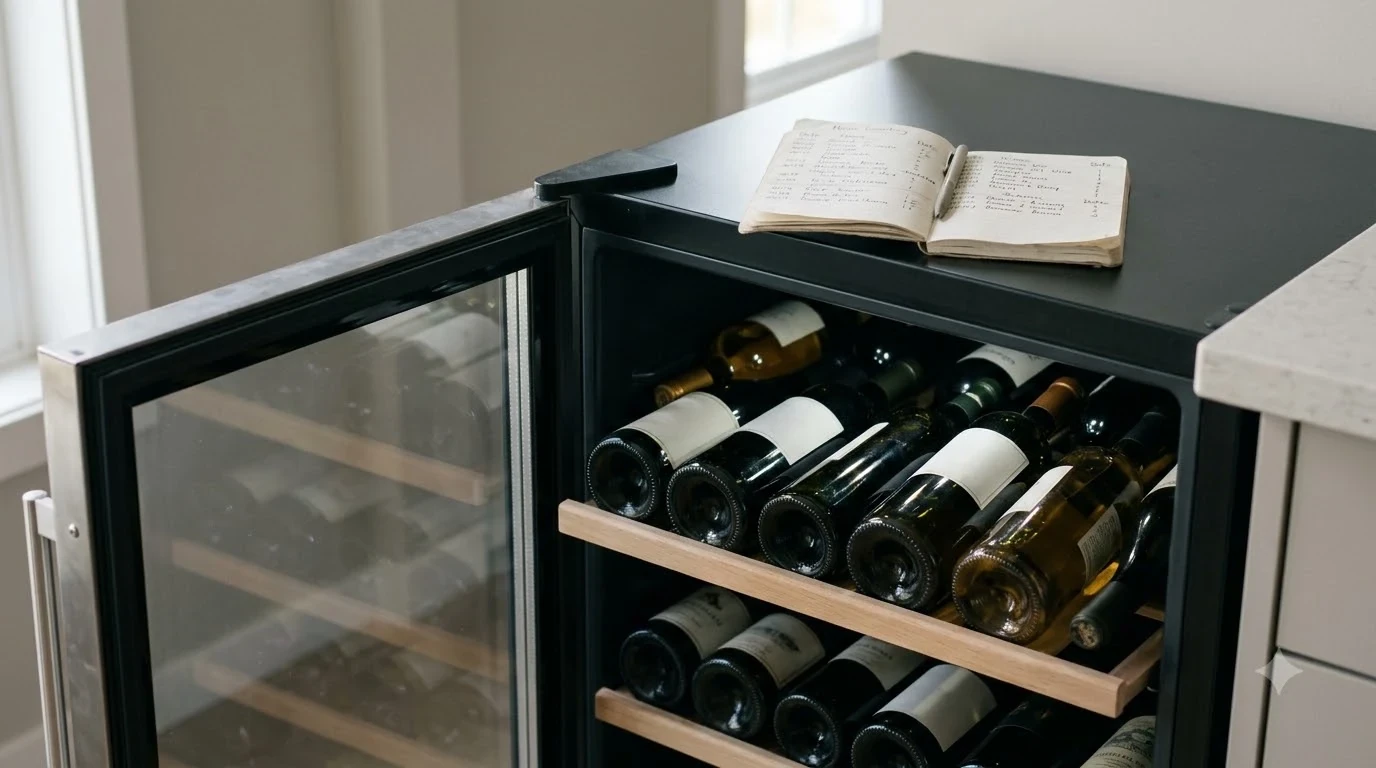
How cold is a wine fridge? Set it to about 55°F for storing most wines, including reds, whites, rosé, and sparkling bottles together. For longer-term storage, a steady 53–57°F is a useful target range. A wine fridge is meant to hold wine at a stable storage temperature, not necessarily the temperature at which every bottle should be served.
The right setting depends on what the cabinet is doing. A single-zone unit usually works best as a steady home for a mixed collection, while a dual-zone model can keep bottles closer to their serving temperatures. The important priorities are a stable temperature, sensible placement, and enough room for air to circulate around the bottles.
The Best Wine Fridge Temperature for Everyday Storage
For a cabinet holding a mix of bottles, choose 55°F as a practical set point. Aiming for 53–57°F is also appropriate for extended storage, and the narrow range matters more than chasing one supposedly perfect number.
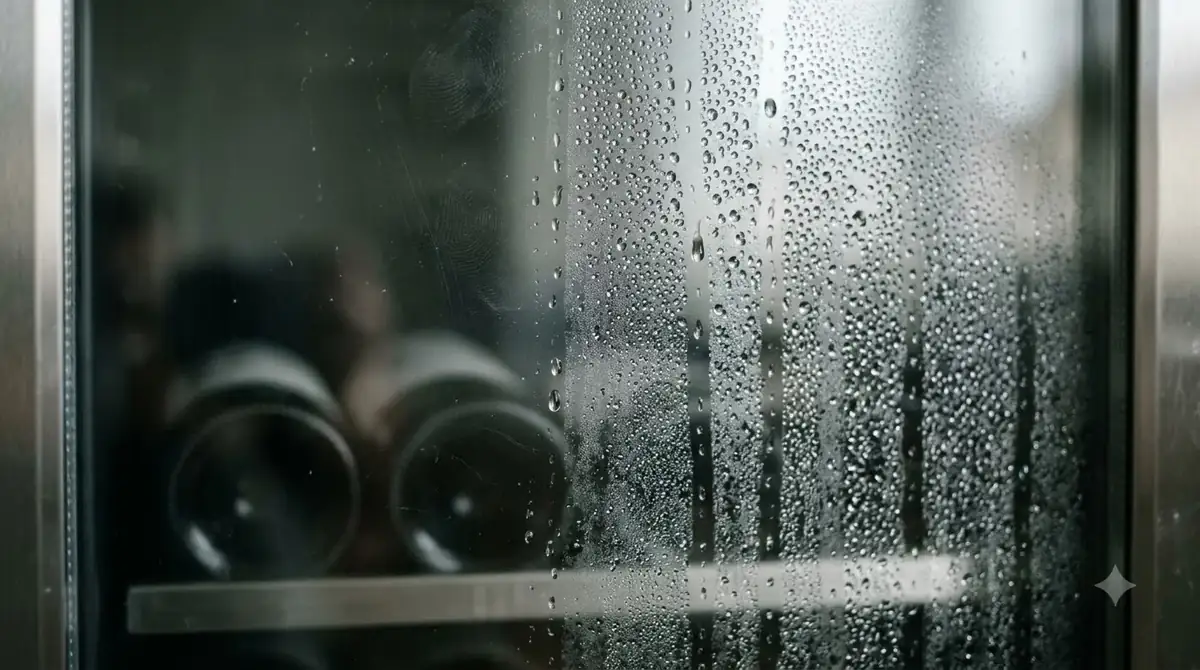
Wine Enthusiast separates short-term storage, defined as less than six months, from longer storage. It recommends a constant 50–59°F for the shorter period and 53–57°F when bottles will remain stored longer. That puts 55°F near the center of both recommendations, making it an easy setting for a single-zone wine refrigerator. Its guidance also applies the same storage temperature to red, white, sparkling, and fortified wines rather than assigning each color a different long-term setting. Read its wine storage temperature advice for the distinction between storage and service.
A target of 55°F is not a command to keep the display locked at precisely that figure every second. Household appliances cycle as they cool, and the temperature can vary slightly in different parts of the cabinet. What matters is that the wine remains in a cool, relatively consistent environment rather than repeatedly warming up and cooling down. A stable setting in the recommended band is generally a better result than frequent manual adjustments in response to every small display change.
There is some variation among credible recommendations. Miele recommends 53–57°F for red and white wine stored together, while Liebherr gives 10–12°C, approximately 50–54°F, as its ideal. The ranges overlap in the low-to-mid 50s, making 55°F a straightforward compromise for a typical home cabinet. Avoid using the temperature of an ordinary food refrigerator as the default for long-term wine storage; chill bottles further shortly before serving.
Storage Temperature Is Different From Serving Temperature
Storage temperature is the environment in which a bottle waits; serving temperature is the temperature at which the wine tastes balanced in the glass. A 55°F storage setting is suitable for a mixed collection, but sparkling wine, light whites, and full-bodied reds are usually served at different temperatures.
Typical serving ranges are 40–50°F for sparkling wine, 45–50°F for light whites and rosé, 50–55°F for fuller whites, 55–60°F for light reds, and 60–65°F for fuller reds. Sweet whites are commonly served at 43–50°F. These are service ranges, not reasons to store every bottle at its own drinking temperature for months.
A Pinot Noir and a Cabernet Sauvignon can both stay at 55°F in storage, even though the Pinot Noir may be served around 55–60°F and the Cabernet closer to 60–65°F. Chill or warm each bottle briefly before pouring rather than setting different long-term temperatures for each grape. The table below summarizes common serving ranges.
| Wine style | Typical storage setting | Typical serving temperature |
|---|---|---|
| Red, white, rosé, or sparkling stored together | About 55°F | Varies by style |
| Sparkling wine | About 55°F | 40–50°F |
| Light white and rosé | About 55°F | 45–50°F |
| Full-bodied white | About 55°F | 50–55°F |
| Light red | About 55°F | 55–60°F |
| Full-bodied red | About 55°F | 60–65°F |
| Sweet white | About 55°F | 43–50°F |
Use the serving bands as starting points. Let a white warm slightly in the glass if its aroma seems muted, or briefly chill a red that feels heavy. Make these small adjustments when opening the bottle instead of changing the storage setting for the entire collection.
Single-Zone and Dual-Zone Wine Fridges
A single-zone wine fridge is usually the simplest choice when the main goal is storing bottles, because one steady setting near 55°F suits a mixed collection. A dual-zone model is useful when you want one compartment for storage and another for bottles that are nearly ready to pour.
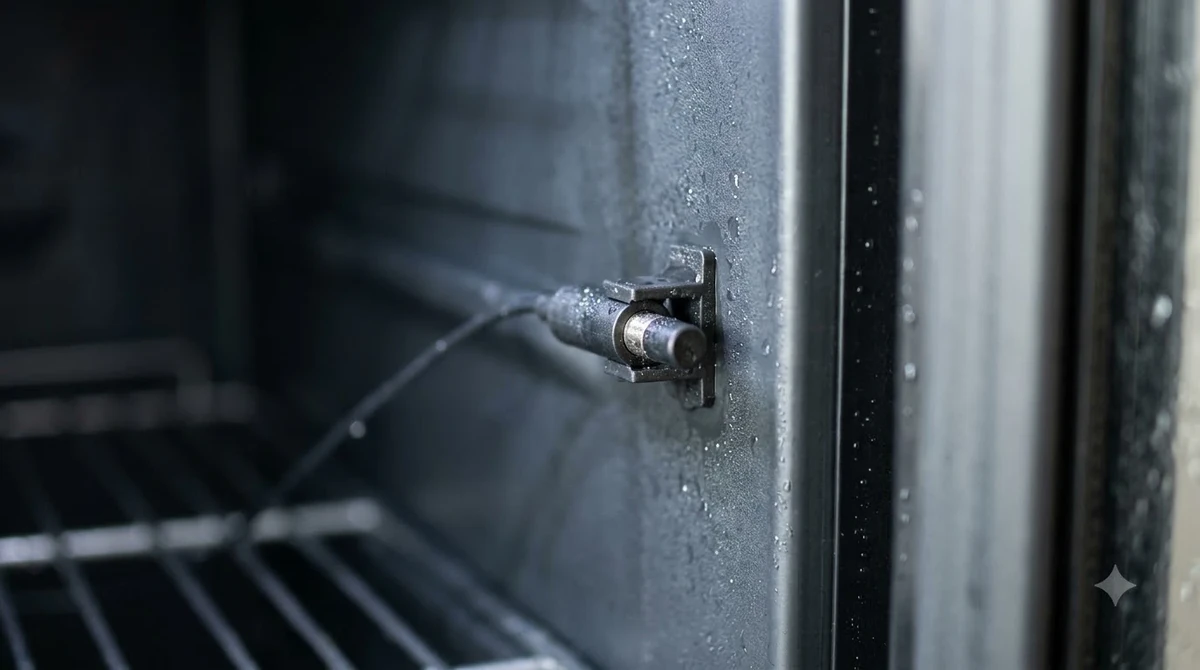
In a single-zone cabinet, set the entire interior near 55°F and store reds, whites, rosé, and sparkling wine together. This works especially well for people who buy bottles for later meals rather than keeping every bottle ready to serve immediately. It also avoids having to decide which zone should hold a bottle that may be opened weeks or months later.
A dual-zone cabinet lets you set two compartments independently. One reasonable arrangement is to keep the longer-term collection around 55°F and use the second zone for short-term chilling: roughly 45–50°F for lighter whites or rosé, or a warmer setting for reds that will be served soon. The exact limits and which compartment runs colder depend on the model, so follow its operating instructions rather than assuming the upper zone is always the colder one.
Some cabinets create a temperature gradient between top and bottom shelves rather than offering two independent controls, so check how the manufacturer describes the zones. For predictable long-term storage, choose a model that maintains one stable temperature throughout. A 20-bottle collection held for future meals may need only one zone; a larger collection with Champagne, Sauvignon Blanc, Chardonnay, Pinot Noir, and Cabernet bottles being prepared for different meals may benefit from separate storage and service areas.
What Happens If a Wine Fridge Is Too Cold or Too Warm?
A wine fridge that runs too warm can accelerate aging, while an excessively cold setting can delay a bottle reaching serving temperature and encourage harmless tartrate crystals. Freezing is the real danger at the cold end: expanding wine can push out a cork or damage the closure.
Warm storage is a bigger concern when it lasts for weeks or months. Miele cautions that temperatures above 71°F can cause wine to mature too quickly and lose aroma development. A cabinet that sits in a hot garage or beside an oven may struggle to hold its set point, so the displayed target alone does not guarantee that the bottles are actually being kept cool.
Low temperatures generally slow maturation rather than instantly ruining wine. Liebherr explains in its wine storage guide that very cold storage can encourage tartrate crystals, which may look like glass shards or sediment but are deposits from wine acids and minerals, not proof that a bottle is spoiled. Freezing is different: expanding wine can push out a cork or cause leakage. Do not use a wine fridge as a freezer or set it extremely low to chill one bottle quickly; chill a bottle needed tonight separately in a regular refrigerator or an ice-water bath.
If a unit routinely drops below its normal range, learn how to recognize a wine fridge too cold before adjusting it blindly. Check whether the problem is a changed setting, a sensor reading, a blocked air outlet, or a control fault. A single unusually cold reading does not prove the wine itself has frozen, but repeated readings well below the intended set point deserve attention.
How to Check the Actual Temperature Inside the Cabinet
The number on the control panel is the set point or the appliance’s sensor reading, depending on the model; it may not describe the temperature beside every bottle. An independent thermometer placed on a middle shelf gives you a useful second reading, especially after installation or a setting change.
Choose the setting, close the door, and allow the cabinet to settle before judging performance. Several room-temperature bottles can take time to cool, so compare readings over several days at the same shelf and roughly the same time instead of reacting to one display change. A second thermometer near the top or bottom can reveal whether the cabinet has a persistent temperature gradient.
Keep the cabinet within its rated capacity: overfilling can restrict circulation, while an almost-empty unit is not usually a reason to lower the setting. Follow the specified clearance around the appliance and its vents; built-in and freestanding models can have different requirements. Avoid a sunny window, hot garage, oven, or radiator. A climate-controlled interior room is generally a better location than a patio or utility space with large temperature swings.
Tip: After changing the set point, keep the door closed and let the cabinet stabilize before making another adjustment. Record the independent thermometer reading for several days; repeated measurements tell you more than a quick glance at the display.
Humidity, Light, Vibration, and Bottle Placement
Temperature is the first priority, but good storage also limits drying, light exposure, odors, and movement. For natural-cork bottles, Liebherr cites 50–80% relative humidity as a useful range. Air that is too dry can contribute to cork drying, while persistent excess moisture can encourage mold and damage labels; many wine fridges do not precisely control humidity.
Store cork-finished bottles on their sides when they will be kept for an extended period. This keeps the wine in contact with the cork and is a traditional way to help prevent the closure from drying. Screw-cap bottles do not need to lie horizontally for cork-moistening reasons, although their position can still be chosen for convenient, secure storage. Keep labels visible when practical so bottles are less likely to be repeatedly handled or moved.
Direct sunlight and ultraviolet exposure can affect wine over time, so avoid a sunny location and use UV-resistant glazing when the door receives bright light. Keep the unit away from equipment that vibrates frequently, and move bottles as little as practical. Also avoid storing wine next to paint, solvents, cleaners, or strong food odors; some models use charcoal filters to reduce unwanted smells.
For a broader reference that combines cellar storage with serving advice, use the site’s Wine Storage & Serving Temps resource. It helps keep the distinction clear: the cabinet provides a stable home for unopened bottles, while the final few degrees are adjusted to the style and occasion when the bottle is opened.
When Temperature Problems Point to a Repair Issue
A wine fridge that cannot hold a stable temperature may have a placement, airflow, door-seal, or mechanical problem. A recurring gap between the set point and the actual cabinet temperature is more meaningful than a brief change after the door has been opened.
Confirm the setting, make sure the door closes fully, inspect the gasket, and clear blocked vents. Check the required ventilation clearance and the room’s operating temperature range. If an error code appears, record it and consult the manual. Compressor and thermoelectric models cycle differently, so a quiet spell alone does not prove a failure; persistent warm readings or repeated freezing after basic checks may require a technician.
For an Allavino cabinet, note the model number and any error indication, then compare its actual temperature with the intended 55°F setting over several days. A unit that cannot reach its setting may need the steps for Allavino wine fridge not cooling; a persistent fault may call for Allavino wine fridge repair. Record the set point, independent readings, room conditions, and unusual sounds so the symptom can be described clearly. Move valuable bottles to another stable, cool location if the appliance repeatedly swings far outside its intended range.
Frequently Asked Questions
Can I store red and white wine at 55°F?
Yes. A steady 55°F is suitable for storing both red and white wines together, along with rosé and sparkling wine. If the control panel uses Celsius, 13°C is the closest whole-degree setting to 55°F.
Is 40°F too cold for a wine fridge?
Forty degrees Fahrenheit is colder than the usual target for long-term storage, though a short-term chilling zone may use temperatures around that level for selected bottles. It equals about 4.4°C, which is close to the temperature of many household food refrigerators rather than a cellar-style wine cabinet.
Should I turn my wine fridge off when it is empty?
There is no reason to maintain a storage temperature when no bottles are inside for an extended period. Before unplugging it, remove the shelves if the manual permits, clean and dry the interior, and leave the door positioned as the manufacturer recommends to limit trapped moisture and odors.
Does a wine fridge need to be set differently for Champagne?
No special long-term setting is needed when Champagne is stored with other wines; about 55°F is suitable. Champagne bottles are often wider than standard Bordeaux bottles, however, so confirm that the shelf spacing can accommodate their shape without forcing the rack.
How long should a wine fridge take to reach its set temperature?
There is no universal cooling time because cabinet size, starting room temperature, bottle load, ventilation, and appliance design all affect the result. Air temperature can change faster than the liquid inside a 750 mL bottle, so the display may reach its target before the wine itself is fully chilled.
For most home collections, a wine fridge set near 55°F provides the right balance for storing different styles together. Keep the temperature steady, confirm the cabinet’s actual conditions, and chill each bottle further only when preparing it to serve. That simple routine protects the collection without making storage more complicated than it needs to be.
More in Storage & Fridge Care
 How Long Can You Store Wine in a Wine Fridge? Protect Bottle QualityUpdated Nov 20, 2026
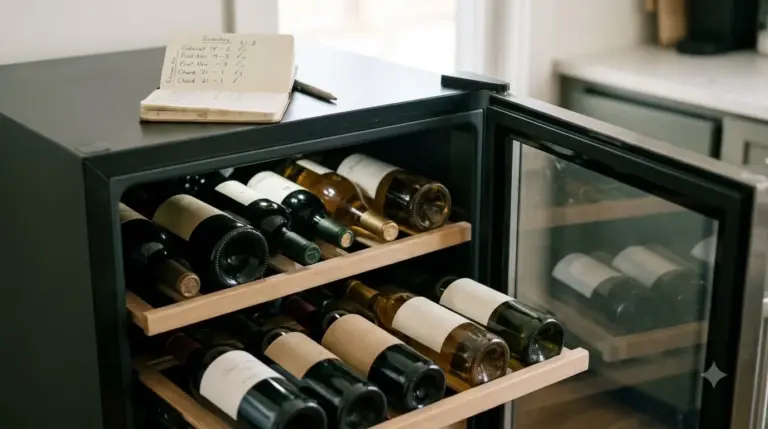 Can You Store Beer in a Wine Fridge? Keep Both Drinks FreshUpdated Nov 20, 2026
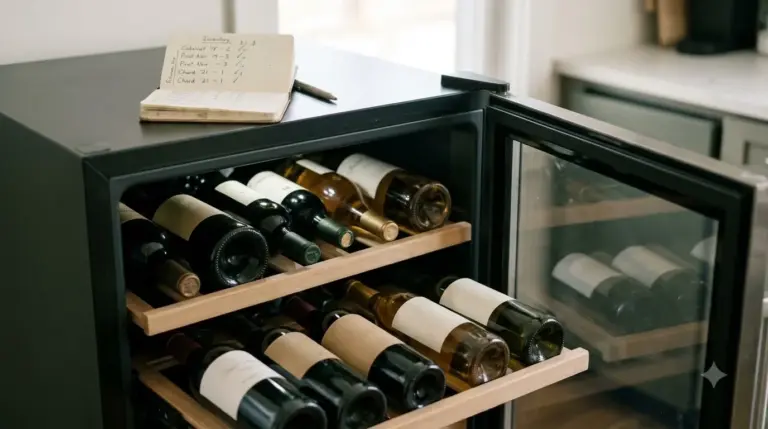 Is It Worth Repairing a Wine Fridge? Spot the Cheap Fixes Before You ReplaceUpdated Nov 20, 2026
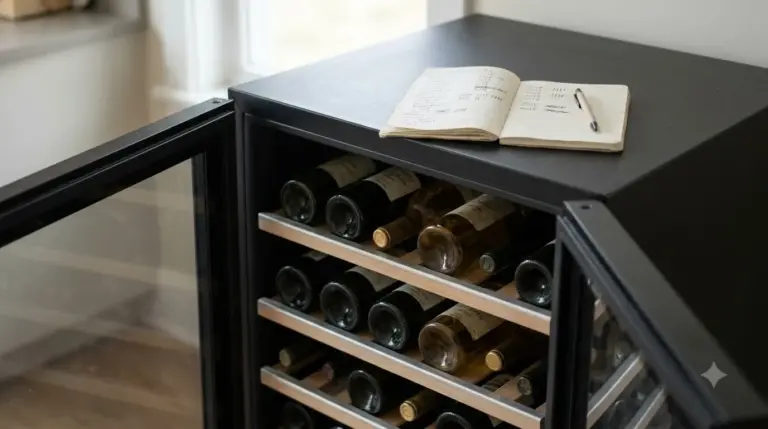 Wine Fridge Condensation: Identify Causes and Fix Moisture ProblemsUpdated Nov 20, 2026
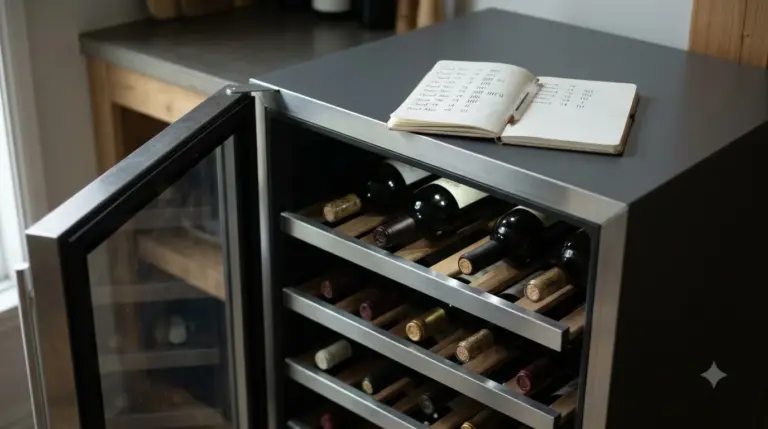 Wine Fridge Too Cold: Protect Your Wine and Fix the TemperatureUpdated Nov 20, 2026
 How to Reset Wine Fridge: Restore Cooling and SettingsUpdated Nov 20, 2026