

We may earn a commission when you buy through links on this page, at no extra cost to you. Learn more.
A wine serving temperature chart shows that sparkling wines are best served at 40–50°F, light whites and rosés at 45–50°F, full-bodied whites at 50–55°F, light reds at 55–60°F, and full-bodied reds at 60–65°F. Sweet wines generally benefit from serving temperatures between 43°F and 50°F. These ranges help preserve freshness, balance acidity, and reveal aromas without allowing alcohol or tannins to dominate. The right temperature depends on the wine’s body, sweetness, structure, and style rather than simply whether it is red or white.
Wine temperature is one of the easiest serving details to overlook, yet a difference of just a few degrees can change the way a bottle smells and tastes. A white wine served too cold can seem muted, while a red wine served too warm can taste heavy and alcoholic. The following chart provides practical starting points for common wine styles, along with instructions for chilling, warming, and maintaining the right temperature throughout a meal.
Wine Serving Temperature Chart for Every Major Style
The most useful starting point is to match the temperature to the wine’s body and structure. Light wines generally benefit from cooler service, while fuller-bodied wines need slightly more warmth to express their aromas and textures.
| Wine style | Serving temperature | Examples |
|---|---|---|
| Sparkling wine | 40–50°F | Champagne, Cava, Prosecco |
| Light, crisp white wine | 45–50°F | Pinot Grigio, Sauvignon Blanc |
| Light-bodied rosé | 45–50°F | Dry Provence-style rosé |
| Fuller-bodied rosé | 48–53°F | Structured rosé wines |
| Sweet white wine | 43–50°F | Moscato, Sauternes |
| Full-bodied white wine | 50–55°F | Oaked Chardonnay, Viognier |
| Skin-contact white wine | 50–55°F | Orange wine, skin-fermented Pinot Gris |
| Light-bodied red wine | 55–60°F | Beaujolais, Gamay, Pinot Noir |
| Medium-bodied red wine | 58–63°F | Chianti, Merlot, Rioja Crianza |
| Full-bodied red wine | 60–65°F | Cabernet Sauvignon, Syrah, Malbec |
| Light fortified wine | 55–60°F | Fino Sherry, tawny Port |
| Fuller fortified wine | 60–66°F | Vintage Port, Madeira |
These are practical serving ranges rather than strict rules. For example, a delicate sparkling wine can benefit from the cooler end of its range, while a vintage Champagne may be more expressive at 45–50°F. Similarly, a delicate Pinot Noir may benefit from 55°F, whereas a more concentrated red may be more expressive closer to 60°F.
The chart also distinguishes between light and full-bodied wines within the same color category. An aromatic Sauvignon Blanc and a rich, oak-aged Chardonnay are both white wines, but they do not need identical serving temperatures. Body, alcohol, acidity, tannin, sweetness, and winemaking choices all influence the ideal starting point.
Why Serving Temperature Changes Wine’s Flavor
Temperature affects how quickly aromatic compounds are released, how acidity feels on the palate, and how prominently alcohol and tannins appear. The goal is to find a temperature that allows the wine’s fruit, structure, and aroma to work together.
When wine is too cold, its aromas become less expressive. A chilled Sauvignon Blanc might still taste refreshing, but its citrus, tropical fruit, and herbal notes can become difficult to recognize. The same effect can make a delicate Champagne seem less complex than it really is. According to WSET, temperatures below 43°F can mask flavors in white, rosé, and sparkling wines. Its practical advice on ideal serving temperatures and wine storage also explains why temperature control matters beyond the moment of pouring.
Warmer temperatures encourage aromatic compounds to escape from the glass. This can help a complex Chardonnay reveal its baked apple, vanilla, and toasted notes. However, excessive warmth can also make alcohol seem more prominent and reduce the impression of freshness. A Cabernet Sauvignon served at 72°F, for example, may feel heavier and less balanced than the same wine served at 62°F.
Temperature also influences the perception of acidity and tannin. Cooler temperatures emphasize acidity, bitterness, and tannin, while warmer conditions tend to soften their apparent impact. This distinction matters when serving a structured red wine such as young Cabernet Sauvignon or Syrah.
Body matters more than color alone
Body describes the weight and texture of wine in the mouth. Light-bodied wines generally have a more delicate structure, while full-bodied wines have greater concentration, texture, or alcohol. These differences explain why a crisp Albariño is normally served colder than an oaked Chardonnay, despite both being white wines.
The same principle applies to reds. Pinot Noir usually has lower to medium tannin and relatively high acidity, making it a good candidate for light chilling. Cabernet Sauvignon has high tannin and a fuller structure, so it generally benefits from a warmer serving temperature.
Tip: If a wine seems muted, let it warm gradually in the glass before deciding that it lacks aroma. If it tastes overly alcoholic or heavy, place the bottle in the refrigerator for a short period and reassess the next pour.
Sparkling Wine and White Wine Serving Temperatures
Sparkling wines and most white wines should be served chilled, but the ideal temperature depends on their style. Champagne and Prosecco generally benefit from 40–50°F, while richer whites such as oaked Chardonnay show more detail around 50–55°F.
Champagne, Prosecco, and Cava
Most sparkling wines taste lively and balanced between 40°F and 50°F. Cooler service helps preserve their freshness and slows the release of carbon dioxide, which can make bubbles seem overly aggressive when the wine is warm.
Champagne and Cava undergo their second fermentation in the bottle, while Prosecco is typically made using the tank method. These production differences influence their textures and aromas, but all three benefit from appropriate chilling. A fresh Prosecco can be served toward 40–45°F, while a complex vintage Champagne may be more expressive around 45–50°F.
For a dinner party, keep sparkling wine in an ice-and-water bucket between pours. This helps maintain a consistent temperature without relying on repeated trips to the refrigerator. A stemmed sparkling wine glass or a white wine glass can also give more room for aromatic development than a narrow flute.
Light and aromatic white wines
Pinot Grigio, Sauvignon Blanc, Riesling, Albariño, and unoaked Chenin Blanc generally benefit from temperatures around 45–50°F. Their freshness and acidity are important parts of their character, and chilling helps keep these features prominent.
Sauvignon Blanc is particularly suited to this range because its citrus, green fruit, and herbal aromas are refreshing when properly chilled. Riesling also benefits from cooler service, especially when its acidity provides a counterbalance to residual sugar. If either wine becomes too cold, however, its aromatic character can become less noticeable.
Full-bodied white wines
Oaked Chardonnay, Viognier, and other richer white wines are generally best served between 50°F and 55°F. This slightly warmer range gives their fuller textures, layered aromas, and oak-derived flavors more room to develop.
A lightly oaked Chardonnay can be served toward 50°F, while a richer white Burgundy may benefit from temperatures closer to 55°F. Serving these wines directly from a very cold refrigerator can suppress their aromas and make their texture seem less generous.
Skin-contact white wines also benefit from avoiding excessive chilling. Their additional texture and tannins can make them feel more similar to light reds than to delicate white wines. A starting temperature around 50–55°F is a useful choice for many examples.
Rosé, Sweet Wine, and Fortified Wine Temperatures
Rosé and sweet wines generally need cooler service to preserve freshness and balance sweetness. Most rosés work well around 45–53°F, while dessert wines such as Sauternes are often served between 43°F and 50°F.
Dry rosé
Light, crisp rosé wines are usually best served at 45–50°F. This temperature emphasizes their fresh red berry, citrus, and floral notes without making their acidity seem too sharp. Fuller-bodied rosés can be served slightly warmer, around 48–53°F.
For example, a delicate Provence rosé is likely to be more refreshing toward the cooler end of the range. A more structured rosé made from Grenache or Syrah may show additional texture and fruit complexity when served closer to 52°F.
Rosé is particularly useful for outdoor meals because it can remain refreshing as the weather warms. An ice bucket can help maintain the bottle’s temperature during a long lunch or dinner.
Sweet white wines
Sweet wines generally benefit from temperatures between 43°F and 50°F. Cooling helps keep sweetness from feeling overwhelming and allows acidity and fruit flavors to remain prominent.
Moscato, late-harvest Riesling, Sauternes, and other dessert wines can all benefit from chilled service. A lighter Moscato may be most refreshing toward 43–45°F, while a richer Sauternes may show greater aromatic detail around 45–50°F.
The sweetness of the food matters as much as the temperature. A dessert wine should generally be at least as sweet as the dessert it accompanies. Otherwise, the wine may taste less fruity and more acidic by comparison. A sweet Riesling, for example, can work well with fruit-based desserts, while Sauternes can complement rich desserts containing apricots or peaches.
Port, Sherry, and Madeira
Fortified wines have different serving requirements depending on their sweetness, age, and style. Delicate tawny Port and fino Sherry are commonly served around 57–60°F, while vintage Port and Madeira can be served closer to 60–66°F.
Fino Sherry benefits from cool service because its dry, savory character is especially refreshing at a lower temperature. Richer Port styles can benefit from slightly warmer service, which gives their dried fruit, spice, and nutty aromas more room to develop.
Madeira is particularly versatile because its styles range from relatively dry to intensely sweet. The serving temperature should reflect the wine’s body and sweetness rather than assuming that every fortified wine belongs in the same category.
Red Wine Serving Temperatures by Body and Tannin
Red wines generally taste best between 55°F and 65°F, depending on their body and tannin. Light reds need more chilling, while full-bodied wines such as Cabernet Sauvignon and Syrah benefit from slightly warmer service.
Light-bodied reds
Pinot Noir, Gamay, Beaujolais, and some lighter Italian reds can be served between 55°F and 60°F. Their fresh fruit, acidity, and relatively moderate tannins make them suitable for a gentle chill.
Beaujolais is especially enjoyable slightly chilled because its bright cherry and raspberry flavors remain refreshing. A lighter Pinot Noir can also benefit from temperatures around 56–58°F, particularly when served alongside roast chicken, mushrooms, or salmon.
Chilling these wines does not mean serving them refrigerator-cold. Excessively low temperatures can make acidity and tannin seem more pronounced while muting the wine’s fruit and aromatic complexity.
Medium-bodied reds
Medium-bodied reds generally work well between 58°F and 63°F. Examples include many Merlot wines, Chianti, Rioja Crianza, and medium-weight Grenache blends.
Merlot usually has softer, more moderate tannins than Cabernet Sauvignon, making it approachable at slightly cooler temperatures. Chianti often has substantial acidity, so serving it around 60°F can help preserve its freshness while allowing cherry, herbal, and savory aromas to emerge.
These wines are useful choices for meals because they can accommodate a broad range of foods. Medium-bodied reds work well with tomato-based pasta, grilled vegetables, roast chicken, and moderately seasoned meat dishes.
Full-bodied reds
Cabernet Sauvignon, Syrah, Malbec, and fuller-bodied Merlot generally benefit from serving temperatures between 60°F and 65°F. This range gives their richer textures and concentrated aromas room to develop without allowing alcohol to become too prominent.
Cabernet Sauvignon has relatively high tannin, so serving it too cold can make its structure seem particularly firm. A temperature around 62–65°F is a useful starting point for a structured Napa Valley Cabernet or a Bordeaux-style blend.
Syrah also benefits from careful temperature control. Its dark fruit, pepper, and savory characteristics are more expressive when the wine is not overly cold, but serving it above 65°F can make its alcohol seem dominant. Malbec generally works well around 60–65°F, especially when paired with grilled beef or lamb.
Why room temperature is misleading
The traditional instruction to serve red wine at room temperature can create confusion. Modern homes are often considerably warmer than the cool rooms historically associated with wine service. WSET identifies approximately 59–64°F as a useful interpretation of room temperature for wine.
A dining room at 72°F or 75°F is therefore usually too warm for most red wines. A short period in the refrigerator can bring a bottle closer to its ideal serving temperature without compromising its character.
How to Chill or Warm Wine Before Serving
The easiest way to reach the correct temperature is to use a refrigerator for gradual cooling and an ice-water bucket when faster chilling is needed. For warming, allow the bottle to sit at room temperature rather than using direct heat.
Refrigerator chilling times
Chilling time depends on the bottle’s starting temperature, refrigerator temperature, and wine volume. The following estimates are practical starting points for a standard 750 ml bottle beginning at approximately 70–72°F.
| Wine style | Approximate refrigerator time | Serving goal |
|---|---|---|
| Sparkling wine | 2–3 hours | 40–50°F |
| Light white wine | 1½–2 hours | 45–50°F |
| Rosé | 1½–2 hours | 45–53°F |
| Full-bodied white | About 1 hour | 50–55°F |
| Light red | 45–60 minutes | 55–60°F |
| Full-bodied red | 20–30 minutes | 60–65°F |
These times are estimates, not guarantees. A bottle stored at 55°F needs less chilling than one kept in a warm kitchen. A thermometer provides a more reliable indication of the wine’s actual temperature than refrigerator timing alone.
Using an ice-water bucket
An ice bucket containing both ice and water is one of the most effective ways to cool a bottle quickly. According to WSET, the bucket should be approximately three-quarters full, using equal quantities of ice and water.
Water surrounds more of the bottle’s surface than ice alone, allowing heat to transfer more efficiently. This makes an ice-water bucket particularly useful when Champagne, Prosecco, or white wine needs to be chilled shortly before guests arrive.
Place the bottle in the mixture so that most of its body is surrounded by cold water. Rotate it occasionally if necessary, and monitor the temperature rather than assuming a fixed chilling time will work for every bottle.
Warming wine without damaging it
If a red wine is too cold, allow it to warm gradually at room temperature. Holding the bowl of a wine glass briefly can also transfer enough warmth to make a small pour more expressive.
Avoid radiators, hot water baths, direct sunlight, or other sources of sudden heat. Rapid temperature changes can damage wine, and overheating can make its aromas and flavors less balanced.
In a warm climate, the opposite problem is more common. A bottle of red wine stored in a warm dining room may need a short refrigerator rest before serving. This is particularly useful for full-bodied reds that otherwise might taste overly alcoholic.
Serving Temperature Versus Long-Term Wine Storage
Serving temperature and storage temperature are different measurements with different purposes. A bottle may be stored around 55°F for consistency and then chilled or warmed before serving to reach the appropriate temperature for its style.
For long-term storage, a stable environment around 55°F is a useful target. WSET identifies 50–59°F as an appropriate storage range and emphasizes that consistency is important. Repeated temperature fluctuations can be more problematic than a small, stable variation from the target.
Serving temperatures are much more varied. Sparkling wine may be poured around 43°F, while a structured Cabernet Sauvignon may be served around 63°F. Neither bottle should necessarily be stored permanently at its serving temperature.
Maintaining stable storage conditions
Wine storage should protect bottles from temperature swings, direct sunlight, and excessive vibration. A dark, cool location is generally preferable to a kitchen cabinet beside an oven, where daily cooking can produce repeated temperature changes.
Cork-sealed bottles are generally stored horizontally so that the cork remains in contact with the wine. Screw-cap bottles can be stored vertically because their closures do not depend on cork moisture to maintain a seal.
Humidity also deserves attention, particularly when storing wine for extended periods. The right conditions can help protect cork closures and reduce the risk of premature deterioration. Read more about wine storage humidity and its role in maintaining a suitable storage environment.
Choosing and maintaining a wine refrigerator
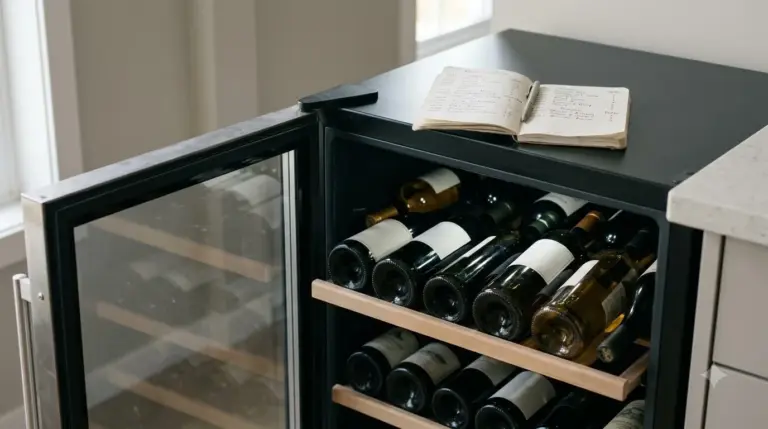
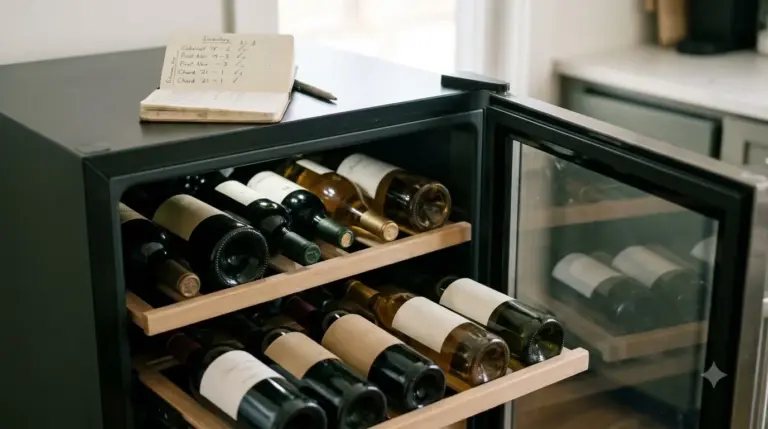
A wine refrigerator can provide a more consistent environment than an ordinary household refrigerator. Some models offer separate temperature zones, which allow sparkling and white wines to be kept cooler than reds before service.
However, storage appliances are not maintenance-free. If a unit stops reaching its selected temperature, check the door seal, ventilation clearance, thermostat setting, and surrounding room temperature. Persistent cooling problems may require professional attention. The guide to Allavino wine fridge not cooling covers troubleshooting considerations for a wine refrigerator that is not maintaining its temperature.
For additional advice on bottle placement, storage conditions, and serving preparation, explore how to store wine at home. Proper storage makes it easier to bring each bottle to the right temperature when it is time to open it.
Serving and storage are separate parts of wine care, and understanding both helps preserve the character of a bottle. For more practical advice, visit the Wine Storage & Serving Temps learning section.
Frequently Asked Questions
Should wine be served at the same temperature throughout the year?
No. Seasonal conditions can change how quickly a bottle warms after pouring. During a summer meal outdoors, sparkling wine may need more frequent attention in an ice bucket, while a red wine may need additional chilling before it reaches the table. The wine’s style should determine its target temperature rather than the season alone.
Does the shape of a wine glass affect serving temperature?
Yes. A glass with a wider bowl exposes more wine to air, while a narrow opening can concentrate aromas. A long stem also allows someone to hold the glass without transferring as much warmth from their hand to the wine. These differences can influence how quickly a pour warms and how its aromas are perceived.
What temperature should wine be when using a decanter?
Decanting does not establish a separate universal serving temperature. A young, full-bodied red can be decanted for approximately 30–60 minutes and served around 60–65°F. The decanter’s material and the room temperature can affect how quickly the wine changes temperature, so monitor the wine rather than assuming that aeration will keep it cool.
Can wine freeze in a household freezer?
Yes. Wine can begin freezing when left in a household freezer long enough, although the exact freezing point depends on its alcohol and sugar content. Expansion during freezing can push out a cork or damage the closure. A refrigerator or ice-water bucket provides more controlled cooling without relying on prolonged freezer exposure.
Does an opened bottle need a different serving temperature?
The ideal serving range for the wine itself remains the same after opening. However, opened still wine generally keeps better in the refrigerator, including red wine, and can be brought back toward its preferred serving temperature before the next pour. Sparkling wine benefits from a suitable sparkling-wine stopper and refrigeration to help retain its carbonation.
The best way to serve wine is to begin with the appropriate temperature range, then make small adjustments as the bottle and glass warm. Keep sparkling and crisp whites cool, give richer whites enough warmth to reveal their aromas, and serve reds below typical household room temperature. With a thermometer, an ice bucket, and a little preparation, you can make each bottle more expressive and enjoyable.
More in Storage & Fridge Care
 How Long Can You Store Wine in a Wine Fridge? Protect Bottle QualityUpdated Nov 20, 2026
 Can You Store Beer in a Wine Fridge? Keep Both Drinks FreshUpdated Nov 20, 2026
 Is It Worth Repairing a Wine Fridge? Spot the Cheap Fixes Before You ReplaceUpdated Nov 20, 2026
 Wine Fridge Condensation: Identify Causes and Fix Moisture ProblemsUpdated Nov 20, 2026
 Wine Fridge Too Cold: Protect Your Wine and Fix the TemperatureUpdated Nov 20, 2026
 How to Reset Wine Fridge: Restore Cooling and SettingsUpdated Nov 20, 2026