

We may earn a commission when you buy through links on this page, at no extra cost to you. Learn more.
Calories in pinot grigio depend mostly on its alcohol content and how much residual sugar is left after fermentation. A typical dry pinot grigio sits in the lower-alcohol range of table wine, while sweeter or richer styles carry more calories per glass. Because the calorie count moves with the bottle, a quick estimate based on the style on the label is usually more useful than a single fixed number.
Pinot grigio is one of the most common white wines on American restaurant lists, and many people who track their intake want a rough idea of what a glass adds up to. This guide explains where those calories come from, how the style of the wine changes the count, and how to make a sensible estimate without a lab test.
Where the calories in wine come from
Wine contains calories from two main sources: alcohol and residual sugar. Alcohol provides most of the energy in a dry wine, and sugar adds more when some of it is left in the bottle instead of being fermented into alcohol. Protein and fat are negligible in wine, so the calorie question is really about alcohol strength and sweetness.
This is why two white wines of the same serving size can differ. A higher-alcohol wine packs more energy into the same glass, and a wine with noticeable sweetness adds to that total. Acidity does not add calories, but it can make a wine taste drier even when some sugar is present.

How the style of pinot grigio changes the count
Pinot grigio is grown in several regions, and the wines differ in body. Wine Folly’s pinot grigio and pinot gris guide lists the grape at 11.5 to 13.5 percent alcohol by volume and describes most Italian versions as totally dry, lean, and high in acidity. Those lighter styles generally sit at the lower end of the calorie range for white wine.
Richer versions can carry more energy. The same guide notes that Alto Adige and Friuli examples can be fuller-bodied, and that wines from Alsace, where the grape is called pinot gris, tend to be richer. A fuller body usually reflects riper fruit and sometimes higher alcohol, and both of those push the calorie count up. Late-harvest or sweeter bottles add still more.
Climate and harvest timing also play a part. Grapes picked later in the season tend to build more sugar, and a warmer site can push alcohol higher. Cooler vineyards usually yield lighter, more acidic wines, which is why many dry Italian bottles feel so crisp. Because these choices vary by producer and vintage, two bottles from the same region can still differ.
When you check a label, look at the alcohol percentage first. It is the single most useful clue for estimating energy, and it is printed on most bottles sold in the United States.
| Factor | Effect on calories | What to look for |
|---|---|---|
| Alcohol by volume | Higher ABV means more calories per glass | Label percentage |
| Residual sugar | Sweeter wines add calories | Words like off-dry, late harvest, or sweet on the label |
| Style and body | Fuller wines usually carry more energy | Region and producer description |
| Serving size | The biggest practical variable | Measure the pour, not the bottle |
How to estimate a glass of pinot grigio
The most reliable way to estimate is to start with the label’s alcohol percentage and the size of your pour.
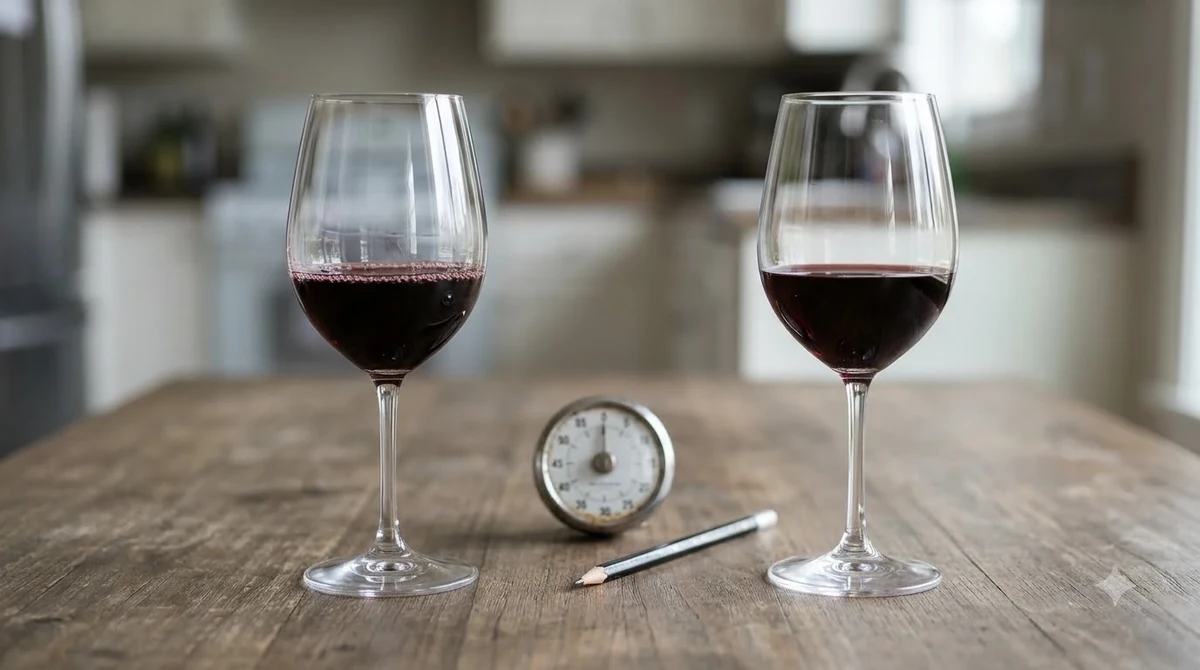
A simple habit helps here. Keep a small measuring cup near the wine, pour one standard glass, and note how it looks at the rim. After a few days, you will recognize that level by eye, and your estimates will improve without any extra work. Standard wine-glass pours are often larger than people expect, and a generous glass in a restaurant can be well above a measured serving. Measuring with a jigger or a marked glass for a week gives you a far better sense of your real intake than any rule of thumb.
Estimating a glass in a restaurant is harder. Pours are not standardized, and a server may fill the glass well above a standard measure. If you want a closer estimate, ask for the wine by the glass size on the menu, or compare the pour against a measured glass you have at home. That one check often tells you more than any table.
If the bottle is dry and the label gives a lower alcohol percentage, the glass will usually land near the lighter end of the range. If the label suggests a richer style or a higher alcohol level, plan for more. Nutrition databases list white wine in general, and they can be used for a broad estimate when a specific bottle is unknown.
Tip: Pour a measured glass at home and compare it with the glass you usually get at a restaurant. The gap is often where the surprise is.
Calories compared with other white wines
Pinot grigio sits near the lighter end of the white wine range because of its typically dry, crisp style. Sweeter whites, dessert wines, and richer oaked styles usually have more calories per glass. For a broader comparison across white wine styles, see the calories in white wine guide, which covers how the numbers shift from one style to the next.
Mixed drinks deserve a separate note. A pinot grigio spritz, made with a splash of soda or sparkling water, is usually lower in calories than a glass of wine of the same volume, but adding fruit juice, syrup, or a sweet liqueur raises the count quickly. The same logic applies to sangria, where the fruit and sugar can add more energy than the wine itself. Checking the recipe matters as much as checking the bottle.
Context also matters. A glass of pinot grigio with a meal adds to the total energy of that meal, while the same glass enjoyed slowly before dinner is a different choice. Many people find it easier to plan around a wine they already know, so once you have measured your usual pour, you can compare it to other drinks on your list with much more confidence.
Many shoppers also want to know how pinot grigio compares with pinot gris. Because they are the same grape, the difference lies in style and sweetness rather than in the grape itself, and the same logic applies to both. The pinot gris calorie guide looks at that difference more closely.
Frequently Asked Questions
Is pinot grigio lower in calories than other white wines?
Dry, lighter-bodied pinot grigio usually sits toward the lower end of the white wine range. Sweeter or fuller styles can be higher, so the bottle itself matters.
What affects the calorie count the most?
Alcohol content and residual sugar have the biggest effect. Serving size matters just as much, since a large pour adds up quickly.
Does dry pinot grigio have sugar?
Dry pinot grigio has little or no residual sugar, which keeps its calories lower. Acidity can make a wine taste dry even when a small amount of sugar remains.
How can I estimate calories in a glass at home?
Check the alcohol percentage on the label and measure your pour. Comparing that with a general white wine entry in a nutrition database gives a reasonable estimate.
For most people, the easiest habit is to read the label, note the alcohol and style, and measure the glass. That gives a clear picture without needing an exact figure for every bottle, and it keeps the estimate useful whenever you order or pour.
More in Wine Types & Grapes
 Zinfandel Sugar Content: Dry Red vs. White Zinfandel GramsUpdated Nov 21, 2026
 Best Zinfandel Substitute Options for Sipping and CookingUpdated Nov 21, 2026
 Zweigelt Food Pairing: Best Dishes, Cheeses, and Serving TipsUpdated Nov 21, 2026
 Zinfandel Tannins Explained: How Structure Shapes Every BottleUpdated Nov 21, 2026
 Zinfandel Sweetness Level: Dry Red vs. Sweet White Zin ExplainedUpdated Nov 21, 2026
 Xinomavro Food Pairing: Best Dishes, Styles, and Serving TipsUpdated Nov 21, 2026