

We may earn a commission when you buy through links on this page, at no extra cost to you. Learn more.
Barolo wine is a full-bodied red made only from Nebbiolo grapes in the Langhe hills of Piedmont, in northern Italy. It is a DOCG wine, Italy’s highest classification, and the rules require at least 36 months of aging after harvest, with at least 18 months in wood. Young Barolo is firm and tannic, and it is widely regarded as one of Italy’s great red wines.
This guide explains what Barolo wine is, what the legal rules mean when you read a label, how the wine tastes and ages, and how to serve and pair it. If you are new to Italian reds, Barolo is a strong example of what a single grape can do in one specific place, and it rewards patience in the cellar as much as attention at the table.
What Barolo wine is
Barolo is produced in the Langhe hills, southwest of the city of Alba in the province of Cuneo. The core communes include Barolo, Castiglione Falletto, Serralunga d’Alba, La Morra, and Monforte d’Alba. Each village produces wine with a slightly different character, so the same grape can taste distinct depending on where the vines grow. The Barolo reference entry gives the history and commune list in more detail.
The wine is made from Nebbiolo, a grape that is grown mostly in Piedmont. According to Wine Folly’s Nebbiolo guide, the variety is bone-dry with high tannins and medium-high acidity, and its alcohol usually sits between 13.5 and 15 percent. Under the DOCG rules, Barolo must be 100 percent Nebbiolo, so there is no blending with other grapes. That single-variety rule is one reason the wine is so closely tied to the place it comes from. The DOCG status dates to 1980, which put the appellation among Italy’s most protected.
What the label rules mean
Barolo has some of the strictest production rules in Italian wine, and those rules show up in the way bottles are aged before release. Knowing them helps you judge what you are buying, especially if a bottle looks very young or very old.
| Requirement | What the rule says |
|---|---|
| Grape | 100 percent Nebbiolo |
| Minimum aging after harvest | At least 36 months, with at least 18 months in wood |
| Riserva | Requires five years of aging |
| Minimum alcohol | 13 percent ABV, and most bottles are above 15 percent |
Because the aging period is long, a Barolo on store shelves has usually been resting for several years already. That makes Barolo one of the few reds where a bottle that looks mature may be exactly what you want. The label tells you the vintage, which is the most useful clue about how much time the wine has spent in the cellar.
How Barolo tastes and ages
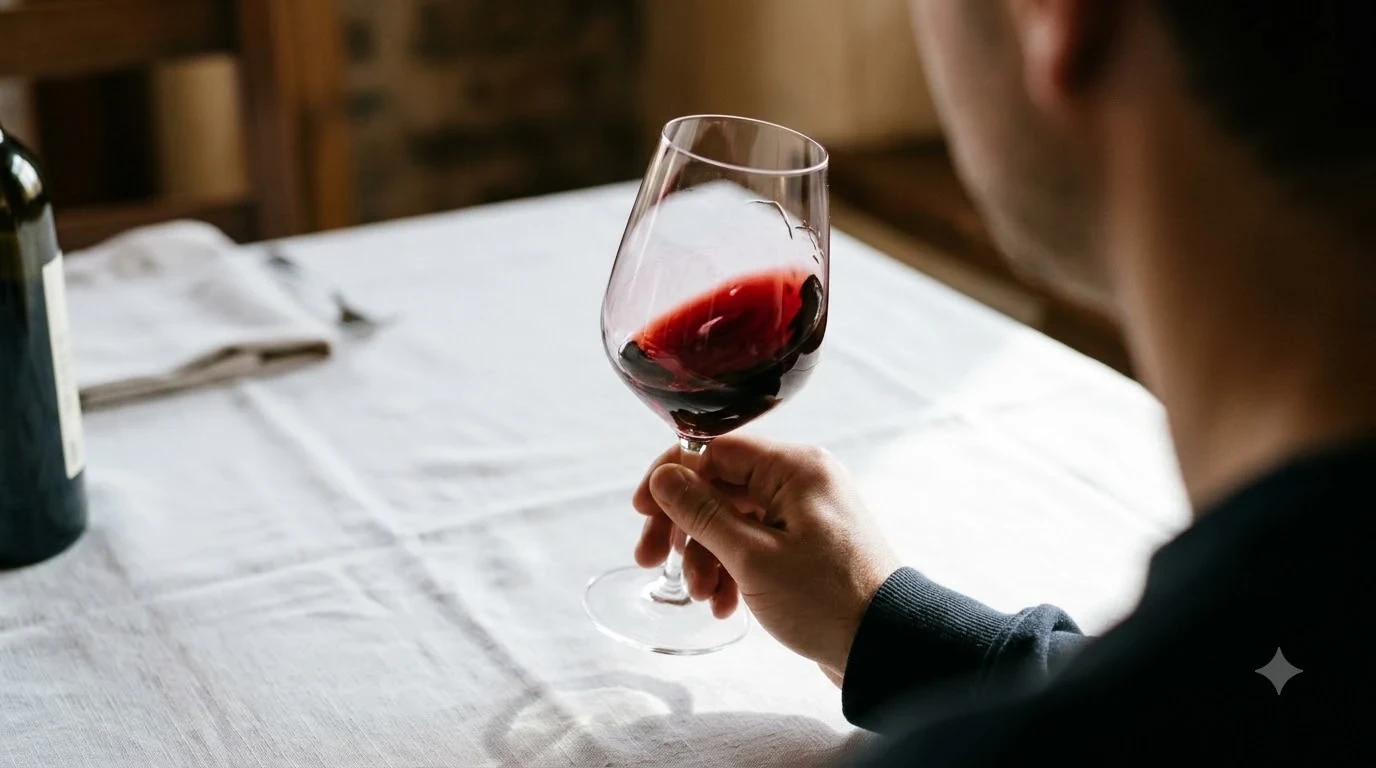
Barolo is full-bodied with pronounced tannins and high acidity. When young, the wine can feel closed and austere, with a firm grip that needs time to soften. Aromas often include tar and roses, and the color runs from ruby or garnet when young to brick and orange as it matures.
On the palate, the grape usually shows cherry and rose, with leather, anise, and a clay-like earthiness as the wine develops. Those notes are the reason many tasters describe Barolo as perfumed even when the structure is still firm. Pay attention to the balance between fruit and tannin on a young bottle, because a wine with bright cherry and a long finish usually has more room to age than one that tastes mostly of wood.
Its reputation rests on aging. A well-made Barolo can develop complex, savory notes over many years, and the structure that makes it difficult in its youth becomes the backbone of a mature bottle. If you prefer fruit-forward, soft reds, a young Barolo may surprise you, so decant it, let it breathe, and give it a meal to work with.
A short history of Barolo
Barolo was once believed to be sweet. Until the middle of the nineteenth century, the wine was often not fully dry, and credit for making it dry has traditionally gone to Camillo Benso, Conte di Cavour, and the French enologist Louis Oudart. Kerin O’Keefe’s research instead credits Paolo Francesco Staglieno, whose 1835 winemaking manual promoted dry fermentation.
The region went through a famous dispute in the 1970s and 1980s. “Modernist” producers used shorter maceration and new oak, while “traditionalists” held to longer maceration and large old botti. The argument, often called the Barolo wars, shaped how many producers make the wine today, and most bottles now reflect a blend of both approaches.
How to serve and pair Barolo
Serve Barolo a little below room temperature so its aromas stay clear and its tannins do not feel heavy. Wine Folly suggests 55 to 60 degrees Fahrenheit (12 to 15 degrees Celsius) for Nebbiolo, which is cool enough to keep the perfume lifted without making the wine feel stiff. Young bottles benefit from decanting, which softens the tannin and opens the fruit and floral notes. Older bottles often need less air and more care, since sediment and fragile structure can be affected by vigorous handling.
The classic pairing is rich, savory food. Braised meats, roasted game, and dishes built on mushrooms or truffle complement the wine’s structure. Aged hard cheeses also work well, since their salt and texture balance the tannin. Keep the portions generous, because a big red needs food that can stand up to it.
How to choose a Barolo
Start with the vintage and the producer. A bottle from a recent year will be firmer and need more time, while an older bottle may be ready to drink. Check whether the label says Riserva, which signals the longer five-year aging requirement. Ask the shop or sommelier which bottles are ready now and which will reward a few more years in the cellar. Compare two or three producers from the same vintage if you can. Barolo styles differ quite a bit between traditional and modern approaches, and a side-by-side tasting is the fastest way to learn which style you prefer. Read the producer’s own technical sheet when you can, since it often explains the vineyard site and the time spent in oak. A clear note on the vineyard or commune is a good sign that the bottle reflects a specific place, which is what most collectors look for in Barolo. Keep a short note on each bottle, including the vintage, the producer, and how the wine tasted on the day, so your next purchase is easier to judge.
If you want to compare Barolo with another structured red, our Cabernet Sauvignon wine guide covers a different style built on a different grape. For a broader look at how Italian and other European reds differ, the wine by type section is a useful reference.
Frequently Asked Questions
Is Barolo made from more than one grape?
No. Under the DOCG rules, Barolo must be 100 percent Nebbiolo. Blending with other grapes is not allowed for this wine.
How long should I age a Barolo?
The law already requires at least 36 months of aging after harvest before release, and Riserva requires five years. Many producers recommend keeping bottles longer, but the right window depends on the vintage and producer.
Is Barolo a good first Italian red?
It can be, but it is quite structured. Beginners often enjoy it more with food, and a simpler Italian red may feel more approachable on its own.
What does Barolo taste like?
Barolo is known for tar and rose aromas, firm tannins, and high acidity. As it ages, the flavors become more savory and complex, and the color shifts toward brick and orange.
Barolo wine rewards both study and patience. Read the label, match the bottle to the meal, and give young wines time to open. The more you learn about the village and vintage, the more each glass tells you about the hills it came from. For a broader look at the grapes behind Italian reds, see moscato wine to compare a very different style from the same country.
More in Wine Types & Grapes
 Zinfandel Sugar Content: Dry Red vs. White Zinfandel GramsUpdated Nov 21, 2026
 Best Zinfandel Substitute Options for Sipping and CookingUpdated Nov 21, 2026
 Zweigelt Food Pairing: Best Dishes, Cheeses, and Serving TipsUpdated Nov 21, 2026
 Zinfandel Tannins Explained: How Structure Shapes Every BottleUpdated Nov 21, 2026
 Zinfandel Sweetness Level: Dry Red vs. Sweet White Zin ExplainedUpdated Nov 21, 2026
 Xinomavro Food Pairing: Best Dishes, Styles, and Serving TipsUpdated Nov 21, 2026