

We may earn a commission when you buy through links on this page, at no extra cost to you. Learn more.
A wine enthusiast wine fridge not cooling usually has one of a few fixable causes: no power, a setting or showroom mode, a blocked front grille, a dusty condenser, a worn door seal, or a room that is too warm for the unit. Check those in that order before assuming the sealed refrigeration system has failed. Most of the checks take only minutes, and several cost nothing. A technician becomes the right call only when the cabinet still stays warm after every item has been ruled out.
Opening the door to find bottles sitting at 65°F when they should rest near 55°F is stressful, especially with a collection you care about. The good news is that most cooling complaints trace back to a short list of causes, and you can check each one yourself. This guide walks through those checks in a practical order, explains which temperatures to aim for, and shows when a warm cabinet points to a repair instead of a quick adjustment. It also covers the habits that keep the problem from coming back.
Confirm Power, Display and Settings First
These basic checks catch a surprising number of failures, and they take only a few minutes. Start here before touching any internal part.
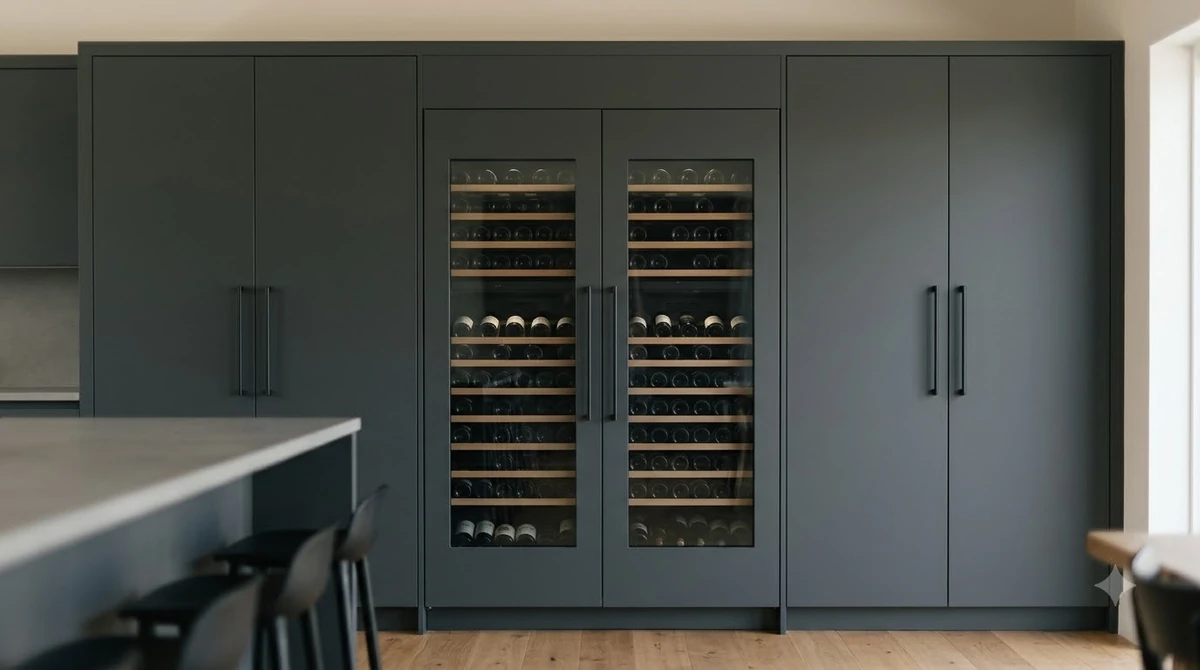
Begin with the plug. Make sure it is fully seated in a working outlet, and test the outlet with another device if you are unsure. Then look at the breaker panel, because a tripped breaker can cut power while the display stays dark or flickers. Marvel’s guide calls for a grounded 115-volt, 15-amp dedicated circuit that is not shared with other appliances, and it warns against extension cords, which can be hazardous and can degrade performance. A wine fridge sharing a kitchen circuit with a microwave or coffee maker can trip the breaker repeatedly. If the controls look unfamiliar, the allavino wine fridge not cooling guide is a useful place to compare control layouts.
If the display is lit but the cabinet stays warm, look for a showroom or demo mode. Some units ship with it enabled, which keeps the lights and display running while the cooling stays off. U-Line’s use and care guidance for its 2000 Series lists “Digital Display Functions, But Unit Does Not Cool” as a symptom and makes checking for showroom mode the first remedy. On a dual-zone unit, confirm which zone you are reading, because each zone holds its own setting and it is easy to read the wrong number.
Next, review the set point. Wine fridges respond slowly, so change the temperature one step at a time and give the unit a full day before judging the result. Marvel notes that the time needed to reach a set point depends on ambient temperature, the temperature of the bottles you load, and how often the door opens. The number on the display reflects the actual inside temperature, so if it differs from your target, the cabinet is still moving toward it. Resist the urge to keep adjusting it every hour.
The Right Temperature for Storing Wine
Knowing the target range tells you whether the cabinet is failing or simply running a few degrees warm. The figures below come from wine storage guidance and manufacturer recommendations.
For storage under six months, Wine Enthusiast’s storage temperature guide recommends a constant 50 to 59°F, which avoids premature aging and agitation. For longer holding, the same guidance suggests a slightly cooler 53 to 57°F. It also makes a point that matters for a mixed collection: all wine should be stored at one temperature, whether white, red, sparkling or fortified. Serving temperatures are a separate matter, and you can handle them by moving a bottle out of storage shortly before you open it.
| Situation | Target temperature | Notes |
|---|---|---|
| Short-term storage (under six months) | 50 to 59°F | A constant temperature avoids premature aging |
| Long-term storage (six months or more) | 53 to 57°F | A slightly cooler setting suits extended aging |
| Typical wine fridge range | 40 to 65°F | Below 40°F is too cold for most wines |
| Marvel long-term red and white target | 55°F (13°C) | Manufacturer’s stated ideal |
| Marvel dual-zone wine setting | 38 to 65°F per zone | The lower zone cannot be set colder than the upper zone |
Serving temperatures show where storage ends and service begins. Full reds are best around 60 to 65°F, light reds around 55 to 60°F, full whites around 50 to 55°F, and sweet whites around 43 to 50°F. Sparkling wine belongs at 40 to 50°F. A cabinet held at 55°F is a sensible middle ground for a mixed collection, with each bottle moved to its service temperature as you open it.
Tip: Place a thermometer in a glass of water on a middle shelf and leave it for a few hours before judging the temperature. Air near the door swings the moment you open it, while water gives a steadier reading of what the bottles actually experience.
Room Temperature and Placement Problems
A wine fridge can only pull its cabinet so far below the room around it, so placement often explains a unit that never quite gets cold. This is one of the easiest causes to overlook.
Marvel recommends an installation location with a temperature range of 55 to 100°F (13 to 38°C), out of direct sunlight and away from heat sources such as ovens, dishwashers and heating ducts. A room that drops below that range in winter or climbs above it in summer can leave the unit running longer than it should or missing its set point. Wine Enthusiast advises avoiding non-air-conditioned garages or patios in hot climates, and it recommends a space with fairly constant ambient temperature, because large swings put extra stress on the appliance. A sunny corner, a spot beside the oven, or a garage in August can be the whole problem.
The type of cooler matters here. Wine Enthusiast notes that compressor coolers can get cooler in warmer climates, at 80°F and above, and that they are the more popular option. Thermoelectric coolers use heating plates instead of refrigerant, run very quietly, and can only pull the cabinet a limited amount below room temperature. Haier’s figures for one thermoelectric model, as summarized in a retailer’s troubleshooting checklist, show the lowest reading at 50 to 52°F in a 77°F room. A small thermoelectric cooler in a warm kitchen can seem to fail when it is simply working at its limit. If you own a Haier unit, the haier wine fridge not cooling page covers brand-specific steps.
Finally, check the surroundings. Marvel says adjacent cabinets and countertops can be installed around the unit as long as the front grille stays unobstructed. Look for a trim panel, drawer or gap that blocks the vent. If you have just moved the unit, give it a day to settle, because the cabinet needs time to adjust to its new room.
Clean the Front Grille and Condenser Coils
Dust and blocked airflow are among the most common reasons a healthy compressor cabinet stops keeping up, and both are fully within your control. Cleaning takes a vacuum, a soft brush and a few minutes.
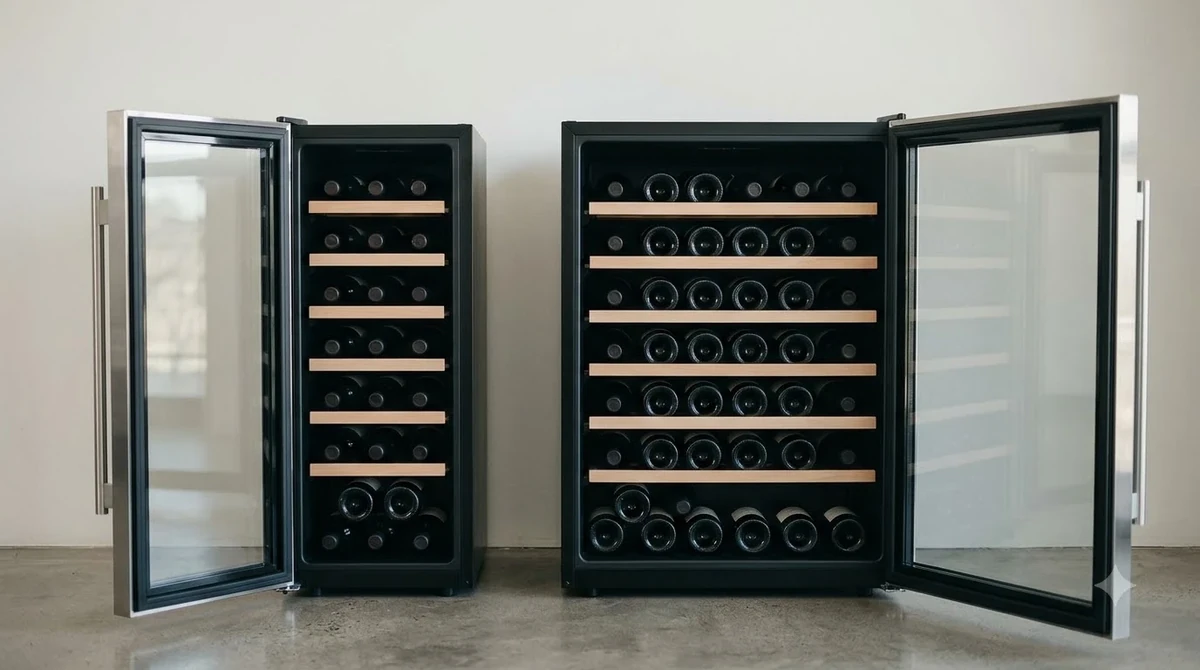
The front grille
The openings in the front grille let air flow through the condenser heat exchanger. When that airflow is restricted, the unit uses more energy and loses cooling capacity. Marvel’s getting-started guide asks owners to keep the area beneath the door open, clean and clear of obstructions, and to brush or vacuum lint and dirt from the grille at least once or twice a year. The same guide advises against custom-made grilles, since they can restrict airflow. Before you clean anything, disconnect the unit from power, and take care when sweeping or vacuuming near the front, because the grille can be damaged.
The condenser coils
The condenser sits at the back or bottom of the cabinet and releases heat from the refrigeration system, and dust builds up on it over time. Marvel suggests cleaning about every six months, while Empava’s manual, as summarized in the same checklist, recommends twice a year. A dusty condenser cannot shed heat, so the compressor runs longer and the cabinet cools less. Remove the grille or access panel as the manual describes, then vacuum or gently brush the coil without applying cleaning products to it. Reconnect the power once the unit is fully reassembled.
After cleaning, listen to the fan for a minute. Air moving through the condenser is part of normal operation, and Marvel lists it among the normal sounds. You are looking for a fan that turns freely and runs quietly, without rattling or grinding.
Door Seals, Loading and Interior Airflow
Cold air escapes through a tired gasket faster than most people notice, and overloading or frequent door openings keep the compressor busy around the clock. The habits and parts covered here control how much cold stays inside.
Inspect the door gasket for tears, flattened sections and sticky residue. A seal that no longer closes tightly lets warm air in every time the door opens, and the unit has to work harder to recover. Look for anything that stops the door from closing fully, such as a bottle, rack or case pressing against the frame. A cabinet that sits out of level can also let the door drift open. Marvel’s guide says to set the front and rear leveling legs so the unit sits firmly and level from side to side and front to back, and it recommends a second person’s help when you tilt the appliance to reach the front legs.
Loading makes a difference too. Marvel recommends letting hot items reach room temperature before placing them in the unit, and it advises minimizing door openings for the next 12 hours after loading large quantities of warm contents. A relatively full compartment needs less run time than an empty one, but overstuffing can block the door. Wine Enthusiast warns that overfilled wine refrigerators cannot maintain a constant ideal temperature, so leave room for air to circulate and keep the door path clear.
Some units warn you about the door and temperature on their own. On certain Marvel dual-zone models, a tone sounds if the door has been open more than 30 minutes, and the display shows HH or LL when the temperature stays above or below the setting for an extended period, which is a cue to contact service. Light adds heat as well. U-Line’s guidance notes that leaving the interior light on adds heat to the cabinet, so if your model lets you control it, switch the light off when you are not reaching in.
When Frost, Fans or Noise Point to a Repair
Some frost and fan noise is normal, but a silent fan or heavy buildup means it is time to stop troubleshooting and call for help. Knowing the difference saves time and keeps a small problem from becoming a bigger one.
A light frost on the back wall that appears and disappears is normal, and U-Line says it melts during each off cycle. If frost builds to 1/4 inch or more, the manufacturer describes a manual defrost: disconnect power, remove the bottles, prop the door open about 2 inches, and let the ice melt. Then clean, dry and reconnect the unit. Do not use sharp tools to speed things up. Marvel repeats that warning and notes that its units contain R600a, a flammable hydrocarbon refrigerant, so the sealed system should never be opened or damaged. Heavy frost usually traces back to the door seal, so return to the earlier section if you see it.
Fan trouble calls for a different approach. If the condenser fan has stopped or sounds rough, check the grille for dust or debris and clear any obstruction first. If the fan stays silent or keeps rattling, the motor may have failed. Fan motors are wired parts, so use a manufacturer-approved replacement and follow the maker’s instructions rather than improvising. Running a unit with a dead fan puts the compressor under heat stress, so avoid leaving it in that state.
Once power, settings, seal, airflow, room temperature and the condenser all check out and the cabinet still stays warm, the problem is probably inside the sealed system. A failed compressor, a refrigerant leak or a control board fault needs a qualified appliance technician. Before paying for a repair, check the warranty. Marvel’s warranty, for example, covers its sealed-system parts, including the compressor, for five years, which is longer than its general parts coverage. Have the model number, serial number and proof of purchase ready when you call. For brand-level checks beyond this guide, see our Brand Troubleshooting section.
Recovery Time and How to Confirm the Fix
After a repair or a setting change, the cabinet needs time to settle, and a simple thermometer tells you whether the fix worked. Give the unit time before you judge it, and avoid reading the result in the first hour.
Plan for about 24 hours. Marvel and Empava both recommend allowing roughly a day for the unit to stabilize after start-up, and U-Line advises waiting 24 hours after each set-point change before rechecking. During that window, keep door openings to a minimum. Marvel’s advice of 12 hours with few door openings after loading warm contents applies here too, since it gives the cabinet time to pull back down.
Use a thermometer rather than trusting the display alone. Place it in a glass of water on a middle shelf, leave it for a few hours, and read it without opening the door. If the reading sits within a few degrees of your target after a full day with the door mostly closed, the fix has worked. If it stays several degrees warm, return to the checklist, recheck the set point, grille, room and seal, and contact service if the cabinet still does not reach the target.
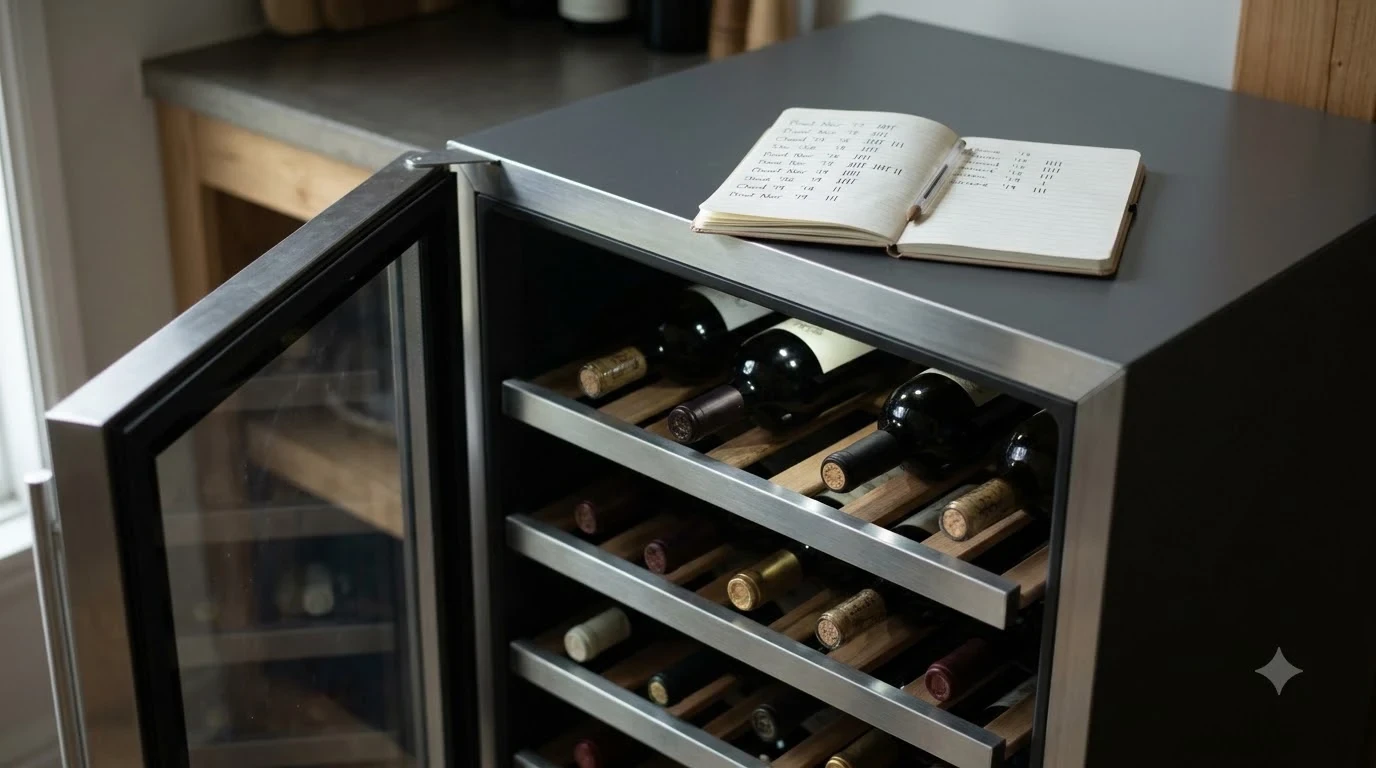
Tip: Note the date and the setting each time you change it, along with a reading from your thermometer. A simple log makes it far easier to tell whether a fix worked or whether the room changed.
Frequently Asked Questions
Can I keep a wine fridge in the garage?
Check the manual before you decide. Empava’s manual limits its units to indoor use and names the garage as a place to avoid. Marvel’s warranty applies to outdoor operation only on models designed for it, so a garage placement is appropriate only for a unit rated for that environment.
What should I do after a power outage?
Restore power as soon as you can, and keep door openings to a minimum while the power is off so the cold inside holds. Marvel’s guide says to correct a power failure quickly for this reason. Once the unit is running again, let it reach its set point before reloading, and confirm the reading with a thermometer.
Should I switch off my wine fridge while I am away?
Marvel advises setting the unit to the warmest temperature that is still acceptable for the stored wine during long absences, rather than switching it off entirely. That leaves the unit working less hard than it would at your usual target. Return the setting to your normal storage target about a day before you come home so the cabinet has time to settle.
Can I clean the inside of my wine fridge with soap and water?
Yes. Marvel recommends washing the interior with mild soap and water. Avoid abrasive cleaners, solvents, polish and undiluted detergent, and always disconnect power before cleaning with soap and water. Dry the interior before reconnecting the unit.
How long does opened wine last in the fridge?
Still wines usually keep three to five days once opened, and sparkling wine lasts only one to three days. Fortified wines such as port or sherry can last several weeks, and bag-in-box wine typically keeps four to six weeks. Reseal the bottle tightly before returning it to the cabinet.
Most wine fridge cooling problems can be solved by working through power, settings, room temperature, airflow, the door seal and the condenser, in that order. Keep the grille clear, clean the condenser on a regular schedule, and watch the thermometer for drift. When the sealed system is the problem, a qualified technician is the right next step, and the checks you have already completed will make that visit faster.
More in Storage & Fridge Care
 How Long Can You Store Wine in a Wine Fridge? Protect Bottle QualityUpdated Nov 20, 2026
 Can You Store Beer in a Wine Fridge? Keep Both Drinks FreshUpdated Nov 20, 2026
 Is It Worth Repairing a Wine Fridge? Spot the Cheap Fixes Before You ReplaceUpdated Nov 20, 2026
 Wine Fridge Condensation: Identify Causes and Fix Moisture ProblemsUpdated Nov 20, 2026
 Wine Fridge Too Cold: Protect Your Wine and Fix the TemperatureUpdated Nov 20, 2026
 How to Reset Wine Fridge: Restore Cooling and SettingsUpdated Nov 20, 2026