

We may earn a commission when you buy through links on this page, at no extra cost to you. Learn more.
wine cooler not cooling? Start by checking the power, temperature setting, door seal, and ventilation before assuming a cooling component has failed. A cooler can run for hours while recovering from a warm room, a recent bottle load, or repeated door openings. The right troubleshooting path depends on whether your model uses a compressor or thermoelectric cooling, and on whether its display, fans, and cabinet show signs of normal operation.
A warm wine cabinet is frustrating, but a few simple checks can identify many causes without opening the appliance. Work from the outside in: confirm power and settings, give the unit room to release heat, inspect the door, and then decide whether its symptoms call for a qualified technician.
Start With the Easiest Checks Before Calling for Service
Most first checks take only a few minutes: confirm that the wine cooler is switched on, verify its set temperature, and make sure nothing is holding the door open. Then keep the door closed long enough to judge whether the cabinet is actually cooling.
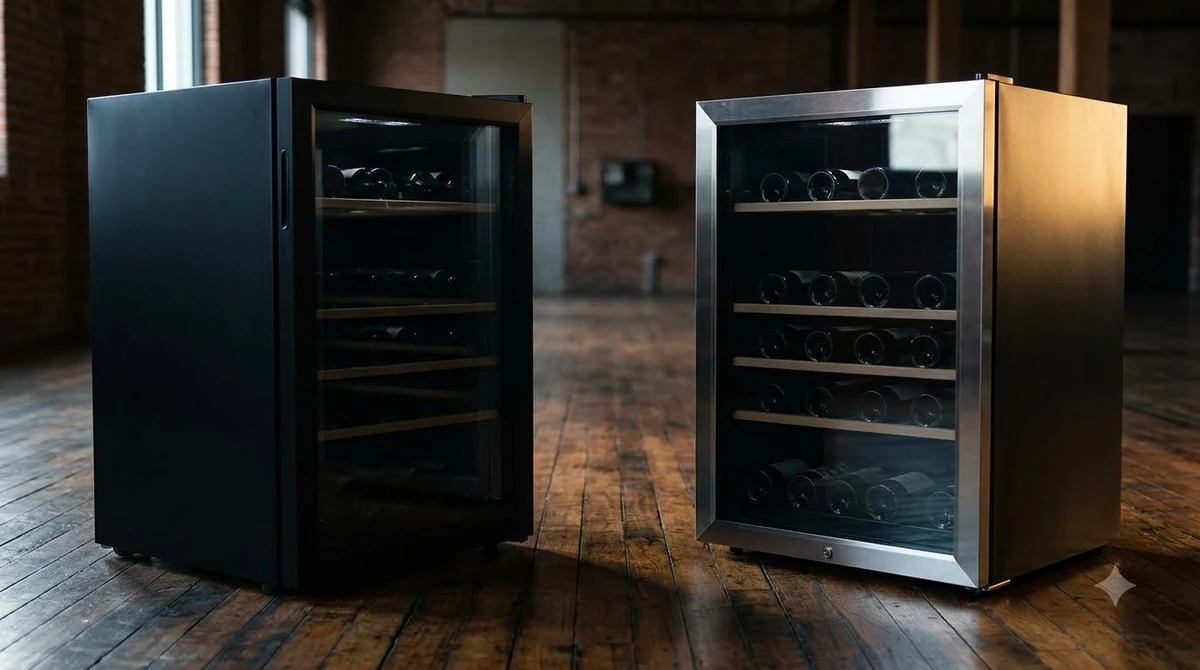
Begin with what the appliance is telling you. Is the display illuminated, does the interior light work, and can you hear a fan or compressor cycle? A blank display points toward the power supply or controls, while a lit display with a warm cabinet suggests other causes. Note flashing indicators or error codes before resetting anything. Also check whether the selected temperature is lower than the current cabinet temperature: some displays briefly show the target setting before returning to the measured temperature. A locked control panel, standby mode, or unexpectedly warm setting can look like a cooling failure even though the refrigeration system is working.
Think about what changed before the temperature rose. A newly installed or restarted cooler, a load of room-temperature bottles, or a door left open during a gathering can require several hours of recovery. Sub-Zero allows up to 24 hours for its units to return to normal after corrective steps; Subcold’s VINO troubleshooting guidance recommends several hours for a thermoelectric unit after a setting change. These are model-specific references, not universal timers. Keep the door shut and avoid repeated adjustments while the cabinet stabilizes.
Check the Power Supply and Temperature Controls
A wine cooler cannot cool if it is not receiving steady power or if its controls are not calling for cooling. Check the outlet and controls first, but do not open electrical panels or handle damaged wiring.
Make sure the plug is fully seated and the wall switch, if present, is on. Test a suspect outlet with a small working appliance or use another suitable outlet if the cooler’s cord is undamaged. Check for a tripped household breaker, but do not repeatedly reset one that trips again. Stop using the cooler if its plug, cable, or outlet is hot, discolored, or damaged. Note whether the interior light and control panel are illuminated.
Look for a lock symbol, standby icon, alarm, or error code. Follow the manual’s steps to release the control lock because button combinations differ by model. Subcold’s VINO guidance suggests switching off a blank-display unit, unplugging it for about 10 minutes, and reconnecting it; use your own manual if it gives another procedure. Then set an allowed temperature, close the door, and record both the selected and displayed readings. Contact the manufacturer or a qualified repair service if the controls will not respond, the display repeatedly goes blank, or an error code returns.
Restore Airflow Around the Cabinet and Check Room Temperature
Wine coolers move heat out of the cabinet, so blocked exhaust vents or an overly warm installation area can make the inside stay warm. Check the clearances and room conditions before concluding that the compressor or cooling module has failed.
Find the intake and exhaust openings on your model. Freestanding wine coolers commonly release heat from the rear, while built-in models are designed to vent through a front grille. A freestanding cabinet pushed tight against a wall, surrounded by stored items, or placed inside a closed cupboard may not shed heat effectively. Keep the front grille, rear vents, and fan openings free of dust, packaging, curtains, and nearby objects. Use the installation manual for the required clearance rather than applying one measurement to every cabinet.
Room conditions matter, too. A cooler beside an oven, in direct sunlight, next to a radiator, or in a hot garage may need a more stable indoor location. Thermoelectric performance is especially sensitive to ambient temperature: Vinotemp says its units can generally cool to about 20 degrees Fahrenheit below the surrounding room. In an 80°F room, a thermoelectric model may not reach a 55°F setting even when working as designed. Compressor models adapt better, but poor ventilation and excessive heat can still extend run time. Do not move a built-in unit or alter cabinetry unless its instructions allow it.
Inspect the Door Seal and the Way the Cooler Is Loaded
A door that does not close tightly lets warm, humid room air enter and makes the cooling system work harder. Bottles, shelves, a dirty gasket, or an out-of-level cabinet can all prevent a proper seal.
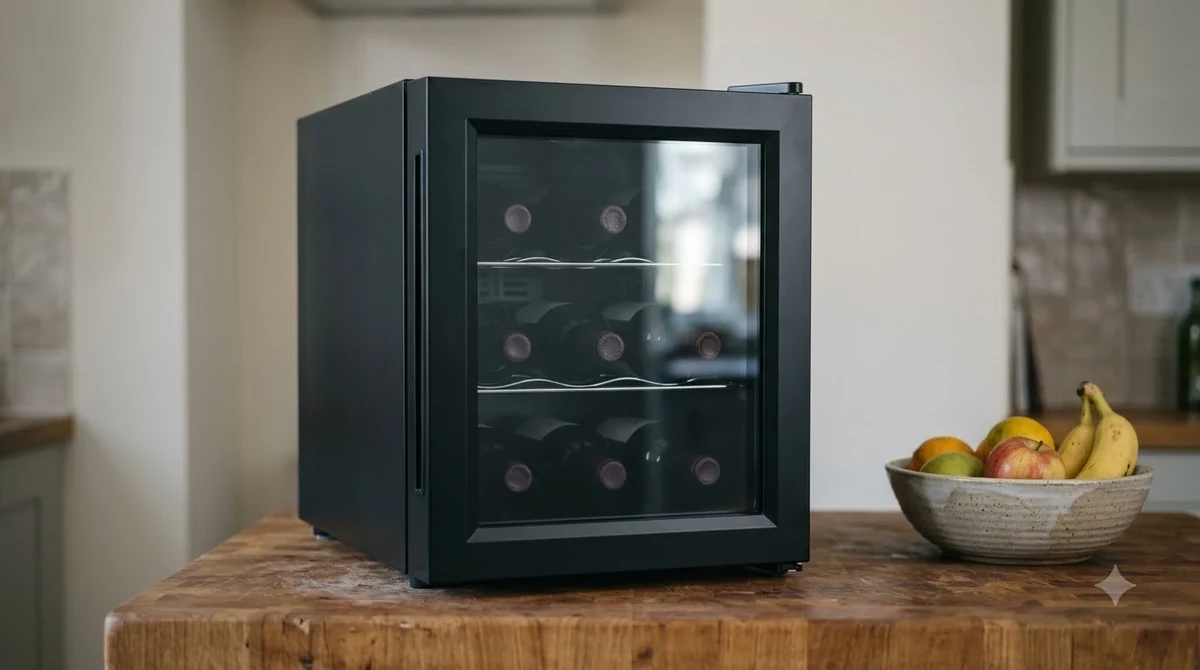
Inspect the full gasket, including the top corners and hinge side, for dirt, cracks, folds, or sections pulling away from the door. Clean it with a soft cloth and a mild appliance-safe cleaner, then dry it. Avoid sharp tools, abrasive pads, and solvents. Make sure shelves are seated correctly and no bottle neck or accessory blocks the door. Large-format bottles take up more room than standard 750-milliliter bottles, and a misplaced shelf can prevent a flush closure.
If the cooler rocks or leans, adjust its leveling feet as directed; a level cabinet helps the door align with the frame. Reduce door openings while the unit recovers, since each opening lets warm air inside. Avoid adding a large number of room-temperature bottles at once. A heavy new load can cause a temporary temperature rise, so add bottles in smaller batches when practical and allow the cabinet to stabilize.
Use a separate refrigerator thermometer instead of relying only on a display that may show a setpoint or a reading from one sensor. Place it where bottles are stored, away from the door, cooling plate, or vent. In a multi-zone model, check each zone independently and allow time after changing either setting. Direct-cooling designs may have a temperature difference between upper and lower shelves, so compare readings with the model’s published guidance.
Know Whether Your Model Uses a Compressor or Thermoelectric Cooling
The two main cooling technologies behave differently, and that changes what normal operation sounds and feels like. Identify the system before interpreting a quiet cabinet, a warm exhaust area, or a slow temperature drop as a defect.
Compressor wine coolers use a refrigeration circuit and cycle as the cabinet approaches its target. A low hum, brief vibration, or warm rear section can be normal as heat leaves the storage compartment. Persistent clicking without a cooling cycle, repeated short cycling, or a compressor that never starts is more concerning when the cabinet keeps warming. Flowing or gurgling sounds can come from refrigerant moving through the system.
Thermoelectric models use a solid-state cooling module and have fewer moving parts. They can be quiet, but performance is tied closely to room temperature. These units cool gradually, so a full load of warm bottles can take longer to reach its setpoint than a few chilled bottles. Some direct-cooling cabinets rely on convection and have no interior circulation fan, so silence inside the storage compartment does not automatically signal a fault.
Fans in other designs transfer heat or circulate cold air. Dust or a loose object can make a fan rattle or restrict airflow. Noise alone is not a diagnosis: light popping can come from expanding materials, but grinding, a blade striking an object, a burning smell, or repeated electrical clicking calls for service. Do not remove the rear cover to inspect wiring, refrigerant tubing, or fan assemblies.
Clean Accessible Vents and Know When Repair Is Necessary
Routine cleaning can restore airflow, but internal refrigeration and electrical repairs are not homeowner maintenance. Disconnect power before cleaning accessible areas and follow the model manual for the location and method of condenser care.
| Situation | Model-specific guidance | What it means |
|---|---|---|
| Blank display on a VINO thermoelectric model | Unplug for about 10 minutes, then reconnect | A single reset may help; use the model manual if it gives another procedure. |
| After changing a VINO setpoint | Allow several hours with the door closed | Do not judge the temperature immediately after an adjustment. |
| After corrective steps on covered Sub-Zero units | Allow up to 24 hours | Recovery time is brand- and model-specific. |
| Sub-Zero condenser care | Check whether cleaning was done within the previous 3 months | Other makers may specify a different interval or access method. |
| Wine Enthusiast 16-bottle touchscreen model | 54–66°F control range; recommended ambient range 77–80.6°F | The manual warns that the control range may not be reached outside its recommended room conditions. |
Dust on an accessible condenser grille or intake can reduce heat transfer and increase run time. Sub-Zero recommends checking its wine-storage condenser if it has not been cleaned in the previous three months; other brands may specify a different interval or location. Use a soft brush or vacuum attachment only where the manual permits, and never spray water into vents or electrical parts.
Do not remove sealed-system covers, cut tubing, puncture a refrigerant line, or add refrigerant. Compressor diagnosis, electrical testing, and replacement of internal fans or sensors require training and proper equipment. Arrange service if the cooler stays warm after the basic checks and the maker’s recovery period. Repeated breaker trips, a hot cord, a persistent service code, a fan or compressor that does not operate, a burning odor, or a rising cabinet temperature are also reasons to stop. Sub-Zero’s warm-storage guidance lists fan, sensor, thermostat, gasket, and sealed-system faults among the possible causes; a factory-certified technician must identify the failed component.
When contacting support, have the model and serial number ready, plus the selected setting, measured cabinet and room temperatures, and any sounds or error codes. Mention whether the display and fans operate, when the issue began, and whether bottles were recently added. Owners of premium built-in cabinets can consult a specialist page for Sub-Zero wine fridge repair; the Wine Enthusiast wine fridge repair resource may help other owners identify a support route. For routine care, browse the site’s Wine Fridge Troubleshooting resources and follow the maintenance schedule for the specific cabinet.
Tip: Take a photo of the control display and write down the cabinet and room temperatures before unplugging the cooler. A technician can use those details to understand the fault history instead of relying on a memory of what the display showed.
Frequently Asked Questions
These answers cover a few model-specific details that can be easy to miss during basic troubleshooting. Treat them as reference points, not replacements for the instructions supplied with your exact wine cooler.
Should a new wine cooler stand upright before I plug it in?
Vinotemp says its coolers should stand upright for 24 hours before first connection to power; the Wine Enthusiast 16-bottle manual specifies about 2 hours. The instructions differ by model, so follow the manual supplied with your cooler after delivery or transport.
Why are temperatures different between the top and bottom shelves?
Vinotemp reports an upper-to-lower zone difference of about 8°F in certain direct-cooling models that rely on convection. Its air-cooled designs with an interior fan show a smaller difference of about 3°F. The size and direction of the variation depend on the cabinet’s design and loading pattern.
What temperature should I use for long-term wine storage?
Vinotemp describes approximately 55°F, or 13°C, as a general storage target for wine. This is a storage reference, not a universal serving temperature for every bottle. Use the cooler’s permitted range and aim for stable conditions rather than repeatedly changing the control setting.
How much clearance does a freestanding Vinotemp cooler need?
Vinotemp specifies at least 6 inches behind its freestanding wine coolers because those models exhaust from the rear. Its built-in models use front exhaust and are designed for a different installation. Do not apply the 6-inch figure to a different brand or model without checking its own manual.
What temperature range appears on Sub-Zero electronic wine storage controls?
Sub-Zero’s warm-storage troubleshooting page gives an electronic control setting range of 34°F to 65°F for the units covered by that guidance. It also describes a dial-control scale from 1 to 10, with 1 warmest and 10 coldest. Those figures are specific to the referenced Sub-Zero controls, not a standard range for all wine coolers.
A wine cooler that stays warm after these checks may have a failed fan, sensor, thermostat, compressor, or sealed cooling component. Keep the door closed, protect the bottles from additional temperature swings, and arrange qualified service rather than opening the appliance or attempting refrigerant work yourself.
More in Storage & Fridge Care
 How Long Can You Store Wine in a Wine Fridge? Protect Bottle QualityUpdated Nov 20, 2026
 Can You Store Beer in a Wine Fridge? Keep Both Drinks FreshUpdated Nov 20, 2026
 Is It Worth Repairing a Wine Fridge? Spot the Cheap Fixes Before You ReplaceUpdated Nov 20, 2026
 Wine Fridge Condensation: Identify Causes and Fix Moisture ProblemsUpdated Nov 20, 2026
 Wine Fridge Too Cold: Protect Your Wine and Fix the TemperatureUpdated Nov 20, 2026
 How to Reset Wine Fridge: Restore Cooling and SettingsUpdated Nov 20, 2026