

We may earn a commission when you buy through links on this page, at no extra cost to you. Learn more.
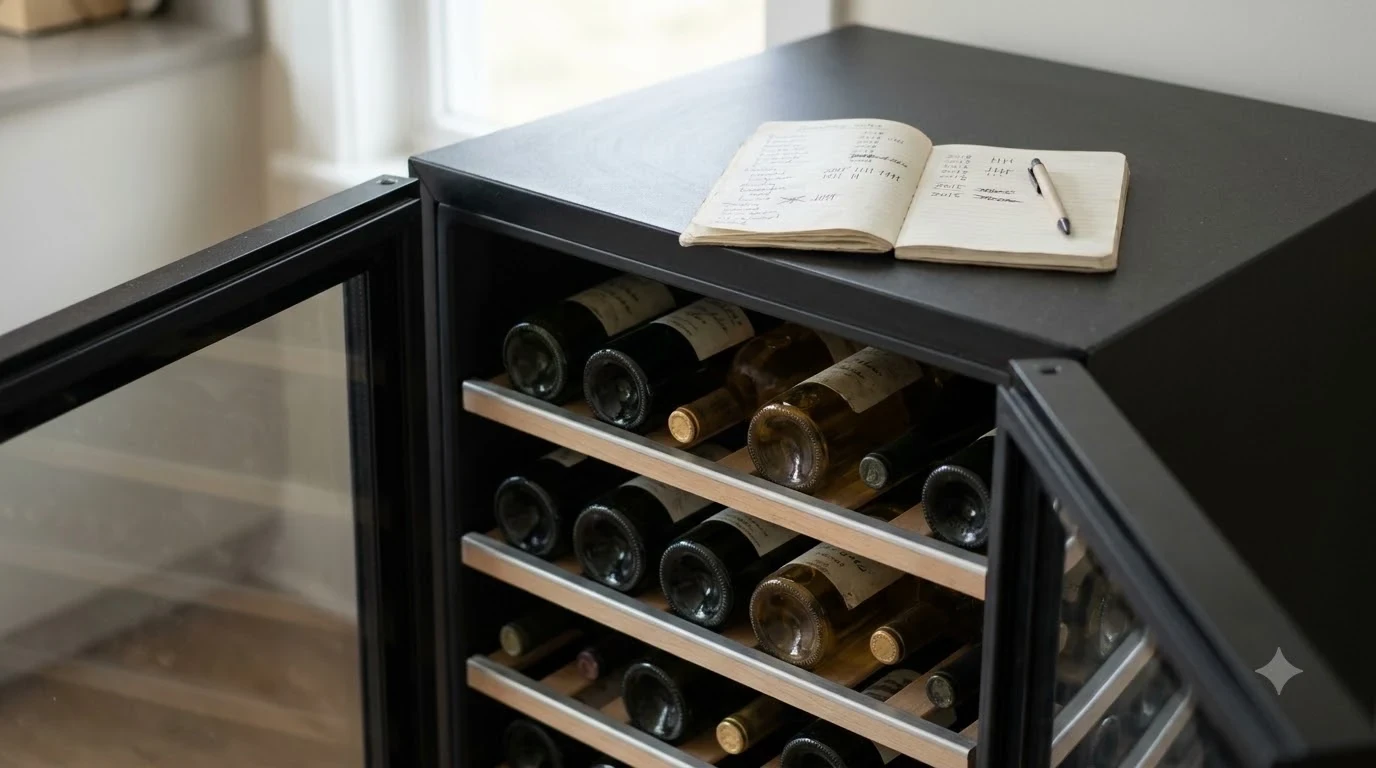
A Viking wine fridge not cooling properly is often caused by an incorrect temperature setting, restricted ventilation, a poorly sealed door, or a problem with the cooling system. Start by checking the power supply, control settings, cabinet airflow, and door gasket before assuming the compressor has failed. If these basic checks do not restore cooling, the evaporator fan, condenser fan, temperature sensor, or sealed refrigeration system may need professional attention.
A Viking wine cellar is designed to maintain stable storage conditions, not simply make bottles cold. When the cabinet starts warming up, the important distinction is whether the refrigerator has stopped producing cold air or whether something is preventing it from maintaining the selected temperature. Understanding that difference can help you identify simple maintenance issues, protect your wine collection, and avoid unnecessary repairs.
1. Check the Power Supply and Temperature Controls First
The first step when a Viking wine refrigerator stops cooling is to establish whether it has power and whether its temperature controls are operating correctly. A disconnected plug, tripped breaker, accidental control adjustment, or interrupted electrical supply can create symptoms that resemble a refrigeration failure.
Begin with the electrical supply. Check that the power cord is firmly connected to the outlet and that the outlet is functioning. If the appliance is connected to a dedicated circuit, inspect the breaker panel for a tripped breaker. A completely dark control panel may indicate a power problem rather than a failed cooling component.
If the display is illuminated, examine the temperature setting. Someone may have changed the target temperature while cleaning the cabinet, moving bottles, or adjusting the controls. Return the setting to the intended storage temperature using the instructions for your particular Viking model. Avoid making several adjustments in quick succession because doing so makes it harder to determine whether the appliance is responding.
Next, check whether the control panel displays an error message or unusual temperature reading. Record any displayed warning before attempting a reset. Some models have different control arrangements, so the button sequence and available diagnostic functions should be taken from the correct owner’s manual rather than a generic refrigerator reset procedure.
A useful distinction is whether the cabinet has stopped cooling entirely or is simply taking longer to reach its target. A refrigerator that was recently unplugged, relocated, or loaded with many room-temperature bottles may need time to stabilize. Keep the door closed during this period and monitor the actual temperature rather than repeatedly changing the controls.
2. Inspect Temperature Settings and Dual-Zone Operation
Incorrect temperature settings can make a functioning Viking wine cellar appear defective. This is particularly important on dual-zone models, where separate compartments may have independent controls and different temperature requirements.
Start by identifying the temperature setting for each zone. If the upper compartment is cooling normally but the lower compartment is warm, the problem may be limited to one zone. Conversely, if both compartments are warmer than their selected temperatures, the cause may involve a shared cooling component, restricted ventilation, or the overall operating environment.
Use an independent refrigerator thermometer to compare the displayed setting with the actual cabinet temperature. Place it in a representative location away from the door and direct contact with cooling surfaces. Allow the reading to stabilize before drawing conclusions. A single measurement immediately after opening the door is not a reliable indication of overall performance.
For long-term wine storage, approximately 55°F is a widely used target. Wine Enthusiast identifies 55°F as a suitable storage temperature across red, white, sparkling, and fortified wines. The goal is consistency rather than repeatedly changing the setting to suit the serving temperature of individual bottles.
Viking’s support information also distinguishes its wine cellar models by their intended storage arrangements. Its undercounter product information identifies a 15-inch model with a 24-bottle capacity and a 24-inch model with a 45-bottle capacity. These differences matter because cabinet design, capacity, and control arrangements are not necessarily identical across the product range.
| Temperature or specification | Reference | Practical significance |
|---|---|---|
| Long-term wine storage | Approximately 55°F | Useful baseline for stable storage |
| 15-inch Viking undercounter cellar | 24 bottles | Smaller cabinet capacity |
| 24-inch Viking undercounter cellar | 45 bottles | Larger cabinet capacity |
| Standard wine pour | 5 oz | Helps estimate bottle consumption |
| Standard wine bottle | 750 ml | Approximately five standard pours |
If the temperature remains inconsistent, record the reading from each compartment separately. This information is particularly useful when arranging a service visit because it helps distinguish a single-zone problem from a general cooling failure.
For additional storage guidance, see our Brand Troubleshooting resources. Understanding the difference between serving temperature and storage temperature can also prevent unnecessary adjustments when the appliance is actually operating normally.
3. Examine Ventilation and Cabinet Airflow
Restricted ventilation is another important reason a Viking wine fridge may struggle to cool. Refrigeration equipment must release heat generated during operation, and inadequate airflow around the appliance can interfere with that process.
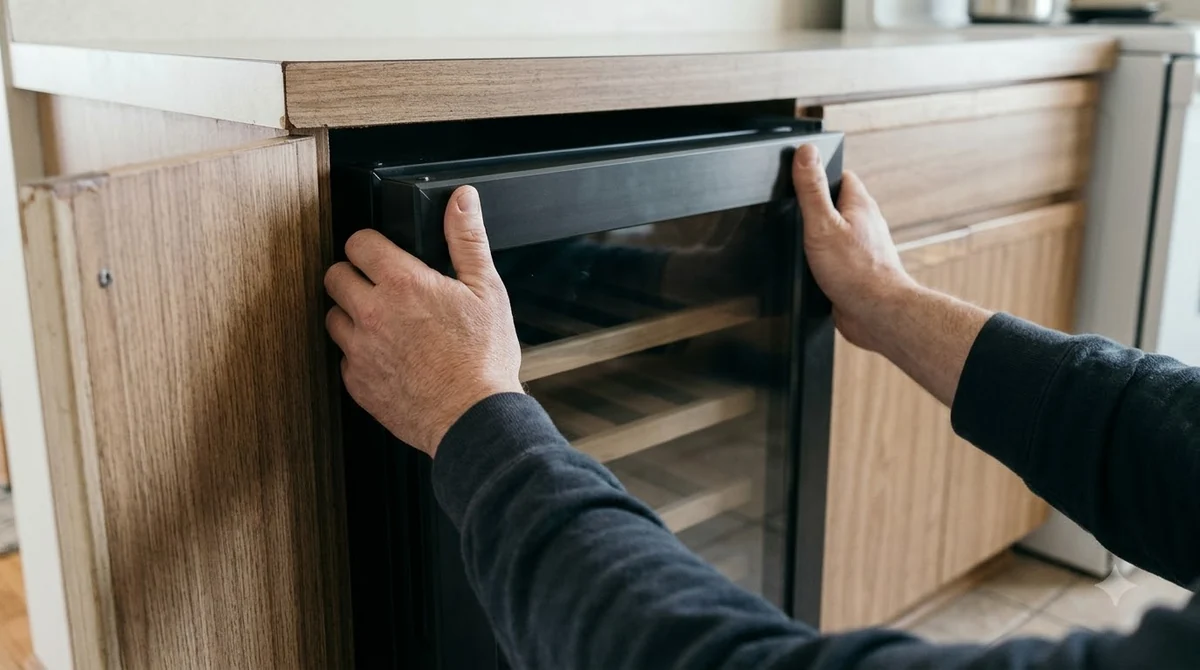
First, identify whether your Viking wine cellar is installed as a freestanding appliance or beneath a counter. Installation requirements vary by model, and the clearance needed for one design should not automatically be applied to another. Check the installation instructions for the exact model before moving the appliance or changing its surrounding cabinetry.
Look for objects blocking accessible ventilation openings. Dust, accumulated household debris, storage boxes, decorative panels, or other items can interfere with the intended airflow. Pay particular attention to the grille and ventilation area identified in the manufacturer’s installation documentation.
Do not assume that every Viking wine cellar has an externally accessible condenser coil or an identical ventilation arrangement. Built-in and freestanding configurations can use different designs. If the installation documentation identifies a specific grille or service access area, follow those instructions rather than removing cabinet panels to search for components.
Room temperature is another consideration. A wine refrigerator operating in a hot kitchen, enclosed utility area, or poorly ventilated cabinet may have difficulty releasing heat. Direct sunlight and nearby heat-producing appliances can make the surrounding environment even more challenging.
Check whether the appliance has enough clearance around the areas specified by Viking. If the refrigerator is installed tightly against surrounding cabinetry in a way that differs from the installation instructions, a qualified installer may need to correct the arrangement.
Cleaning accessible exterior ventilation openings can help prevent dust accumulation. Disconnect the appliance from power before performing permitted cleaning, and use a soft brush or vacuum attachment where appropriate. Never insert tools into ventilation openings or attempt to clean electrical components while the unit is operating.
Tip: Before arranging a repair, check the space surrounding the wine refrigerator. A blocked ventilation grille or unsuitable installation environment can create cooling symptoms even when the refrigeration system itself is functioning.
4. Inspect the Door Gasket and Bottle Arrangement
A damaged door gasket or poorly arranged bottle collection can make it difficult for a Viking wine cellar to maintain a stable temperature. These problems are particularly easy to overlook because the refrigerator may continue running even though warm air is entering the cabinet or internal circulation is restricted.
Start with the door seal. Open the door and inspect the gasket around its entire perimeter. Look for visible cracks, hardened sections, dirt, folds, or areas that appear detached from the door. A gasket that no longer makes consistent contact with the cabinet can allow warm room air to enter.
Clean an accessible gasket using a soft cloth and a suitable mild cleaning solution. Remove residue carefully, then dry the surface. Avoid harsh chemicals, abrasive pads, or excessive force that could damage the flexible sealing material.
Next, check whether the door closes completely. Bottles, racks, or packaging that extend beyond their intended positions may interfere with the closing mechanism. Also inspect whether the refrigerator is level enough for the door to operate correctly according to the installation requirements.
A simple visual inspection can reveal many sealing problems. If a section of the gasket is visibly deformed or damaged, replacing it with the correct model-specific part is generally more appropriate than trying to reshape it permanently with household adhesives or heat.
Bottle arrangement matters as well. Avoid packing bottles so tightly that they obstruct the movement of air inside the cabinet. Leave the intended circulation spaces clear and make sure shelves are properly seated. An overloaded compartment can create temperature differences between storage positions.
Interestingly, Viking’s own support FAQ recommends keeping its wine cellar reasonably well stocked. Its explanation is that the stored mass helps moderate temperature changes and can reduce how frequently the compressor needs to run. This does not mean the cabinet should be overloaded. The appropriate arrangement is a balanced load that respects the manufacturer’s capacity and airflow requirements.
For a practical comparison, a smaller 15-inch Viking undercounter wine cellar is identified as holding 24 bottles, while its 24-inch counterpart holds 45. These capacities provide a useful reference when organizing a collection, although the actual bottle arrangement depends on bottle shape and the individual shelf configuration.
5. Identify Possible Fan, Sensor, and Compressor Problems
If power, controls, ventilation, and door sealing appear normal, the next step is to consider internal cooling components. A malfunctioning fan, temperature sensor, control board, or compressor can prevent a Viking wine refrigerator from maintaining its target temperature.
Evaporator fan problems
The evaporator fan helps circulate cooled air through the cabinet in refrigeration systems that use this arrangement. If the fan fails, becomes obstructed, or operates intermittently, the cabinet may develop uneven temperatures or insufficient cooling.
One possible symptom is that the refrigerator appears to be running but the air circulation seems unusually weak. Another is a difference between the temperature near the cooling outlet and the temperature in other storage positions. These symptoms can suggest an airflow problem, although they do not prove that the evaporator fan is defective.
Internal fans are not always accessible to the owner. Do not remove protective covers or attempt to reach moving electrical components. A technician can inspect the fan, its wiring, and its control signals using the appropriate service procedures.
Condenser fan problems
Some refrigeration designs use a condenser fan to help remove heat from the cooling system. If that fan stops operating, heat may not be released effectively, reducing the refrigerator’s ability to maintain its temperature.
A continuously running compressor combined with poor cooling can justify checking the heat-rejection system. However, fan operation depends on the appliance’s design and operating conditions. The absence of an audible fan does not automatically establish that the component has failed.
Temperature sensor and control board faults
The temperature sensor provides information that helps the control system regulate cooling. If its reading is inaccurate or its electrical connection is defective, the refrigerator may receive incorrect information about cabinet temperature.
A sensor problem can produce unusual temperature readings, irregular cooling cycles, or an appliance that does not respond correctly to control adjustments. A technician may need to compare sensor readings with actual cabinet conditions and test the relevant electrical connections.
The control board is another possible source of trouble. It coordinates various operating functions, and an electrical or electronic fault can interfere with cooling even when other components appear intact.
Compressor and sealed-system problems
The compressor is central to the refrigeration cycle. If it cannot operate correctly, the appliance may lose its ability to cool even though the control display remains illuminated.
Listen for unusual clicking, buzzing, or repeated starting and stopping. These sounds may indicate an electrical or mechanical problem, but they are not enough to identify the failed part. A compressor that runs continuously without producing adequate cooling can also point toward a refrigeration-system fault or poor heat dissipation.
Sealed-system problems, including refrigerant leaks and compressor failures, require professional diagnosis. Refrigerant handling and sealed-system repairs are not ordinary cleaning or maintenance tasks. Avoid opening refrigerant lines, attempting to add refrigerant, or replacing major components without the required qualifications and equipment.
6. Follow a Safe Troubleshooting Process Before Requesting Service
A structured troubleshooting process makes it easier to identify the likely cause without creating additional damage. Work through the external checks first, document the results, and stop when a problem requires access to internal electrical or refrigeration components.
Step 1: Record the current symptoms
Write down whether the control display is illuminated, whether the compressor appears to run, and whether the cabinet is warm throughout or only in one zone. Note any unusual sounds, visible error messages, or repeated interruptions in operation.
Also record the displayed temperature and the actual temperature measured with an independent thermometer. These two readings provide a useful starting point for evaluating whether the appliance is cooling adequately.
Step 2: Check the basic operating conditions
Verify the electrical connection and inspect the breaker. Confirm that the intended temperature settings are selected and that the door closes fully. Make sure the cabinet is not overloaded and that accessible ventilation areas are unobstructed.
These checks address several common causes without requiring the removal of panels or access to internal components. They also help establish whether the problem is related to the installation environment or the appliance itself.
Step 3: Allow the cabinet to stabilize
After correcting an obvious obstruction or temperature-setting issue, close the door and avoid unnecessary adjustments. A cabinet that has been open for an extended period or loaded with warm bottles needs time to recover.
Monitor the temperature over several readings rather than relying on a single observation. If the temperature continues rising or fails to move toward the selected setting, further investigation is appropriate.
Step 4: Protect the wine collection
If the refrigerator cannot maintain a suitable storage environment, move particularly valuable or temperature-sensitive bottles to another location with stable conditions. Avoid leaving wine in a hot room while waiting for a repair appointment.
For temporary storage, a consistently cool location away from direct sunlight and heat sources is preferable to an area with large temperature fluctuations. A target near 55°F is a useful reference for long-term wine storage.
Keep cork-finished bottles on their sides where appropriate and avoid exposing the collection to repeated temperature changes. Once the Viking refrigerator is repaired, return bottles in a way that preserves adequate internal airflow.
Step 5: Arrange qualified service
If the basic checks do not resolve the problem, contact Viking customer support or an authorized service provider. Viking provides a dedicated service-provider locator for customers who need appliance assistance.
Before making the request, locate the model and serial number. These details help the technician identify the correct documentation, parts, and service procedures. Viking maintains a product documentation archive containing installation instructions, specifications, and use-and-care manuals for its appliances.
Use the exact model documentation rather than assuming that every Viking wine cellar has the same controls, ventilation arrangement, or cooling components. This is particularly important for older and discontinued models.
Viking’s support FAQ also identifies specific wine cellar model families, including the VCWB series. Its documentation and support resources are useful starting points for determining which product information applies to your appliance.
Other manufacturers have their own troubleshooting considerations. If you are comparing appliance symptoms across different brands, our guides to Allavino wine fridge not cooling and Magic Chef wine fridge not cooling explain why model-specific diagnosis matters.
7. Frequently Asked Questions
Why does my Viking wine fridge show the correct temperature but the wine feels warm?
A displayed temperature is a reading from the appliance’s control system, not a direct measurement of every bottle. Bottle temperature changes more slowly than the air temperature inside the cabinet. Use an independent thermometer and allow sufficient time for the bottles to approach the cabinet temperature before deciding that the cooling system has failed.
Can I use a Viking wine cellar to store unopened champagne?
Yes. A wine cellar can provide a suitable environment for storing unopened champagne when its temperature remains stable. Viking’s support FAQ advises that ordinary refrigerator storage is suitable for champagne for up to 24 hours, while longer storage benefits from an appropriate wine-storage environment. Avoid placing bottles near strong household odors.
Does storing different bottle shapes affect Viking wine cellar capacity?
Yes. Published bottle capacity is generally based on a particular bottle arrangement and standard bottle dimensions. Champagne bottles, large-format bottles, and unusually shaped Burgundy bottles can occupy more shelf space than standard Bordeaux bottles. The practical number of bottles may therefore be lower than the stated capacity.
Does high altitude affect the cooling performance of a Viking wine cellar?
Viking’s support FAQ states that its wine cellar testing found no effect from high altitude on the wine cellar. This is a manufacturer-specific statement and should not be generalized to every wine refrigerator. If your appliance performs poorly, investigate its actual operating conditions and model-specific requirements rather than assuming altitude is responsible.
Can a Viking wine cellar be installed beside another undercounter appliance?
Viking identifies its undercounter wine cellars as appliances that can be installed under a counter or used freestanding, with certain installation arrangements allowing side-by-side placement. The precise installation requirements depend on the model and surrounding cabinetry. Review the manufacturer’s installation instructions before placing another heat-producing appliance beside the wine cellar.
A Viking wine fridge not cooling is not automatically a compressor failure. Checking electrical power, temperature controls, ventilation, door sealing, and bottle arrangement can identify several correctable problems before professional service is necessary. If cooling remains inadequate after these checks, arrange a model-specific inspection to protect both the appliance and the wine collection.
More in Storage & Fridge Care
 How Long Can You Store Wine in a Wine Fridge? Protect Bottle QualityUpdated Nov 20, 2026
 Can You Store Beer in a Wine Fridge? Keep Both Drinks FreshUpdated Nov 20, 2026
 Is It Worth Repairing a Wine Fridge? Spot the Cheap Fixes Before You ReplaceUpdated Nov 20, 2026
 Wine Fridge Condensation: Identify Causes and Fix Moisture ProblemsUpdated Nov 20, 2026
 Wine Fridge Too Cold: Protect Your Wine and Fix the TemperatureUpdated Nov 20, 2026
 How to Reset Wine Fridge: Restore Cooling and SettingsUpdated Nov 20, 2026