

We may earn a commission when you buy through links on this page, at no extra cost to you. Learn more.
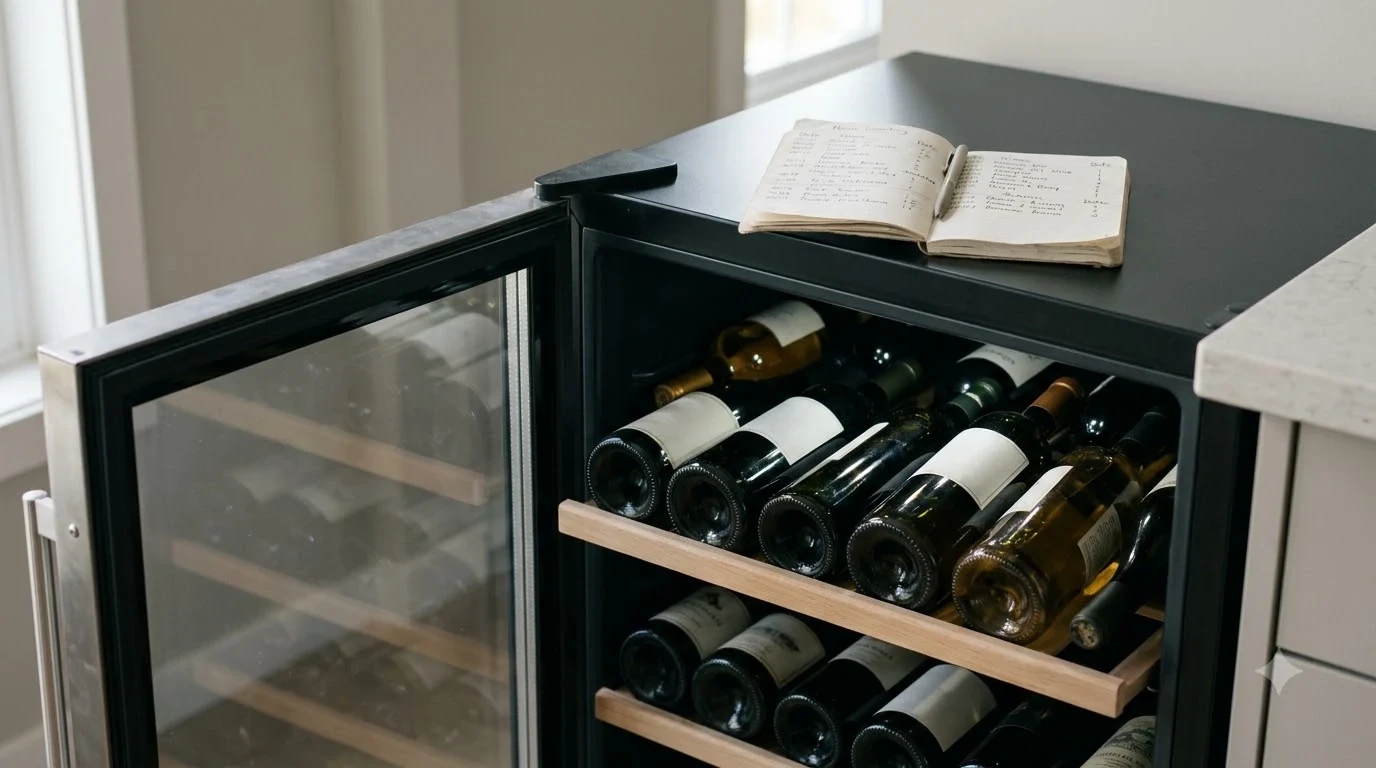
A u line wine fridge not cooling usually has an airflow, temperature-setting, electrical, door-seal, or cooling-component problem. Start by checking the temperature with an independent thermometer, confirming that the appliance has power, and inspecting its ventilation openings. Simple problems such as blocked vents or an incorrect setting may be manageable without a service visit, while compressor, fan, and sealed-system failures generally require a qualified appliance technician.
A U-Line wine refrigerator is designed to maintain a controlled environment for wine, not to operate like an ordinary kitchen refrigerator. When bottles feel warmer than expected, the display shows an unusual reading, or the compressor seems to run continuously, the first task is identifying whether the problem involves the temperature setting, the surrounding installation, or an internal component. The troubleshooting steps below cover common causes, safe checks, and situations that call for professional repair.
1. Check the Actual Temperature Before Troubleshooting
The first step is determining whether the refrigerator is genuinely too warm or whether its display is giving an inaccurate impression. An independent appliance thermometer provides a more useful starting point than relying on a control-panel reading alone. A temperature difference can also occur while the cabinet is recovering from a recent door opening or a change in settings.
Place a refrigerator thermometer inside the cabinet, preferably near the middle shelf where it can measure the surrounding air without touching a bottle, wall, or cooling surface. Leave it in place long enough to obtain a representative reading. Avoid measuring immediately after loading several room-temperature bottles, because the contents and interior air need time to settle.
For general wine storage, approximately 55°F is a useful target for a single-zone cabinet holding a mixed collection. Different wines have different serving requirements, but long-term storage generally benefits more from stable conditions than from repeatedly changing the temperature to suit individual bottles. A dual-zone U-Line model may have separate controls and different intended ranges for its upper and lower compartments.
Compare the thermometer reading with the selected setting. If the display indicates 55°F but the independent thermometer reads 57°F, the difference alone does not establish a cooling failure. However, a persistent increase over several hours, particularly when the cabinet is set to a lower temperature, deserves further investigation.
Allow approximately 24 hours after changing a setting before deciding whether the adjustment has solved the problem. This is particularly important after loading bottles or changing the refrigerator’s location. Repeatedly lowering the setting during this period can make troubleshooting confusing because the cabinet has not had enough time to respond to each adjustment.
Tip: Record the selected temperature and the independent thermometer reading at the beginning of troubleshooting. Check them again after 6 hours and approximately 24 hours. This simple record helps establish whether the refrigerator is gradually cooling, maintaining a steady temperature, or continuing to warm up.
2. Inspect Power, Electrical Connections, and Controls
A U-Line wine refrigerator cannot cool if its electrical supply is interrupted or its controls are not operating correctly. Check the outlet, power cord, circuit breaker, and control-panel response before investigating refrigeration components. A cabinet with no lights, no display, and no operating sounds may have a different problem from one whose lights work but whose interior remains warm.
Start with the power cord. Confirm that its plug is fully inserted into the outlet and that the cord has no visible cuts, crushed sections, or signs of overheating. Do not pull the refrigerator away from cabinetry by its power cable, and avoid using an extension cord as a substitute for a suitable electrical connection.
Next, check the circuit breaker supplying the appliance. If the breaker has tripped, identify whether other equipment on the same circuit is contributing to the problem. A GFCI-protected outlet may also interrupt power if its protection mechanism has tripped. Follow the outlet manufacturer’s reset instructions, provided there is no evidence of water exposure, damaged wiring, or another electrical hazard.
Once power is restored, examine the control panel. Make sure the refrigerator has not been switched off accidentally and that the temperature selection is appropriate for the model. Some wine refrigerators have controls that can be locked or placed into special operating modes. If buttons do not respond normally, consult the instructions for the exact model rather than trying random button combinations.
U-Line appliances have different configurations, so the location of controls and the meaning of displayed indicators should not be assumed to be identical across the entire product range. Locate the model and serial number on the appliance identification label. Use that information to find the correct owner’s manual or contact U-Line support for model-specific instructions.
A simple power interruption may explain a refrigerator that has stopped running, but repeatedly resetting a breaker is not an appropriate repair. If the breaker trips again, disconnect the appliance if it is safe to do so and arrange an electrical inspection. A damaged cord, outlet, control board, or internal electrical connection requires proper diagnosis.
3. Check Ventilation, Cabinet Clearance, and Room Temperature
Restricted ventilation is one of the first installation problems to investigate when a wine refrigerator runs but cannot maintain its selected temperature. The cooling system must release heat from the cabinet, and insufficient clearance can interfere with that process. A refrigerator installed too close to surrounding surfaces may struggle even when its internal components are functioning.
Begin by identifying whether the U-Line appliance is designed for freestanding or built-in installation. These configurations are not interchangeable. A freestanding refrigerator may need open space around its sides, rear, or top, while a properly designed built-in model may discharge heat through a front-facing grille or base ventilation system.
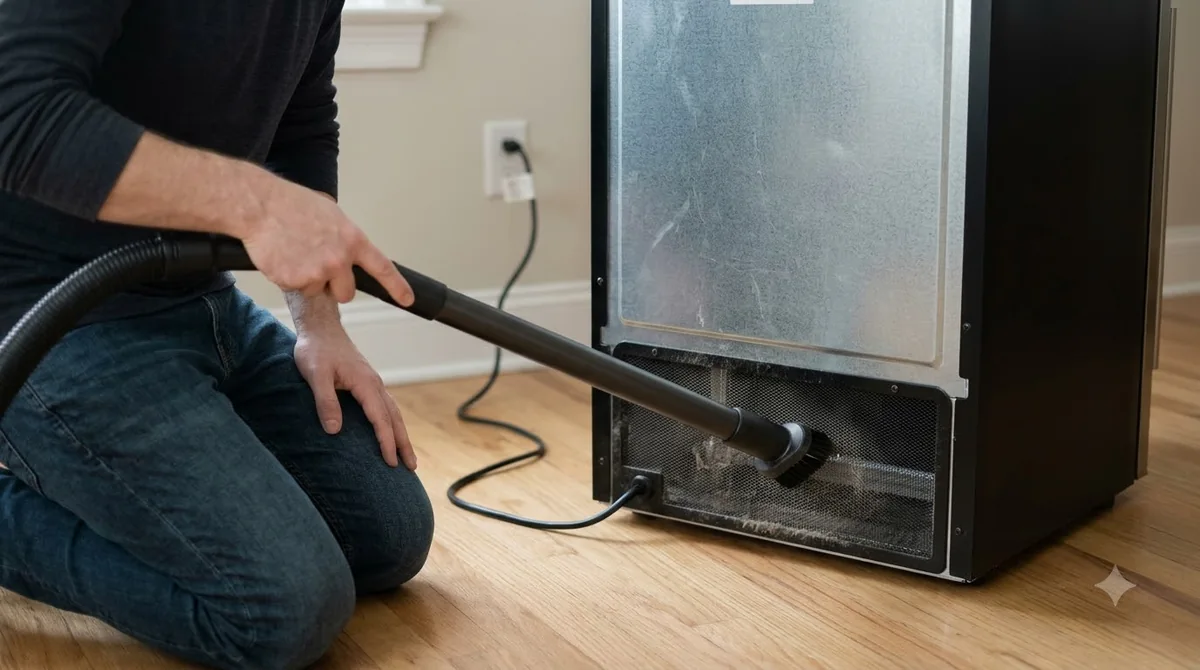
Inspect the ventilation grille for dust, pet hair, packaging material, and other obstructions. Remove loose surface debris with a soft brush or vacuum attachment only when the appliance is switched off and the manufacturer’s cleaning instructions permit it. Do not push tools into the grille or bend its fins.
Check the surrounding cabinetry as well. A recently installed cabinet panel, decorative trim piece, or stored object can partially cover an air opening. Even a relatively small obstruction may interfere with the airflow required by the refrigerator.
Room temperature is another important consideration. A wine refrigerator installed in a hot garage, enclosed utility room, or sunny kitchen may have difficulty maintaining its target setting. Heat from nearby ovens, dishwashers, windows, and other appliances can increase the load on the cooling system.
The exact operating-temperature limits depend on the U-Line model. Look up the specified ambient operating range before assuming that a particular room is suitable. Do not use another brand’s clearance measurements as a substitute for U-Line’s installation requirements.
Food & Wine’s examination of wine refrigerators illustrates why installation design matters: one freestanding example requires 4 inches above and behind the cabinet and 2 inches on each side. That is an example, not a universal U-Line specification. For more on ventilation and installation differences, see its wine refrigerator installation and selection guidance.
If the appliance is built into cabinetry, do not pull it forward permanently or remove surrounding panels without understanding its installation design. Correct the obstruction using the manufacturer’s installation instructions. If the required airflow path is inaccessible or the cabinetry appears to have been installed incorrectly, a qualified installer can assess the space.
4. Examine the Door Gasket and Interior Air Circulation
A door that does not seal properly allows warmer room air to enter the cabinet, making it harder to maintain a consistent temperature. Blocked interior spaces can create a separate problem by interfering with the movement of cooled air. Both conditions can produce uneven temperatures even when the refrigeration system is still operating.
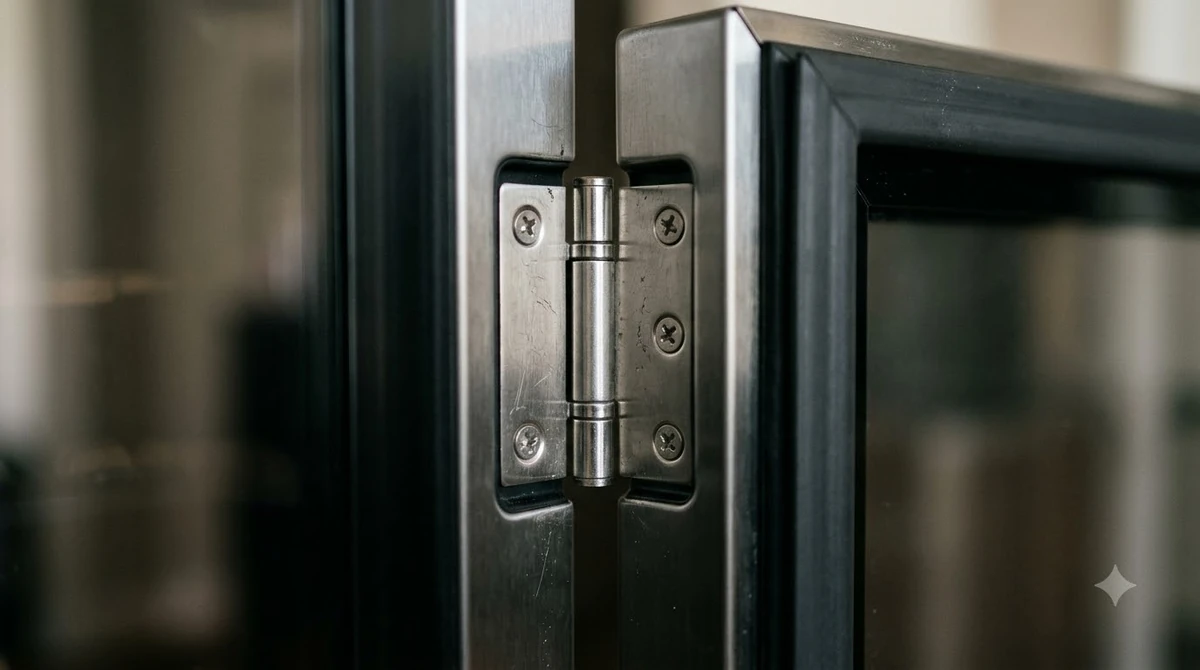
Inspect the door gasket around its entire perimeter. Look for dirt, hardened sections, cracks, tears, or areas that have pulled away from the door. A gasket should sit evenly against the cabinet when the door is closed. If one corner remains visibly separated, warm air may be entering continuously.
Clean an ordinary dirty gasket with a soft cloth and mild soapy water, then dry it thoroughly. Avoid strong solvents, abrasive pads, or sharp objects that could damage the sealing surface. If the gasket is torn, permanently distorted, or no longer makes contact with the cabinet, it may need replacement with the correct model-specific part.
You can perform a basic paper test to look for a weak seal. Place a strip of ordinary paper between the door and cabinet, close the door, and gently pull the paper. Repeat at several locations around the perimeter. If the paper slides out unusually easily at one section compared with the others, inspect that section more closely.
Next, examine how the bottles and shelves are arranged. A bottle positioned incorrectly can prevent the door from closing completely. An oversized Champagne bottle, for example, may not fit into a shelf position intended for standard Bordeaux bottles. Check that every shelf is seated correctly and that no bottle projects into the door’s closing path.
Do not pack bottles tightly against ventilation openings or cooling surfaces. Leave the spaces identified in the model’s manual unobstructed. A heavily loaded cabinet may also need more time to recover after its door has remained open or several room-temperature bottles have been added.
Check whether the refrigerator sits evenly in its installation space. A cabinet that is badly out of alignment may place uneven pressure on the door gasket. If the appliance has adjustable leveling feet, follow the installation instructions when making corrections. Avoid adjusting built-in units in a way that changes their required ventilation or compromises cabinet stability.
5. Investigate the Condenser, Evaporator Fan, and Compressor
If the electrical supply, temperature setting, ventilation, and door seal are all satisfactory, the problem may involve an internal cooling component. The condenser, evaporator fan, compressor, temperature sensor, and associated electrical controls all contribute to refrigeration. A failure in any one of these areas can prevent a U-Line wine refrigerator from reaching its selected temperature.
Condenser and condenser fan: The condenser releases heat removed from the refrigerator interior. Dust accumulation can reduce heat transfer, while a failed or obstructed condenser fan can interfere with heat removal on models that use one. Depending on the design, the condenser and fan may be located near the bottom, rear, or another designated mechanical compartment.
Look for visible dust around accessible ventilation areas, but do not remove mechanical covers or reach into the fan assembly. If the appliance is switched off and the manufacturer permits exterior cleaning, remove accessible dust using an appropriate soft brush or vacuum attachment. A fan that does not operate, makes unusual noises, or appears damaged should be inspected by a technician.
Evaporator fan: The evaporator fan helps circulate cooled air inside the cabinet on models equipped with one. If the fan stops working, cooling may become uneven or insufficient. Some refrigerators have fan operation that changes depending on door position or operating conditions, so the absence of an audible fan at one particular moment does not automatically establish a fault.
Listen for unusual rattling, scraping, or repeated clicking. Frost accumulation near an air passage can also interfere with circulation. Do not remove ice using knives, screwdrivers, heat guns, or other sharp or high-temperature tools. A technician can determine whether the issue involves a fan motor, a sensor, or a defrost-related problem.
Compressor: The compressor circulates refrigerant through the cooling system. If it cannot start, runs abnormally, or repeatedly shuts down, the refrigerator may fail to maintain its target temperature. A compressor that is unusually hot, produces repeated clicking sounds, or operates continuously without adequate cooling deserves professional attention.
Compressor problems are not necessarily caused by a defective compressor itself. A starting component, electrical connection, temperature control, or another part of the refrigeration system may be responsible. Replacing the compressor without identifying the underlying cause can lead to an unnecessary repair.
Temperature sensor and control board: The refrigerator depends on temperature information to determine when cooling is needed. An inaccurate sensor may report the wrong cabinet temperature, while a control-board problem may prevent the cooling system from responding correctly. If the displayed reading changes erratically or the compressor behaves inconsistently, a technician can test the relevant electrical components.
These components should not be replaced based on sound alone. A qualified appliance technician can measure electrical operation, assess the cooling system, and identify the failed part using the service information for the specific U-Line model.
6. Follow a Safe Troubleshooting Sequence and Decide When to Call for Service
Working through the easiest checks first reduces unnecessary repairs and makes it easier to explain the problem to a technician. Begin with the independent temperature reading, then check power, settings, ventilation, the door seal, and accessible signs of abnormal operation. Stop before opening electrical compartments or attempting refrigeration-system repairs.
The following sequence provides a practical way to organize the investigation. It separates routine observations from work that requires specialist tools or technical training.
| Step | What to inspect | What the result may indicate |
|---|---|---|
| 1 | Independent thermometer | Confirms whether the cabinet is actually too warm |
| 2 | Power cord and outlet | Identifies an interrupted electrical supply |
| 3 | Temperature controls | Reveals an incorrect setting or operating mode |
| 4 | Ventilation openings | Identifies blocked airflow or inadequate clearance |
| 5 | Door gasket and shelves | Reveals warm-air leakage or restricted circulation |
| 6 | Accessible condenser area | May reveal dust accumulation or an obstruction |
| 7 | Fan and compressor behavior | Helps identify a possible internal mechanical fault |
| 8 | Professional component testing | Confirms electrical, sensor, compressor, or sealed-system faults |
After correcting a simple issue, give the refrigerator time to recover. Approximately 24 hours is a useful observation period after a temperature adjustment or substantial change in loading, although the exact recovery time depends on the model, ambient conditions, and severity of the problem. Record the temperature periodically rather than repeatedly opening the door to check whether the cabinet feels cold.
Arrange professional service if the refrigerator continues warming despite adequate ventilation and correct settings. A technician should also investigate persistent clicking, burning smells, repeated breaker trips, unusual vibration, water near electrical components, or a compressor that runs without producing adequate cooling.
Refrigerant leaks and sealed-system failures require specialized equipment and trained handling. Do not attempt to add refrigerant, puncture tubing, bypass electrical protection, or replace a compressor yourself. These actions can create additional damage and may make the appliance unsafe to operate.
Before scheduling service, locate the model and serial number and prepare a short description of the symptoms. Include the selected temperature, the independent thermometer reading, how long the problem has continued, whether the compressor runs, and whether the appliance recently lost power or was moved. Photographs of the installation and ventilation openings can also help the service provider understand the setup.
If you have another wine refrigerator with similar symptoms, the diagnostic approach is comparable, although its controls and installation requirements may differ. Our guides to Allavino wine fridge not cooling and Magic Chef wine fridge not cooling cover troubleshooting considerations for those brands. The Brand Troubleshooting resource also provides a starting point for other wine-storage appliances.
7. Protect Your Wine While the Refrigerator Is Not Cooling
Wine should be moved to a suitable temporary storage location if the U-Line refrigerator cannot maintain a stable temperature. Prolonged exposure to excessive heat is more concerning than a brief temperature fluctuation, so prioritize bottles stored in a warm cabinet and avoid leaving the collection in direct sunlight. A stable indoor room is generally preferable to a hot garage, window area, or kitchen beside an oven.
For a temporary arrangement, use another functioning wine refrigerator or a cool, dark room with relatively stable temperatures. A cellar temperature near 55°F is suitable for many mixed collections. If you use another refrigerator, select a wine-appropriate setting rather than assuming that the colder temperature of a regular food refrigerator is ideal for extended wine storage.
Serving temperature and storage temperature are not the same thing. Light whites and rosés are commonly served at 45–50°F, full-bodied whites at 50–55°F, light reds at 55–60°F, and full-bodied reds at 60–65°F. Sparkling wines are generally served at 40–50°F. These ranges can guide serving decisions once the appliance is working again, but they should not encourage constant changes to long-term storage conditions.
Keep bottles away from direct sunlight and strong vibration. If the temporary storage location has a stable temperature, leave the bottles undisturbed rather than moving them repeatedly between different environments. Bottles intended for longer storage should generally be kept on their sides when sealed with natural corks, provided the storage arrangement supports them safely.
Do not place bottles directly against ice packs or other freezing surfaces. Rapid, uneven cooling can create unnecessary temperature changes, and freezing may damage the wine or push the closure out of the bottle. A temporary storage solution should provide stability rather than the lowest possible temperature.
Once the U-Line refrigerator has been repaired, allow the cabinet to return to a stable operating temperature before replacing the collection. Load bottles carefully, leave ventilation spaces unobstructed, and avoid filling the cabinet beyond the shelf arrangement’s intended capacity.
A useful final step is to maintain a basic temperature log after service. Check the cabinet with an independent thermometer over several days and record any unusual fluctuations. This helps confirm that the repair has addressed the underlying problem instead of simply restoring operation temporarily.
Frequently Asked Questions
How long does a U-Line wine refrigerator typically last?
Service life depends on the model, installation, operating conditions, and maintenance history. A wine refrigerator that receives adequate ventilation and operates within its specified ambient-temperature range may last longer than one exposed to persistent heat or restricted airflow. Keep the model information and maintenance records available when discussing replacement or repair decisions.
Can a U-Line wine fridge be used in a garage?
Only if the specific model is approved for the garage’s expected ambient temperatures. Some appliances are intended for controlled indoor environments and may not operate correctly in locations with substantial seasonal temperature changes. Consult the model’s installation documentation for its permitted operating range before installing it in a garage.
Why is there condensation on the outside of my U-Line wine fridge?
Exterior condensation can develop when warm, humid room air contacts a cooler surface, particularly during periods of high humidity. Check whether the door is closing completely and whether the gasket is making consistent contact. Persistent moisture, unusual water accumulation, or condensation accompanied by cooling problems should be assessed by a service technician.
Can I transport a U-Line wine refrigerator on its side?
Follow the transportation instructions for the exact model rather than assuming every refrigerator can be moved in the same position. Compressor-based appliances may require an upright settling period after transportation if they have been tilted or laid down. Ask U-Line support or the delivery technician for the required waiting period before reconnecting power.
Does a U-Line wine fridge need to be defrosted manually?
Defrosting requirements depend on the refrigerator’s cooling and defrost design. Some models manage frost automatically, while others may require specific maintenance if ice accumulates. Consult the owner’s manual before starting a defrost procedure, and never use sharp tools to remove ice from the interior or cooling components.
A U-Line wine refrigerator that stops cooling does not necessarily need an expensive component replacement. Start with an accurate temperature reading, verify the electrical supply, and check the ventilation openings and door seal before considering internal failures. If those checks do not restore stable cooling, professional diagnosis can identify the problem and help protect both the appliance and the wine stored inside.
More in Storage & Fridge Care
 How Long Can You Store Wine in a Wine Fridge? Protect Bottle QualityUpdated Nov 20, 2026
 Can You Store Beer in a Wine Fridge? Keep Both Drinks FreshUpdated Nov 20, 2026
 Is It Worth Repairing a Wine Fridge? Spot the Cheap Fixes Before You ReplaceUpdated Nov 20, 2026
 Wine Fridge Condensation: Identify Causes and Fix Moisture ProblemsUpdated Nov 20, 2026
 Wine Fridge Too Cold: Protect Your Wine and Fix the TemperatureUpdated Nov 20, 2026
 How to Reset Wine Fridge: Restore Cooling and SettingsUpdated Nov 20, 2026