

We may earn a commission when you buy through links on this page, at no extra cost to you. Learn more.
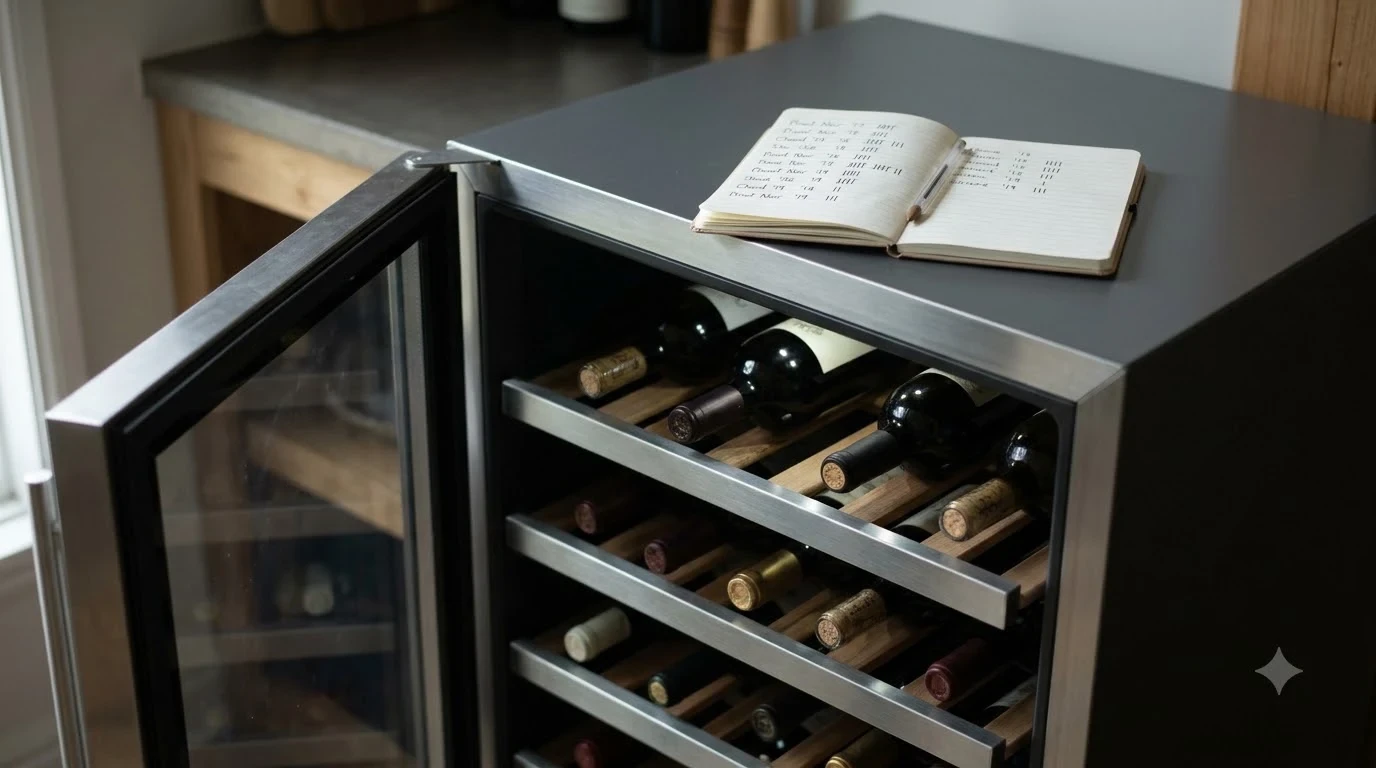
A thermador wine fridge not cooling usually has a problem with its power supply, temperature settings, ventilation, door seal, or cooling components. Start by checking the electrical connection, confirming the selected temperature, and clearing obstructions around the ventilation openings. If the cabinet continues warming despite these checks, a failed fan, compressor, temperature sensor, or sealed-system component may require professional repair. Identifying the symptoms before arranging service can help prevent unnecessary repairs and protect stored wine.
A wine refrigerator has a different job from an ordinary kitchen refrigerator. It must maintain a relatively stable environment rather than simply make everything as cold as possible. Thermador wine storage products also include different configurations and temperature-control arrangements, so the correct troubleshooting procedure depends on the model. A useful starting point is to separate simple operating problems from signs of mechanical failure, then work through the checks that do not require opening the appliance.
1. Check the Power Supply and Temperature Controls
A Thermador wine refrigerator that appears to have stopped cooling may actually have an electrical or control-setting problem. Before investigating the compressor or cooling system, confirm that the appliance receives consistent power and that its controls are requesting the correct temperature. A working display does not necessarily mean every cooling component is operating properly.
Begin with the electrical supply. Check whether the interior lighting and digital display respond normally when you open the door or operate the controls. If the entire appliance is dark, inspect the household circuit breaker and make sure the power cord is firmly connected where the installation provides an accessible plug. A tripped breaker can interrupt operation, while a loose connection can cause intermittent power loss.
Do not repeatedly reset a breaker that trips again. A recurring electrical interruption can indicate a wiring problem, damaged component, or another fault that needs professional attention. Likewise, avoid using extension cords or improvised electrical connections to keep the wine refrigerator running. Built-in refrigeration equipment should use the electrical arrangement specified in its installation instructions.
Next, inspect the temperature controls. Someone may have accidentally changed the setpoint during cleaning, bottle loading, or ordinary use. On a dual-zone or three-zone wine column, check each compartment separately because one zone can operate normally while another remains too warm. Thermador provides control-setting instructions and product demonstrations through its official refrigeration how-to video library.
Allow time for the temperature to stabilize
A temperature adjustment does not immediately change the temperature of every bottle in the cabinet. Wine bottles have considerable thermal mass, meaning they take time to respond to changes in the surrounding air. A recently loaded refrigerator can also need additional operating time to bring a large collection toward its selected temperature.
After confirming the settings, use an independent refrigerator thermometer to measure the actual interior temperature. Place it in a representative location away from the door and direct contact with cooling surfaces. Record the reading and compare it with the displayed temperature over several hours rather than relying on one observation immediately after opening the cabinet.
If the display responds to adjustments but the measured temperature continues rising, the problem is less likely to be a simple setting error. Persistent differences between the displayed and measured temperatures may also point toward a sensor or control issue. Record both readings because this information can help a technician narrow down the fault.
2. Inspect Ventilation, Installation Clearance, and Room Temperature
Restricted airflow is one of the first physical conditions to investigate when a wine refrigerator runs continuously without reaching its target temperature. Refrigeration equipment must release heat from its cooling system, and inadequate ventilation can interfere with that process. An appliance installed too close to surrounding cabinetry or exposed to excessive room heat may struggle to maintain its temperature.

Start by examining the accessible ventilation openings. Look for dust, packaging material, decorative objects, or other obstructions around the designated intake and exhaust areas. Depending on the Thermador model, ventilation arrangements can differ between freestanding and built-in installations. Never assume that every model releases heat from the same location.
ENERGY STAR recommends allowing a few inches between a refrigerator or cooler and the wall where applicable, along with positioning the appliance away from heat sources. However, built-in wine columns can have specific installation requirements, so the clearance measurements in the individual Thermador installation instructions take priority over general refrigerator guidance.
Consider the room environment as well. A wine cooler installed beside an oven, dishwasher, or sun-facing window may experience additional heat exposure. For example, a unit installed in a kitchen cabinet next to a frequently used oven can face a more demanding operating environment than the same appliance in a cooler room.
Check for installation-related airflow problems
Some ventilation problems begin during installation rather than developing through ordinary use. Cabinet panels, trim pieces, or nearby storage items may obstruct openings that need to remain clear. A refrigerator that worked correctly before cabinetry modifications or a kitchen renovation deserves particular attention in this area.
Do not pull a heavy built-in wine column out of its cabinet just to inspect its rear ventilation system. Moving a built-in appliance can damage flooring, electrical connections, cabinetry, or refrigeration lines. If the installation appears to restrict airflow, have the original installation specifications reviewed by a qualified installer.
Also consider how frequently the surrounding room becomes hot. An enclosed utility space, a cabinet near a heat-producing appliance, or a room with poor air circulation can create unfavorable conditions. If the room temperature changes substantially throughout the day, compare the wine refrigerator’s performance during cooler and warmer periods.
Keep a simple record of the room temperature and cabinet temperature. If the appliance performs well overnight but struggles during the afternoon, environmental heat or ventilation deserves further investigation. This pattern does not prove a particular component has failed, but it provides useful diagnostic information.
3. Examine the Door Seal and Bottle Loading
A door that does not close properly can allow warm air to enter the wine refrigerator continuously. Even a relatively small gap can make it harder for the cooling system to maintain a stable temperature. An overloaded cabinet or incorrectly positioned bottle can create a similar problem by preventing the door from sealing completely.
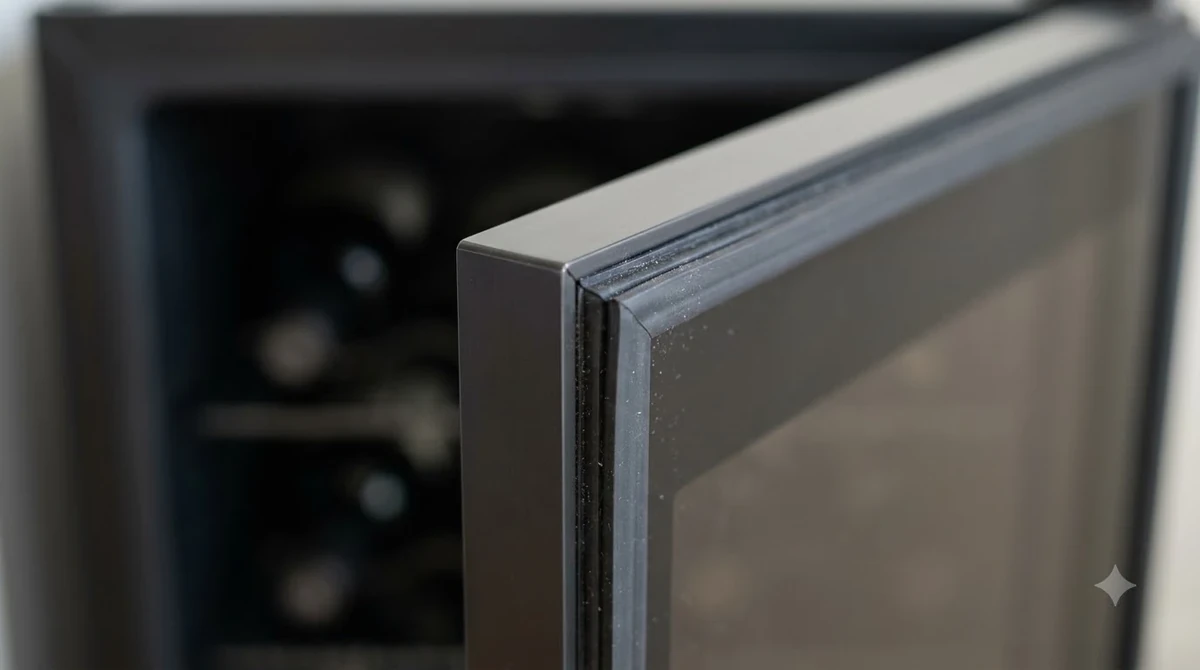
Inspect the gasket around the entire door perimeter. Look for visible tears, flattened sections, hardened rubber, dirt, or areas that have pulled away from their mounting position. A gasket should make consistent contact with the cabinet when the door closes. Pay particular attention to the upper corners and lower edges, where an obstruction or damaged section may be less obvious.
Perform a simple visual check by closing the door slowly and observing whether it sits evenly against the frame. Check that the hinges do not appear loose or misaligned. If the door needs unusual force to close, or if it moves unevenly, the problem may involve the hinge arrangement rather than the gasket itself.
Look for bottle and shelf interference
Wine bottles can interfere with door closure when they extend beyond the intended storage area. This is particularly relevant when a cabinet is filled close to capacity or contains bottles with unusually large shoulders, long necks, or oversized packaging. A bottle positioned incorrectly near the front of a shelf may prevent the door from reaching its fully closed position.
Remove any bottle that appears to interfere with the door, then rearrange the remaining collection according to the manufacturer’s shelf-loading instructions. Thermador provides a dedicated video explaining how to load a wine refrigerator to maximize its storage capacity. Proper loading helps maintain practical access to bottles without obstructing the cabinet’s intended arrangement.
Check that shelves are fully seated in their supports and that none of the racks has shifted forward. A misaligned shelf can interfere with a neighboring rack or door, especially after bottles have been removed and replaced. Avoid forcing a shelf into position if its support mechanism does not align naturally.
Understand why a poor seal affects cooling
When warm room air enters the cabinet, the refrigerator must remove the additional heat. Moisture can also enter with that air, potentially increasing condensation and making the internal environment less stable. The cooling system may consequently run longer or more frequently than expected.
ENERGY STAR specifically recommends checking refrigerator door seals and replacing seals that do not provide an airtight closure. For a Thermador wine refrigerator, use a compatible replacement gasket rather than assuming a generic refrigerator seal will fit. The door dimensions, gasket profile, and mounting arrangement must match the appliance.
If the gasket appears damaged or the door remains misaligned after correcting bottle placement, arrange an inspection. A technician can determine whether the appliance needs a replacement seal, hinge adjustment, or another door-related repair.
4. Identify Fan, Compressor, and Cooling-System Problems
If power, settings, ventilation, and door closure all appear normal, the next suspects are the components responsible for moving air and removing heat. A fan that stops turning, a compressor that fails to operate, or a sealed refrigeration-system fault can prevent a Thermador wine refrigerator from reaching its target temperature. These problems generally require professional diagnosis rather than additional household adjustments.
Listen to the appliance during normal operation. Depending on its design and operating cycle, a wine refrigerator may produce a low mechanical hum or gentle airflow noise. A complete absence of operating sounds while the cabinet warms may suggest that a cooling component is not running, although it does not identify which component has failed.
Unusual noises can provide additional clues. Persistent clicking, repeated starting attempts, loud vibration, or a new grinding sound should not be dismissed as ordinary operating noise. A fan blade contacting an obstruction can create noise, while repeated compressor starting attempts may indicate an electrical or mechanical problem.
Evaporator fan problems
The evaporator fan helps circulate cooled air through the storage compartment on models that use this arrangement. If the fan stops operating, the cabinet may develop uneven temperatures or fail to distribute cooled air effectively. One part of the refrigerator may feel cooler than another, even though the overall system is not maintaining its intended conditions.
In a multi-zone wine column, temperature differences between compartments can be especially useful observations. If one zone remains near its target while another becomes progressively warmer, the problem may involve a zone-specific fan, sensor, control, or cooling component. This pattern should be documented rather than treated as proof of a particular failure.
Do not remove interior panels or reach into fan openings to test whether a blade turns. Fans and electrical connections can present hazards, and accessing them may damage wiring or insulation. A qualified technician can check fan operation and the associated control signals safely.
Compressor and sealed-system problems
The compressor is responsible for circulating refrigerant through the cooling system. If it cannot start, operates abnormally, or loses its ability to provide adequate cooling, the cabinet temperature may gradually increase despite an apparently normal display.
Another possibility is a sealed-system problem involving refrigerant circulation, a restriction, or a leak. These faults cannot be reliably diagnosed by looking at the cabinet temperature alone. A technician may need to perform electrical tests and specialized refrigeration-system measurements to determine the actual cause.
Refrigerant handling is not a suitable household repair. Do not attempt to open refrigerant lines, puncture tubing, or add refrigerant using an improvised kit. Refrigeration work requires the appropriate equipment, technical training, and compliance with applicable regulations.
The important distinction is between normal operating noise and a persistent change in performance. A wine refrigerator that previously maintained a steady temperature but now runs almost continuously while warming deserves prompt professional attention.
5. Understand Temperature Sensors, Displays, and Error Symptoms
A wine refrigerator can have a cooling problem even when its compressor and fans appear to operate normally. Temperature sensors, electronic controls, and display components help regulate the cooling cycle, and inaccurate readings can interfere with that process. Comparing the displayed temperature with an independent thermometer is an effective starting point for identifying a possible control-related fault.
Begin by recording the temperature shown on the display and the temperature measured inside the cabinet. For example, if the display indicates 55 degrees Fahrenheit while an independent thermometer consistently reads 65 degrees Fahrenheit, there is a meaningful discrepancy to investigate. Allow sufficient time for the appliance to stabilize before drawing conclusions from the comparison.
A sensor that provides inaccurate information may cause the control board to make inappropriate cooling decisions. Depending on the model and fault, the appliance might cool too much, fail to cool sufficiently, or display an abnormal temperature. A technician can test the sensor and verify whether the control system is responding correctly.
What warning signs can tell you
Pay attention to unusual indicator lights, temperature alarms, flashing displays, and error messages. Their meanings vary between models, so an error code should be interpreted using the correct Thermador documentation rather than a generic online list.
Write down the exact message and note when it appears. For example, record whether the warning occurs immediately after switching on the appliance, after a door-opening event, or after several hours of operation. This timing can help distinguish an operating-condition warning from a persistent component fault.
Thermador’s support website provides an error-code section and model-specific documentation. Its owner-manual lookup requires the appliance’s E-Nr model number, which can be found on the rating plate. Using the correct manual is particularly important because a similar-looking control panel does not guarantee identical operating procedures.
Check for recent interruptions
Think about whether the refrigerator experienced a power interruption, a recent installation, or a change in its control settings. A power outage can interrupt the normal cooling cycle, while moving the appliance or changing its installation environment can introduce new airflow or electrical problems.
Do not repeatedly disconnect and reconnect the appliance in an attempt to clear unexplained error messages. A power reset may be appropriate for certain documented operating conditions, but the correct procedure varies by model. Follow the manufacturer’s instructions before attempting one.
If the same warning returns, arrange service and provide the exact error message. Repeated warnings after a documented reset are more significant than a single temporary display event.
6. Protect Your Wine and Arrange the Correct Repair
When a wine refrigerator stops cooling, protecting the bottles should be part of the troubleshooting process. Wine is sensitive to prolonged heat exposure and temperature fluctuations, so leaving a collection inside a steadily warming cabinet can create unnecessary quality risks. Move valuable bottles to a stable, suitable storage environment if the appliance cannot maintain its intended conditions.
Wine Enthusiast identifies approximately 55 degrees Fahrenheit as a suitable long-term storage temperature for red, white, sparkling, and fortified wines. This is a storage reference rather than a universal serving temperature. The important priority during a refrigerator failure is to avoid prolonged heat exposure and repeated temperature swings.
A suitable temporary location should be dark, cool, and away from direct sunlight, heating equipment, and strong odors. For cork-finished bottles, horizontal storage helps keep the cork moist. Wine Enthusiast also discusses a humidity range of approximately 50 to 80 percent as useful for maintaining cork condition during storage.
Choose a temporary storage location
If another functioning wine refrigerator is available, transfer the bottles carefully and group them according to their intended storage zones. Avoid repeatedly moving bottles between warm and cold locations while deciding where to keep them.
A cool, dark storage room can provide a temporary alternative when a dedicated wine cooler is unavailable. An ordinary household refrigerator can be useful for short-term storage, but its typical temperature and humidity conditions are not ideal for maintaining a wine collection over an extended period.
Pay particular attention to bottles that have been exposed to unusually high temperatures. Excessive heat can damage wine and produce cooked or stewed characteristics. Unfortunately, cooling a bottle again cannot reverse heat-related deterioration that has already occurred.
Prepare for a Thermador service appointment
Once the bottles are protected, collect the information a service technician will need. Record the complete model number, the approximate age of the appliance, the selected temperature, and the actual measured cabinet temperature. Include any error messages, unusual sounds, and changes in cooling behavior.
Thermador’s online repair process requests the model number, FD number, and Z number. These identifiers help establish which appliance is being serviced. The purchase invoice and date are also useful because the manufacturer states that its standard warranty lasts 24 months from the purchase date, subject to the applicable terms.
Thermador offers factory service technicians and authorized service providers for appliance repairs. Its repair information also describes genuine replacement-part availability for up to 15 years, subject to the applicable conditions. These details make it sensible to investigate authorized repair options before arranging work with an unfamiliar service provider.
For additional troubleshooting information, the Brand Troubleshooting resources provide a useful starting point for understanding wine refrigerator maintenance across different manufacturers. Owners experiencing comparable symptoms on other appliances can also review allavino wine fridge not cooling and haier wine fridge not cooling for brand-specific troubleshooting comparisons.
Tip: Before booking a repair, take a photograph of the Thermador rating plate, record the displayed and independently measured temperatures, and write down any error codes. These three pieces of information can make the initial service assessment more productive.
For an appliance that remains under warranty, contact Thermador before authorizing independent repairs. Unauthorized work or incompatible replacement parts may complicate warranty coverage. For an out-of-warranty appliance, request a diagnosis that identifies the failed component and explains why replacement or repair is necessary.
7. Frequently Asked Questions
How long does a Thermador wine refrigerator usually last?
Service life depends on the specific model, operating environment, maintenance history, and frequency of use. A wine refrigerator that operates in a clean, properly ventilated location may experience less operating strain than one exposed to excessive heat or restricted airflow. Ask a qualified technician to assess the condition of an older unit before deciding whether replacement is more practical than repair.
Can a Thermador wine fridge become too cold instead of too warm?
Yes. A malfunctioning temperature sensor, control board, or incorrectly selected setting can cause excessive cooling. If the measured temperature drops below the intended range, compare the reading with the displayed temperature and inspect the settings for each storage zone. Persistent overcooling deserves the same careful diagnosis as insufficient cooling.
Does opening the wine refrigerator door frequently affect cooling performance?
Yes. Frequent door openings allow room air to enter and increase the cooling workload. This can be particularly noticeable in warm kitchens or during lengthy bottle-loading sessions. Limiting unnecessary openings helps reduce temperature fluctuations and makes it easier for the appliance to maintain its selected conditions.
Can a Thermador wine refrigerator be transported while lying down?
Transportation instructions depend on the appliance design and model. Built-in wine columns can have different handling requirements from smaller freestanding coolers. Consult the manufacturer’s transportation and installation instructions before moving the unit, and arrange qualified assistance for large appliances that must be removed from cabinetry.
Does a Thermador wine refrigerator need regular maintenance even when it cools properly?
Yes. Routine attention to door seals, accessible ventilation openings, interior cleanliness, and bottle placement helps maintain normal operating conditions. The appropriate maintenance schedule depends on the model and installation. Thermador provides dedicated cleaning and care information alongside its refrigeration usage and troubleshooting resources, so owners can follow procedures appropriate to their equipment.
A Thermador wine refrigerator that stops cooling does not automatically need an expensive component replacement. Start with power, temperature settings, ventilation, door closure, and an independent temperature reading before considering mechanical faults. If the cabinet continues warming or displays recurring warnings, protect the wine collection and arrange an inspection through Thermador or an authorized appliance technician.
More in Storage & Fridge Care
 How Long Can You Store Wine in a Wine Fridge? Protect Bottle QualityUpdated Nov 20, 2026
 Can You Store Beer in a Wine Fridge? Keep Both Drinks FreshUpdated Nov 20, 2026
 Is It Worth Repairing a Wine Fridge? Spot the Cheap Fixes Before You ReplaceUpdated Nov 20, 2026
 Wine Fridge Condensation: Identify Causes and Fix Moisture ProblemsUpdated Nov 20, 2026
 Wine Fridge Too Cold: Protect Your Wine and Fix the TemperatureUpdated Nov 20, 2026
 How to Reset Wine Fridge: Restore Cooling and SettingsUpdated Nov 20, 2026