

We may earn a commission when you buy through links on this page, at no extra cost to you. Learn more.
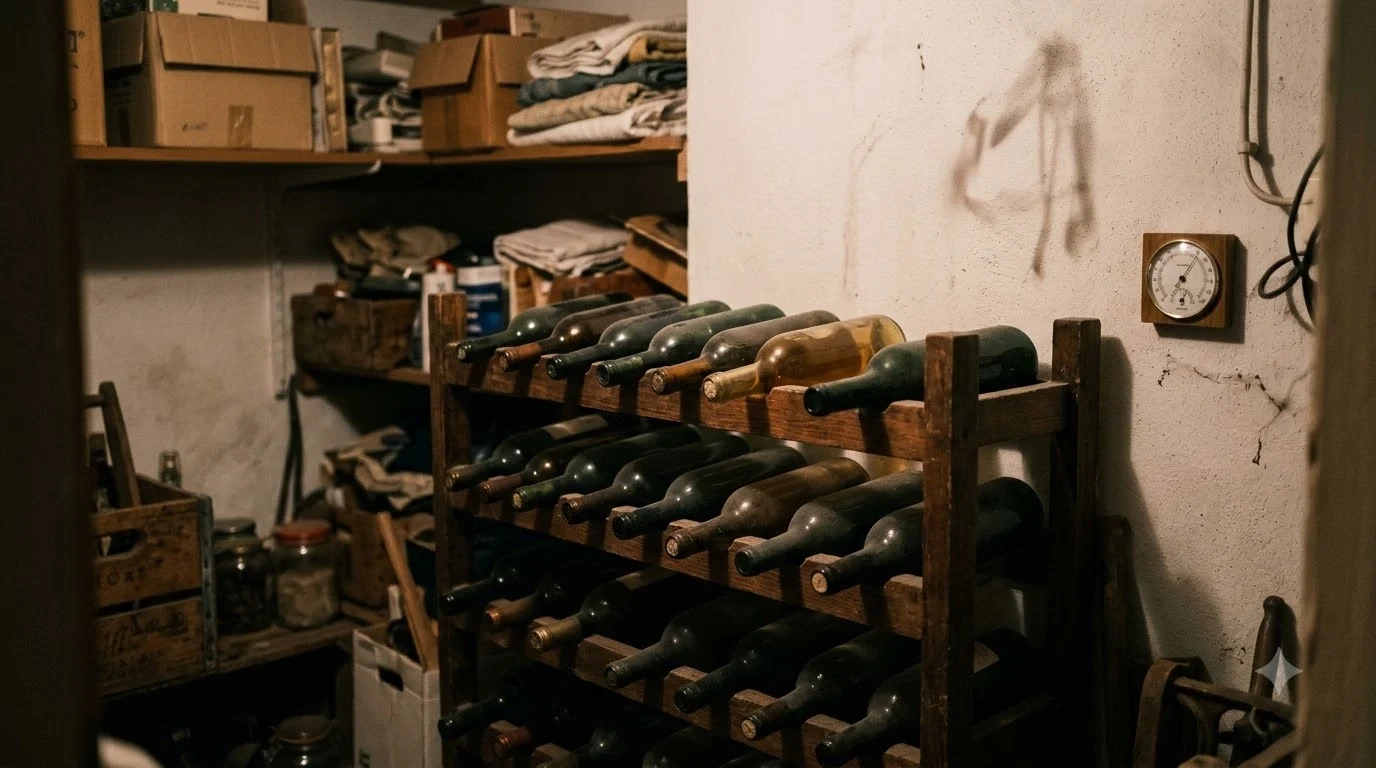
Should wine be stored on its side? Yes for wine with a natural cork, because a horizontal bottle keeps the cork in contact with the wine and helps stop the cork from drying out. Bottles with screw caps or synthetic stoppers do not need to lie down, since their seal does not depend on moisture. Upright storage is fine for short periods, and the orientation matters most for bottles you plan to age for years.
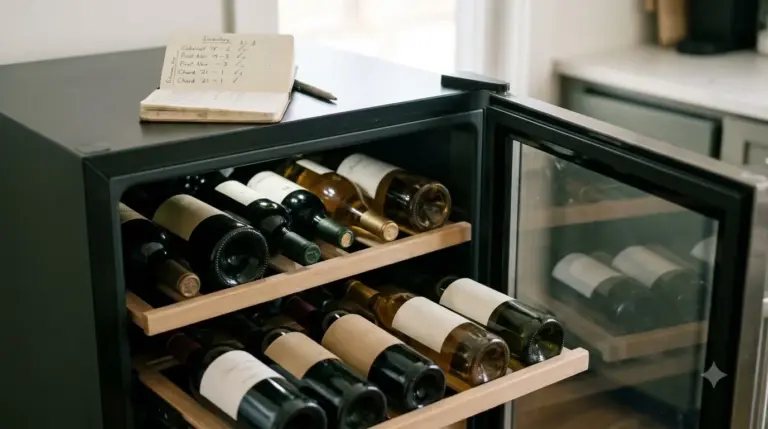
The question comes up often for people building a home collection. Some bottles are stored in racks that lay them flat, while others sit in a wine fridge standing up, and many people wonder whether one of those choices will harm the wine. The answer depends mostly on the closure, plus a few other storage conditions. This guide explains the reasoning so you can decide what fits your bottles.
Why lying a bottle down helps a cork
A natural cork is a porous material that is compressed into the neck of the bottle. When the cork stays in contact with the wine, it remains moist and keeps its shape and elasticity. A dry cork can shrink, crack, or lose its grip on the glass. That can let air seep into the bottle over time, which speeds oxidation and can spoil the wine. Lying the bottle on its side keeps the wine touching the underside of the cork, which is the main reason the practice exists.
The Wikipedia entry on cork notes that cork is compressed into the neck and expands to form a tight seal. The same entry also reports a 2005 study in which 45% of corks showed gas leakage during pressure testing, which shows that even a well-made cork is not a perfect barrier. That is one reason storage conditions matter as much as the closure itself.
When upright storage is fine
Screw caps, sometimes called Stelvin closures, and many synthetic stoppers do not depend on moisture to seal. These closures do not need the wine to touch them, so a bottle can stand upright without losing its seal. Standing bottles are also easier to store in a small space and easier to read labels on. For bottles you will drink within a few months, upright storage is a practical and low-risk choice.
Many shoppers now see screw caps on everyday bottles, and some regions use them widely for crisp whites and fresh reds that are meant to be opened within a year or two. Storing these bottles upright in a pantry or rack saves space and keeps labels easy to scan. The main concern is still temperature. A screw-capped bottle left in a hot car or near a sunny window will age quickly regardless of its position, so the closure does not replace a stable environment.
The Wikipedia entry on cork also explains that screw caps reduce the oxygen transfer rate between the bottle and the air to almost zero. That low transfer is why many producers now use screw caps for wines meant to be drunk young. The trade-off is that very slow oxygen exchange is not always an advantage for long aging, so the closure choice shapes how a wine develops.
Other storage conditions that matter more
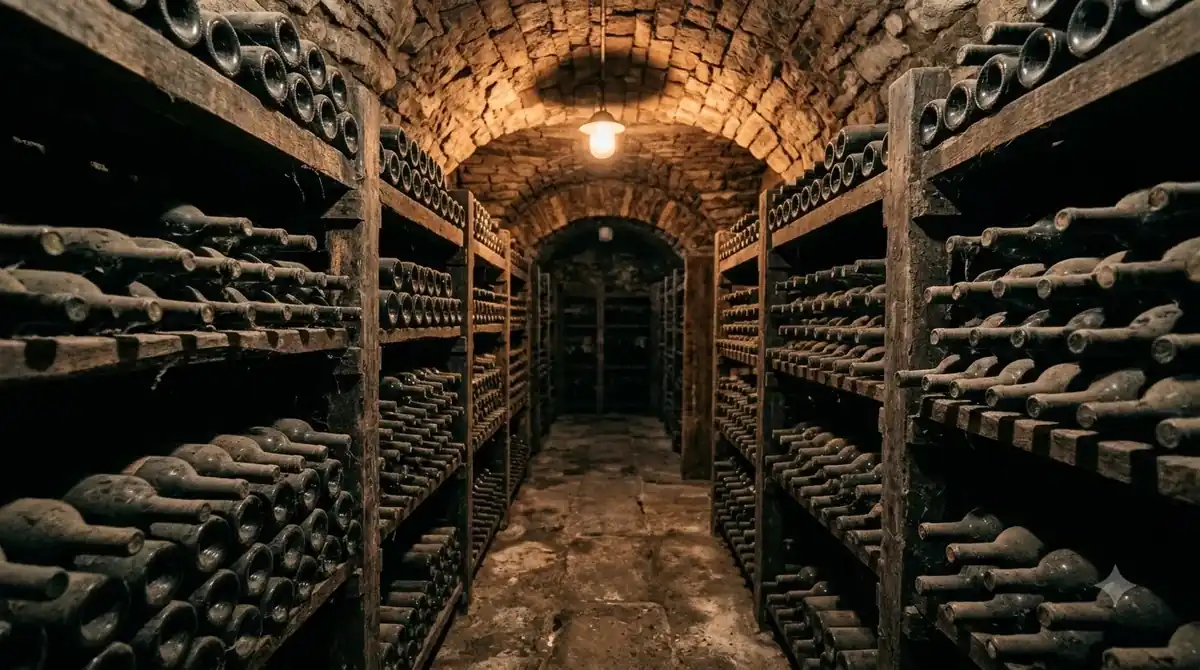
Orientation is only one part of good storage. Temperature stability is often more important than the bottle’s angle. The Wikipedia entry on wine cellars says wine can be stored satisfactorily between 7 and 18 degrees Celsius, or 45 to 64 degrees Fahrenheit, as long as the changes are gradual. It describes 13 degrees Celsius, about 55 degrees Fahrenheit, as ideal for both short-term storage and long-term aging. Wines age normally in a range of about 10 to 14 degrees Celsius, or 50 to 57 degrees Fahrenheit.
Sharp swings are harder on wine than a steady warm spot. The same source notes that temperature swings of 14 degrees or more can cause the wine to breathe through the cork, which speeds aging. A spot near a heater, a sunny window, or an appliance that cycles on and off is a poor choice, even if the bottle lies flat.
| Closure | Store on its side? | Why |
|---|---|---|
| Natural cork | Yes, for long storage | Keeps the cork moist and the seal intact |
| Screw cap (Stelvin) | Not required | The seal does not depend on moisture |
| Synthetic stopper | Usually not required | Does not dry out the way natural cork can |
| Any closure, unstable temperature | Orientation matters less | Temperature swings affect the wine more than the angle |
Tip: If you store bottles on their sides, keep the labels facing up so you can identify each bottle without pulling it out of the rack.
Humidity and the cork
Humidity is a topic where opinions differ. Some wine writers recommend a damp environment so corks do not dry out, and suggest placing a layer of gravel on the floor of a cellar and wetting it lightly from time to time. Matt Kramer, cited in the same wine cellar entry, referred to a French study claiming that relative humidity inside a bottle stays at 100 percent regardless of the closure or the bottle’s orientation. The entry also notes that some experts debate how much humidity matters for storage, so it is reasonable to treat this as one factor among several.
For most home storage, a steady, moderate humidity works well, and extreme dryness is the main thing to avoid. A closet on an interior wall, or a fridge built for wine, usually provides more stable conditions than a kitchen counter or a room that heats and cools quickly.
How to store wine at home
Start by sorting your collection by how long you plan to keep each bottle. Wines for drinking within a few months can stand upright in a cool closet. Bottles with natural corks that you plan to age should lie on their sides in a rack. Keep the racks away from vibration and strong odors, since both can affect a wine over time.
A common mistake is buying a rack for a space that is too warm or too bright, then blaming the rack when the wine tastes flat. Before buying storage equipment, look at the room first and measure how much it changes across a day and across the seasons. A closet away from the kitchen, a basement corner that stays cool, or a dedicated wine fridge are all workable options when the numbers stay steady.
Check the storage area occasionally with a simple thermometer. A stable reading is more useful than a perfect number. If you are moving bottles, let them rest for a day or two before opening, because sediment and the wine itself need time to settle after handling. For a broader overview of temperatures and serving, the Wine Storage & Serving Temps guide is a useful next read, and the Wine Basics section covers the fundamentals.
Frequently Asked Questions
Does wine go bad if it is stored upright?
Not quickly. Upright storage is fine for short periods, especially with screw caps. The risk grows for bottles with natural corks that you plan to keep for years, because a dry cork can let air in over time.
Do screw-cap bottles need to lie down?
No. Screw caps seal without depending on moisture, so the bottle can stand upright without losing its seal. Store them in a cool, steady place as you would any other bottle.
What temperature is best for storing wine?
The Wikipedia entry on wine cellars describes about 13 degrees Celsius, or 55 degrees Fahrenheit, as ideal for both short-term storage and long-term aging. Steady temperatures matter more than hitting one exact number.
Is humidity important for wine storage?
Humidity helps keep natural corks from drying out, but experts disagree on how much it matters inside a bottle. A moderate, stable environment is a sensible goal, and extreme dryness is the main thing to avoid.
For most people, the rule is simple: lay down bottles with natural corks you plan to age, stand up bottles with screw caps, and keep everything cool and steady. Once you have those basics, you can focus on the wines themselves and enjoy them at their best.
More in Storage & Fridge Care
 How Long Can You Store Wine in a Wine Fridge? Protect Bottle QualityUpdated Nov 20, 2026
 Can You Store Beer in a Wine Fridge? Keep Both Drinks FreshUpdated Nov 20, 2026
 Is It Worth Repairing a Wine Fridge? Spot the Cheap Fixes Before You ReplaceUpdated Nov 20, 2026
 Wine Fridge Condensation: Identify Causes and Fix Moisture ProblemsUpdated Nov 20, 2026
 Wine Fridge Too Cold: Protect Your Wine and Fix the TemperatureUpdated Nov 20, 2026
 How to Reset Wine Fridge: Restore Cooling and SettingsUpdated Nov 20, 2026