

We may earn a commission when you buy through links on this page, at no extra cost to you. Learn more.
You can tell how to tell if wine has gone bad by checking its smell, color, and taste, with the sharpest warning signs being vinegar, nail polish remover, and a dull, brownish look. Most spoiled wine shows its problems on the nose before it reaches your mouth. Knowing what to look for makes the check quick and reliable.
This guide walks you through a simple sensory checklist for spotting how to tell if wine has gone bad. It also explains which flaws are harmless, which bottles are still fine for cooking, and which ones belong down the drain.
Signs Wine Has Gone Bad at a Glance
Most wine that has gone bad shows one of a few clear signals. The quickest checks involve looking at the bottle, smelling the wine, and tasting a small sip. You do not need special equipment, only a clean glass and a bit of attention.
The table below lists the most common warning signs and what they usually point to. Use it as a fast reference before you decide whether to keep or pour out a bottle.
| Warning sign | What you may notice | Likely cause |
|---|---|---|
| Vinegar or sharp smell | Acidic, sour nose that stings | Oxygen exposure and acetic acid |
| Nail polish remover or paint thinner | Harsh, chemical aroma | Heavy volatile acidity or spoilage |
| Wet cardboard or newspaper | Dank, musty odor that hides the fruit | Cork taint from a contaminated cork |
| Brown or orange tint in red | Dull, faded color | Oxidation or heat exposure |
| Flat, dull taste | Little fruit, sharp sour finish | Wine left open too long |
| Fizz in a still wine | Tiny bubbles or a light hiss | Re-fermentation after bottling |
Not every odd smell means the bottle is ruined. Some flaws are a matter of taste, and a few styles are meant to be unusual. Still, a wine that smells like vinegar and looks tired is usually past its best.
When in doubt, compare the suspect bottle with a fresh bottle of the same wine. Side by side, the difference between a healthy wine and a spoiled one is often obvious within seconds.
How to Smell a Corked or Oxidized Wine
Smell is the most reliable test for spoilage. Swirl the wine gently, bring the glass to your nose, and take a short breath in. Pay attention to the first impression before you start naming individual aromas.
According to Wine Folly’s guide to common wine faults, cork taint smells dank, like wet newspaper, moldy cardboard, or wet dog. The same guide says the taste is dominated by these odors, with very little fruit left to notice.
Oxidized wine smells different. Instead of a musty odor, you may notice a flat, cooked, or nutty character. Oxidized reds can also smell of vinegar and caramelized apple. If the wine smells like a bowl of stewed fruit with no freshness left, oxygen is the likely culprit.
Cork taint is usually a problem with the bottle itself, while oxidation often comes from a bottle that has been open too long. Knowing which one you are dealing with helps you decide whether the wine is worth returning or simply finishing with a meal.
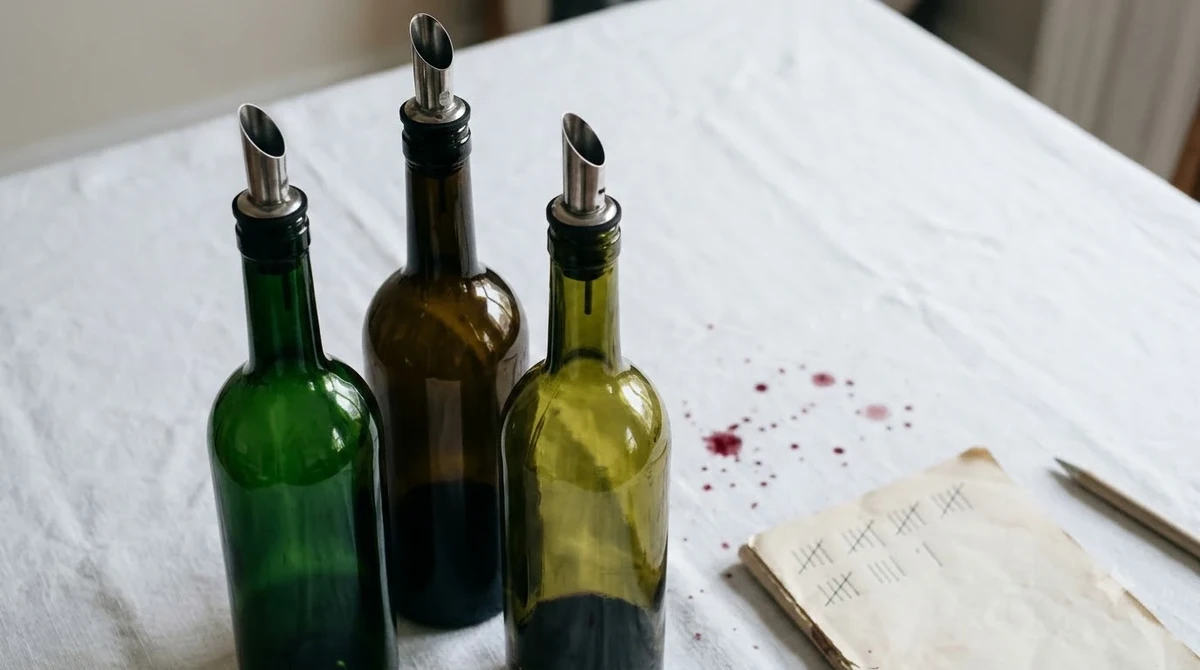
Tip: Smell the wine before you taste it. A sharp, vinegary nose is a strong sign that the bottle should not be poured into a glass for drinking.
What Vinegar, Sherry, and Wet Cardboard Notes Mean
Three smells cause the most confusion for everyday drinkers. Vinegar, sherry-like notes, and wet cardboard can each point to different problems. Learning to separate them makes your judgment much more accurate.
Vinegar is the most common warning. Acetic acid is the main acid in wine, and a small amount is normal. When the level rises, the wine smells sharp and can taste like balsamic or pickled fruit. Wine Folly notes that very high levels can smell like balsamic vinaigrette, and in excess it reads as a fault.
Sherry-like notes are trickier. Some wines are made to show oxidized, nutty, dried fruit flavors, such as sherry, Madeira, and tawny port. In an everyday table wine that you expected to be fresh, the same character usually means the bottle has been exposed to too much oxygen. The difference is context: a wine should taste like its style.
Wet cardboard is the smell most people describe as a warning sign. It is tied to cork taint and usually means the bottle is faulty. You do not need to drink it to confirm, because the odor alone is enough. Take it back to the shop if you can.
Checking Color and Clarity in Red and White Wine
Color changes slowly, so it is useful when you compare a bottle to what it should look like. Hold the glass against a white background and tilt it slightly. Look at the edge, where the color is most revealing.
Red wine that has oxidized often turns brownish or orange at the rim. Wine Folly describes deep reds that lose their brightness and turn a brownish-orange color as a sign of oxidation. Some browning in older red wines is normal, so judge the color against the wine’s age and style.
White wine is more sensitive to oxygen than red. A white that has turned golden, amber, or dull may have spoiled, especially if the aroma has also changed. Pale whites with a fresh, bright look are usually in better shape. Clarity matters too, because cloudiness that appears suddenly in a clear wine is worth a closer smell.
Sediment is a different matter. Older bottles can form crystals or deposits that look alarming but are harmless. Wine Folly describes these tartrate crystals as mineral precipitates that settle at the bottom of older bottles. Decanting or simply leaving them in the bottle is the usual approach.
Bubbles in a still red or white can also be a sign of re-fermentation. The same guide says this often happens when residual sugar is bottled with the wine and no preservatives are used. If you see fizz in a wine that should be still, check the label and the style before you decide.
Does Wine Go Bad After Opening?
Yes, opened wine declines faster than sealed wine, and the timeline is shorter than many people expect. Air is the main enemy, so the way you store the bottle after the first pour matters a great deal.
Wine Folly offers a general rule: an open bottle that has sat for over a week is probably past its prime. The same source names fortified dessert wines, such as port and other wines with 18 percent alcohol or more, as common exceptions. Those styles hold up much longer once opened.
For everyday table wine, most bottles lose their brightness within a couple of days. Re-corking the bottle, keeping it cool, and limiting air contact can slow the change. Many drinkers also use a vacuum stopper or a smaller bottle to reduce the amount of air above the wine. For more detail on chilling after you open a bottle, read should you refrigerate red wine after opening.
Boxed wine is a special case because its packaging limits air contact. If you keep a box in the fridge, the wine can stay fresh for a longer stretch than a bottle. You can compare the timelines in more detail in does boxed wine go bad.
Is Expired Wine Safe to Drink or Cook With?
An expiration date is rarely printed on wine, so the more useful question is whether the wine still tastes and smells healthy. The sensory checks above matter more than the age on the label. A young, well-made wine can be past its best within a few months once opened.
According to Wine Folly, a wine that has gone bad from being left open won’t hurt you if you taste it, though it is usually not worth drinking. The same guide advises against drinking clearly spoiled wine simply because it is technically safe. Pour it out if the flavor is harsh, sour, or chemical.
For cooking, the rule is simple: use wine that you would be happy to drink. Slow cooking can soften some flaws, but it does not remove a vinegar smell or a musty odor. Those notes can carry into a sauce or stew and make the whole dish taste off. If the wine smells sharp, wet, or flat, leave it out of the pot.
Wine that is only a little tired but still pleasant can work well in braises, marinades, and reductions. Taste the wine first, and then taste the dish as it cooks. If you notice a sour or chemical edge in the pot, stop adding wine and start over with a fresh bottle.
Storage Habits That Keep Wine Fresh Longer
Good storage slows the changes that make wine go bad. Heat, light, and air are the three main risks, and each one can be managed with simple habits. Consistency matters as much as any single step.
Wine Folly says most people accept about 55 degrees as a good cellar temperature. More important than the exact number is keeping the temperature steady. Avoid garages that heat up in summer and never store wine in an attic, where temperatures swing widely.
- Keep sealed bottles in a cool, dark place away from windows and direct sunlight.
- Store bottles on their sides if they have corks, so the cork stays moist and sealed.
- After opening, re-cork or seal the bottle and refrigerate it, unless the style is meant to be served warm.
- Pour out any wine that shows clear signs of spoilage, rather than trying to save it.
Light damage can affect delicate whites, and Wine Folly notes that the colored glass of most bottles helps protect them. A clear bottle left near a sunny window is more at risk. For a fuller overview of keeping opened bottles fresh, see Open Wine & Preservation.
Frequently Asked Questions
How can I tell if wine has gone bad just by smelling it?
A bad wine often smells sharp, sour, or chemical. Vinegar, nail polish remover, and paint thinner are common warning notes. Wet cardboard or wet newspaper suggests cork taint. If the aroma is dull and the fruit is gone, the wine has probably oxidized.
Is it safe to drink wine that smells like vinegar?
Wine Folly says spoiled wine generally will not harm you, but it is usually not worth drinking. A strong vinegar smell means the wine has turned. Pour it out rather than finishing the glass, and check the bottle’s storage history if it is new.
How long does wine last once it is opened?
Most everyday table wines start to fade within a few days, and an open bottle that has sat for over a week is probably past its best. Fortified wines such as port hold up much longer. Refrigeration and a tight seal slow the change.
Can I cook with wine that has gone a little flat?
Wine that is only slightly tired can work in sauces and stews, as long as it tastes pleasant on its own. Wine with a sharp, vinegary, or musty smell can spoil a dish. Taste the wine before you add it, and use a fresh bottle if you are unsure.
Checking wine for spoilage takes only a minute once you know the signs. Start with smell, then look at color and taste if the bottle still seems fine. When a wine smells sharp or wet, trust that instinct and pour it out.
More in Storage & Fridge Care
 How Long Can You Store Wine in a Wine Fridge? Protect Bottle QualityUpdated Nov 20, 2026
 Can You Store Beer in a Wine Fridge? Keep Both Drinks FreshUpdated Nov 20, 2026
 Is It Worth Repairing a Wine Fridge? Spot the Cheap Fixes Before You ReplaceUpdated Nov 20, 2026
 Wine Fridge Condensation: Identify Causes and Fix Moisture ProblemsUpdated Nov 20, 2026
 Wine Fridge Too Cold: Protect Your Wine and Fix the TemperatureUpdated Nov 20, 2026
 How to Reset Wine Fridge: Restore Cooling and SettingsUpdated Nov 20, 2026