

We may earn a commission when you buy through links on this page, at no extra cost to you. Learn more.
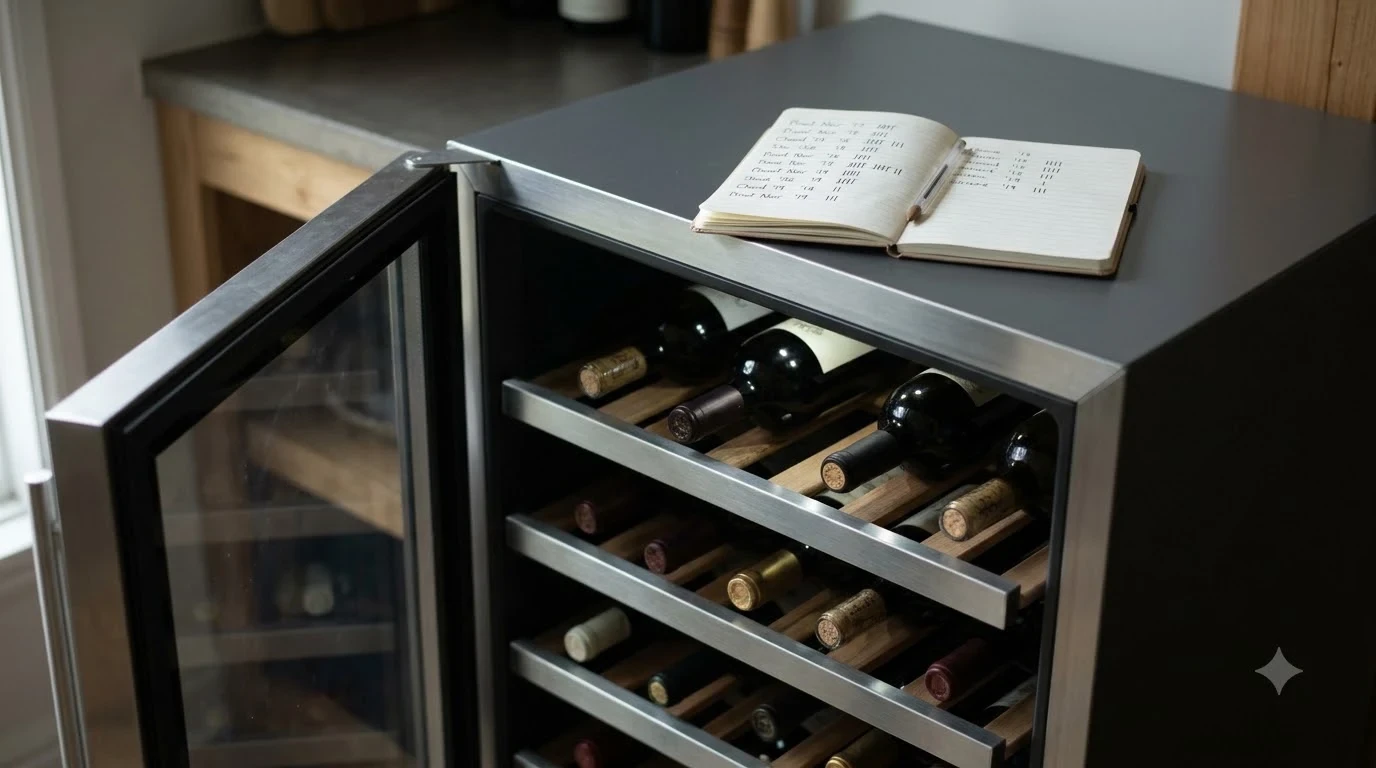
Haier wine fridge repair usually starts with checking the power supply, temperature setting, airflow, and door seal before replacing parts. Many apparent cooling failures come from a blocked filter, a door that is not closing fully, or a room that is too warm for the specific cooling system. Electrical faults, sensor errors, and compressor problems need model-specific diagnosis and, in many cases, a qualified service technician.
Haier wine coolers include thermoelectric and compressor designs, with different controls, filters, temperature ranges, and fault codes. Start with the model number and its manual; do not open electrical compartments or disturb the refrigerant circuit.
Start with the model number and safe first checks
The first repair step is to identify the exact Haier model and confirm that the appliance has a safe, stable power supply. The model matters because a control sequence or error code on one wine cellar may not apply to another, and Haier provides manuals and support by model number.
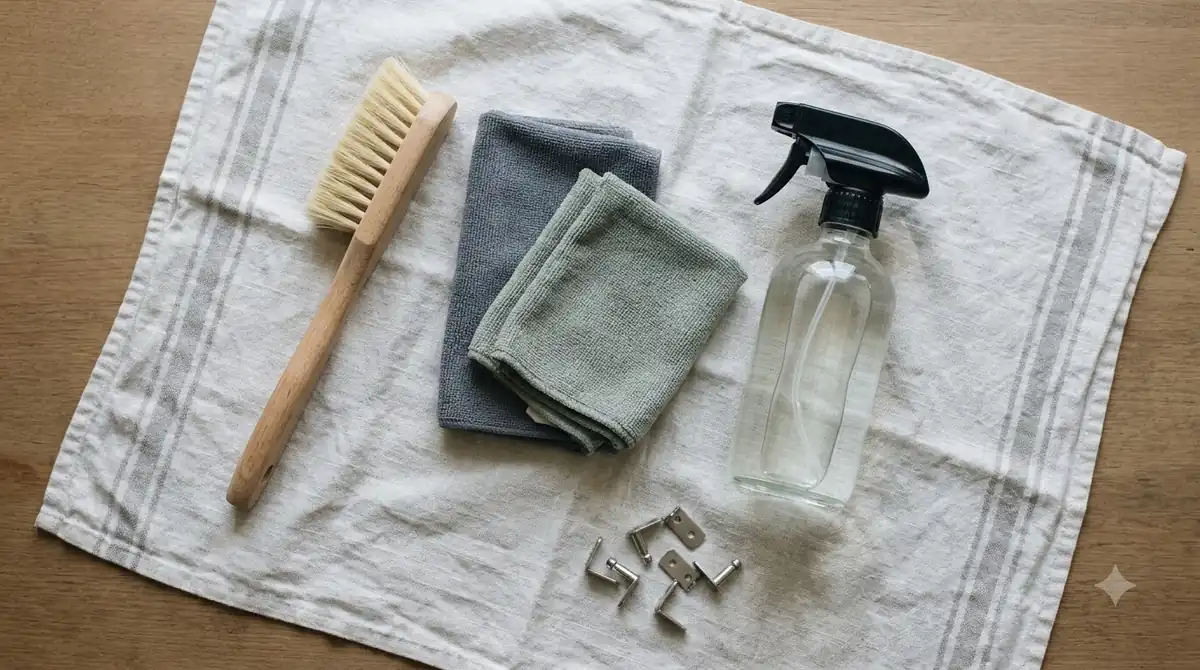
Record the model and serial numbers from the rating label before ordering parts or booking service. An older Haier manual hosted by Sears PartsDirect places the label on the cabinet back, but other designs may differ; check the manual before moving the unit. Haier’s US support page lets owners search product manuals by model number. Keep the purchase date and receipt for warranty questions.
For a dead unit, confirm that the plug is seated and the outlet works with another appliance. Check the household breaker once if needed; stop if it trips again. Do not use a cooler with a cracked, crushed, or unusually hot cord, and never defeat the grounding pin, splice a cord, or test live wiring.
Unplug the wine fridge before routine cleaning or any owner maintenance the manual permits. Haier’s HWC90UC user guide says to wait at least 7 minutes before reconnecting that model after power is disconnected; the JG45B instruction manual gives a 3-to-5-minute restart delay for that model. Those differences are a useful reminder to follow the instructions for the exact unit rather than applying a generic reset interval to every Haier cellar.
Diagnose warm wine and weak cooling
When the cabinet runs but bottles remain warm, check the room conditions, set temperature, door closure, and recent loading before assuming that the compressor or cooling module has failed. A wine cellar needs time to recover after the door has been open or a large group of room-temperature bottles has been added.
Room temperature matters on some thermoelectric Haier models. Haier’s US guidance says one unit can reach about 50–52°F in a 77°F room, versus 46–48°F in a 73°F room. These figures do not apply to every model, but show why a hot or poorly ventilated location can limit cooling. The HWC90UC manual separately specifies a 10–43°C ambient operating range for that cabinet.
Check that the selected temperature is actually appropriate for the compartment and has not been changed accidentally. Some Haier cellars have two independently controlled zones, so a setting changed for the upper chamber may not change the lower chamber. Avoid making repeated, large setpoint changes while diagnosing the problem. Set the desired value once, keep the door closed, and monitor the cabinet with a separate thermometer over a reasonable cooling period. A sudden load of bottles will take longer to cool than the empty cabinet, so assess the trend rather than expecting an immediate drop.
| Model or condition | Documented figure | How to use it |
|---|---|---|
| Haier thermoelectric unit in US support example | 77°F room: about 50–52°F minimum cabinet temperature | Shows how a warm room can limit cooling on that model |
| Same Haier thermoelectric example | 73°F room: about 46–48°F cabinet temperature | Compare only with the same type of unit and room conditions |
| Haier JG45B upper compartment | 5–10°C (41–50°F) setting range | Use the upper-zone controls for this model |
| Haier JG45B lower compartment | 10–18°C (50–64°F) setting range | Use the lower-zone controls for this model |
Tip: Record the actual temperature in both zones before changing settings; a warm upper shelf does not prove that the lower compartment has the same fault.
These examples are useful reference points, not universal pass-or-fail temperatures. If your model’s actual temperature stays well above its selected range after the room is suitable, the door is shut, and the unit has had time to recover, follow the separate Haier wine fridge not cooling troubleshooting steps and prepare the readings for service if the problem continues.
Check the controls, power button, and restart behavior
A blank display or unresponsive power button may point to a control issue rather than a failed cooling system. Use the sequence in the model manual; Haier control panels do not all work alike.
The Haier JG45B manual says to hold its power button for about 3 seconds. Its temperature controls change the selected chamber by 1°C per press, with separate upper and lower displays. A quick tap may not switch the unit off, and this sequence should not be assumed to work on another model.
If the fridge has just been unplugged, switched off, or affected by a power interruption, wait for the restart delay listed in its manual before deciding that it will not start. The JG45B guide specifies 3 to 5 minutes; the HWC90UC guide specifies at least 7 minutes after disconnection. Repeatedly cycling power in quick succession can stress the compressor on models whose instructions warn against frequent starts. Once it restarts, give the cabinet time to settle and record whether the display, fan noise, and temperature reading behave normally.
If the outlet has power but the cooler remains dead, or the display repeatedly loses its settings, stop at the external checks. A loose internal connector, damaged control board, failed sensor, or wiring fault is not a safe guess-and-replace repair. Haier’s Brand Troubleshooting resources can help distinguish basic care issues from symptoms that call for a technician.
Restore airflow and check the door seal
Restricted airflow and poor door closure can make a wine cooler run for long periods without holding temperature. Check the filter and cabinet clearance before ordering a fan or control board, and make sure bottles are not blocking the door.
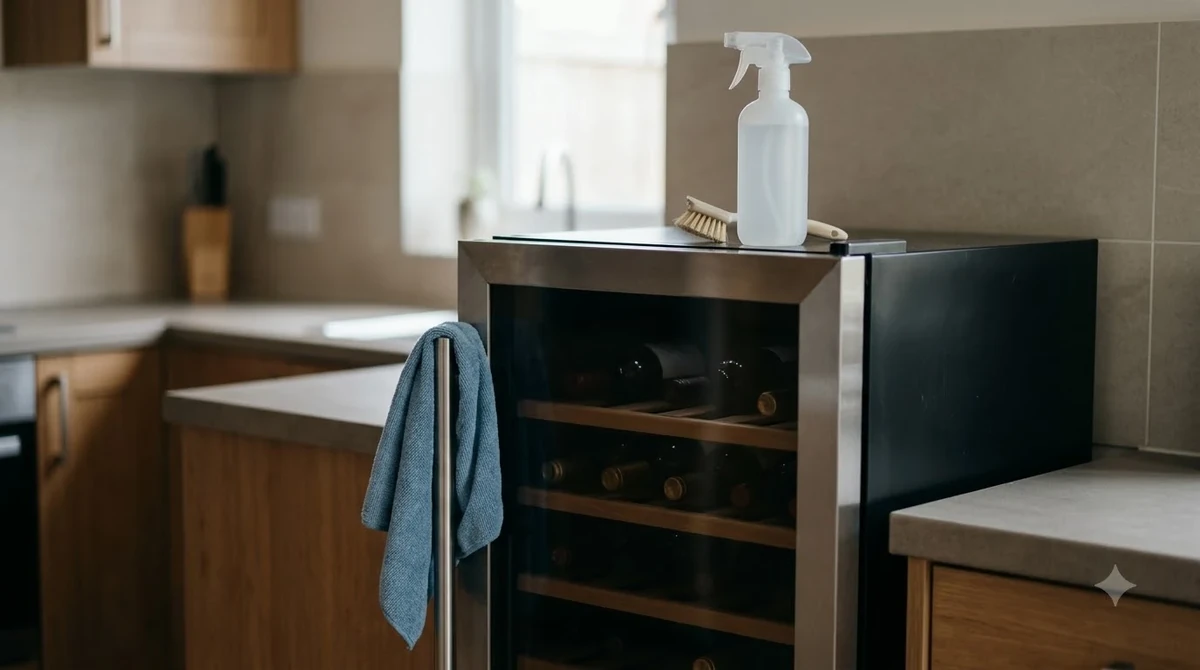
For the Haier model covered by its US “running but not getting cold” guidance, the fan filter is at the rear of the cabinet. Haier’s cleaning instructions are specific: unplug the wine cellar, press down the two tabs at the top of the filter to release it, remove dust and hair with a vacuum hose or wash it by hand in warm, soapy water, rinse it, and let it air-dry completely before reinstalling it. Do not assume every Haier unit has this removable filter in the same location. If your manual does not describe an owner-removable filter, clean only the exterior ventilation openings that are accessible without removing panels.
Leave the clearance specified in the installation manual. Haier’s HWC90UC instructions call for at least 50 mm of space above and around the appliance, while an older Haier HVH019A manual specifies 2 inches (50 mm) at the sides, top, and back. These similar figures belong to particular models, not every built-in or freestanding cellar. A cabinet installed tightly against a wall or surrounded by heat-producing appliances may struggle to shed heat; do not alter built-in cabinetry until you have checked the ventilation requirements for the exact model.
Inspect the door gasket all the way around for dirt, cracks, flattened sections, or areas that pull away from the cabinet. Clean it gently with a soft cloth and mild soapy water, then dry it; replace a torn or misshapen seal with a part matched to the model number. Check that shelves are seated, bottles do not protrude into the closing path, and the cabinet is level enough for the door to close evenly. A gasket that leaks warm air can cause condensation and extended run times, while an uneven cabinet can leave a small gap even when the door looks shut.
Understand Haier error codes, fan faults, and normal sounds
Read an error code as a model-specific diagnostic clue, not as a universal Haier code. The US Haier wine-cellar support chart and the HWC90UC manual use different code sets, and both direct several faults to customer service rather than to an owner repair.
On the Haier US support page for one wine-cellar family, “LL” indicates a compartment temperature below 23°F and “HH” indicates a temperature above 122°F. The same chart lists “EE” or “ER” for a temperature-sensor problem, “F1” or “F4” when the compressor has run continuously for more than 3 hours, “F2” for a single sensor failure, and “F3” for both sensors failing. Haier says service is required for the sensor and compressor-related codes. Pressing the set or light on/off button can silence certain alarms, but the display code remains until the underlying problem is resolved.
The HWC90UC manual uses a different pair of codes: “L2” is a low-temperature alarm involving the control sensor, while “E6” indicates a cabinet fan malfunction. Its troubleshooting table says to contact customer service for either code. Do not interpret an E6 on another model using this manual, or assume that an “F” code means the same thing across product families. Photograph the display and note the model number before calling so the technician can use the correct diagnostic chart.
Some sounds are normal: a soft fan noise, refrigerant gurgle, or light expansion noise can occur during operation. A new rattle, scraping fan, repeated clicking without cooling, or vibration against nearby furniture deserves attention. Haier’s older thermoelectric service manual lists blocked fans and broken blades as technician diagnostic points; live-power and internal checks belong to qualified personnel.
Know when to call for Haier wine fridge service
Limit owner maintenance to checks and cleaning allowed by the manual. A persistent error code, failed internal fan, damaged wiring, sensor issue, or compressor that runs without cooling calls for service, not cabinet disassembly.
Unplug the unit and arrange service if the power cord or plug is damaged, you smell burning, you see signs of melting, the breaker trips repeatedly, or water has reached electrical components. Do not remove a sealed-system cover, cut refrigerant tubing, add refrigerant, bridge a sensor, or bypass a safety device. Haier’s HWC90UC manual warns that electrical equipment should be serviced by qualified electrical experts and that a damaged supply cord should be replaced by the manufacturer, its service agent, or a similarly qualified person. Refrigerant circuits must remain intact; some wine-cooler models use flammable refrigerant, so puncturing a tube or creating a spark near a leak can create a serious hazard.
Before booking, collect the model and serial number, purchase date, receipt, error code, and symptom history. Note the room temperature, setpoint, actual cabinet temperature, fan behavior, and whether the compressor cycles. Mention any filter or gasket cleaning already completed; these details help the provider identify the likely fault and correct parts.
For Haier-branded appliances in the United States, Haier lists 1-877-337-3639 for support and provides an online service-scheduling route. You can review its wine cellar cooling troubleshooting instructions before arranging a visit, and its wine cellar error-code chart can help you record what appears on the display. Confirm the warranty terms for your exact model and country before approving parts or labor.
Frequently Asked Questions
How can I tell whether the JG45B display shows the set temperature or the actual temperature?
On the JG45B, press “Set Upper” or “Set Lower” to view that compartment’s current temperature. The LED flashes the reading, then returns to the setpoint after about 5 seconds.
Is a small temperature difference normal after first switching on a JG45B?
The JG45B manual notes that the displayed temperature may differ by a few degrees from the setpoint when first used or restarted after a long shutdown. It says the difference should settle after a few hours of operation.
Can I run a Haier JG45B from an extension cord?
The JG45B manual calls for a properly installed, grounded wall outlet and says not to use an extension cable or remove the grounding pin. Ask an electrician to assess an outlet that cannot be reached safely.
Can I replace the HWC90UC interior LED light myself?
The HWC90UC manual describes the lamp as DC 12V with a maximum power of 2W and recommends contacting a service person to replace it. That is a model-specific instruction, not a universal specification for Haier wine cabinets. Keep the unit disconnected and arrange service rather than substituting a household bulb.
How long should a Haier wine cabinet stand after it has been tilted during a move?
The HWC90UC guide says that after the appliance has been tilted more than 45 degrees, you should wait 24 hours before plugging it in. The JG45B manual separately advises leaving that model upright for about 2 hours before its first connection after transport. Follow the moving instructions supplied for your exact cabinet, because transport and refrigerant-system designs differ.
A sensible Haier wine fridge repair starts with the model label, the room conditions, the power supply, and the door and airflow checks—not guesswork or replacement parts chosen by appearance. Clean only the user-serviceable areas, record temperatures and error codes, and leave electrical and cooling-system faults to qualified service technicians so the cabinet can return to stable wine storage safely.
More in Storage & Fridge Care
 How Long Can You Store Wine in a Wine Fridge? Protect Bottle QualityUpdated Nov 20, 2026
 Can You Store Beer in a Wine Fridge? Keep Both Drinks FreshUpdated Nov 20, 2026
 Is It Worth Repairing a Wine Fridge? Spot the Cheap Fixes Before You ReplaceUpdated Nov 20, 2026
 Wine Fridge Condensation: Identify Causes and Fix Moisture ProblemsUpdated Nov 20, 2026
 Wine Fridge Too Cold: Protect Your Wine and Fix the TemperatureUpdated Nov 20, 2026
 How to Reset Wine Fridge: Restore Cooling and SettingsUpdated Nov 20, 2026