

We may earn a commission when you buy through links on this page, at no extra cost to you. Learn more.
A haier wine fridge not cooling is often caused by a room that is too warm, restricted airflow, a door that is not sealing, or a setting that does not suit the model. Start by identifying whether the unit uses thermoelectric or compressor cooling, because those systems respond differently to room conditions. Then check power, temperature controls, the door, and ventilation before assuming a cooling component has failed. Several of these checks take only a few minutes and do not require removing a panel.
A wine cooler that feels warm is frustrating, especially when bottles need a steady storage temperature. The key is to separate a normal operating limit from a fault: a thermoelectric Haier cellar may be unable to reach its setpoint in a hot room, while a blocked filter or loose gasket can affect cooling on other models. The steps below help narrow down the cause without risking damage to the appliance.
Identify the Haier Cooling System Before Troubleshooting
Start with the model number and cooling technology, because Haier sells wine cellars with different operating designs. Haier’s thermoelectric guidance describes semiconductor cooling rather than a compressor, and its control instructions advise allowing at least 30 minutes for the cellar to acclimatize before changing the setting.
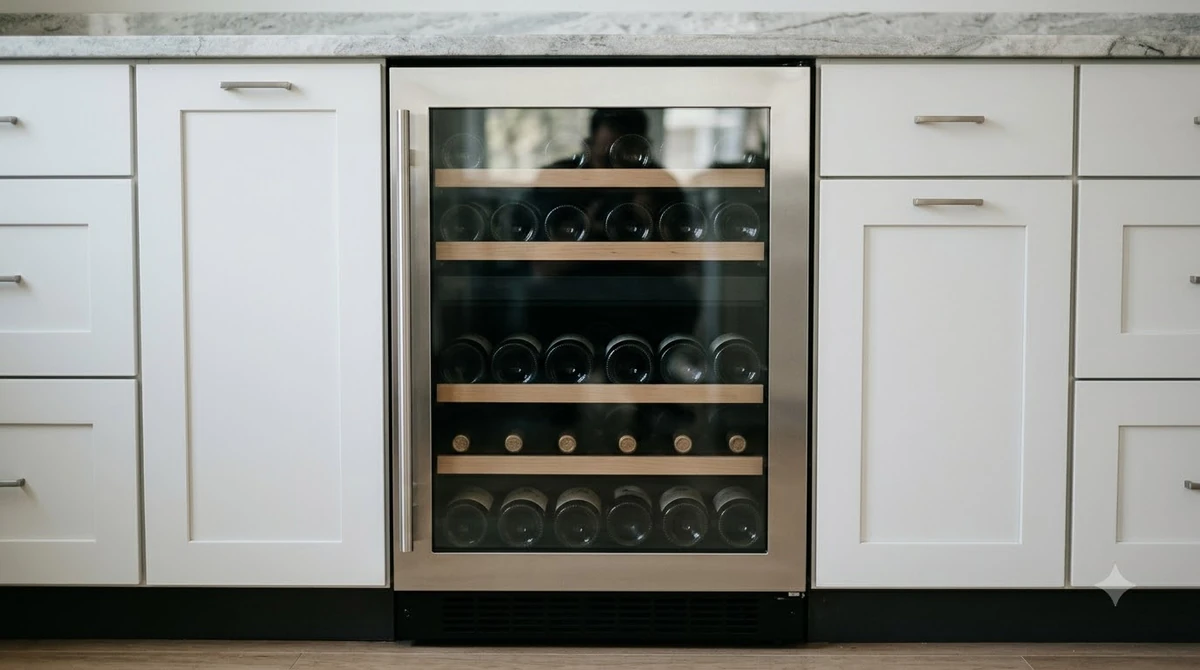
Find the model and serial label before making adjustments. Depending on the design, it may be inside the cabinet, near the door frame, or on the rear exterior. Record the complete model number, not just the Haier name on the front. That number lets you match the appliance to the correct owner’s manual, temperature range, ventilation requirements, and filter-cleaning instructions. A recommendation written for one Haier wine cellar should not automatically be applied to every unit in the product line.
A thermoelectric model generally produces little operating sound because it does not use a compressor, and its cooling performance is closely tied to the room temperature. A compressor model works differently and may run longer when the room is hot or the cabinet has just been loaded. Also note whether the cabinet is single-zone or dual-zone: on a two-compartment model, confirm which control applies to the area that feels warm before changing a setting.
Use the manual’s control and installation sections as well as its troubleshooting page. They identify the temperature range, vent locations, and whether the unit is freestanding or built-in. An installation mismatch can resemble a cooling-system failure.
Compare the Room Temperature With the Setpoint
Ambient temperature is especially important on Haier thermoelectric wine cellars. Haier gives a model-specific example in which a room at 77°F may limit the cabinet to about 50°F–52°F, while a room at 73°F may allow about 46°F–48°F; these are examples for the model covered by that support page, not a guarantee for every Haier unit.
This explains why a display can show a setpoint that the cabinet never reaches. A control setting is a target, not proof that the cooling system can achieve that temperature in every room. Haier also says a thermoelectric cellar may not operate when the room is colder than the selected cabinet temperature; cooling begins after the ambient temperature rises above the set temperature. A wine cooler in a cool basement can therefore behave differently from the same model in a warm kitchen.
Check the room temperature near the cooler, especially if it sits beside an oven, sunny window, heating register, or warm entertainment system. Haier separately lists upper-zone settings of 54°F–66°F and lower-zone settings of 46°F–66°F for its dual-zone cellar range. These are product-family specifications, so use the manual for the exact model.
| Haier support example | Room temperature | Cooling information |
|---|---|---|
| Thermoelectric example | 77°F | Lowest cabinet temperature about 50°F–52°F |
| Thermoelectric example | 73°F | Cabinet temperature about 46°F–48°F |
| Thermoelectric range page | 77°F or warmer | Lowest setting may be limited to about 50°F |
| Dual-zone upper compartment | Setpoint range | 54°F–66°F |
| Dual-zone lower compartment | Setpoint range | 46°F–66°F |
Do not keep lowering the setting in an attempt to force a thermoelectric cooler below its room-dependent limit. Move the unit away from direct heat, improve room conditions where possible, and compare its actual temperature with the model’s stated range. Haier explains this relationship in its wine cellar temperature-control guidance.
Check Power, Controls, and the Door Seal
Confirm the basic conditions first: a working outlet, the power switch in the on position, the correct temperature control, and a door that closes completely. Haier’s troubleshooting checklist names each as a possible reason for warm wine; on a dual-zone model, make sure you are adjusting the control for the compartment that is too warm. Check that the plug is fully seated and the outlet has power, and verify any wall switch is on. A tripped breaker can interrupt operation. Reset it only once if safe; if it trips again, stop using the appliance and have the electrical issue checked. Do not use a damaged cord, loose plug, or hot outlet. On a keypad, check for a control lock or standby mode before pressing buttons repeatedly.
Inspect the door from top to bottom. Bottles, shelves, or a shifted rack can prevent full closure; look for a gasket that is folded, dirty, cracked, loose, or not contacting the cabinet evenly. Clean it with a soft cloth and mild soapy water, then dry it. A simple paper check can help identify a weak area: close the door on a strip of paper and pull gently. The paper should have some resistance. Repeat at several points around the perimeter; a section that slides out freely may indicate poor contact, though a damaged seal or misaligned door may need service.
Consider recent use as well. Haier lists frequent or prolonged door openings, high room humidity, and recently added wine as possible reasons bottles remain warm. A large load of room-temperature bottles can raise the cabinet temperature for several hours. Reduce unnecessary openings while the unit recovers, and avoid loading many warm bottles at once.
Tip: Make one change at a time. Confirm the outlet and door closure first, then adjust the correct zone once. Note the room temperature, setpoint, and cabinet reading so you can tell whether the change helped.
Restore Airflow and Clean the Fan Filter
Restricted airflow can make a working wine cooler seem as if it has lost its cooling capacity. Haier’s support instructions identify a blocked fan filter at the rear of the cabinet as one possible cause, and describe a filter held by two tabs at its top; ventilation openings around the installed unit also need to remain clear.
Start with a visual inspection. Check the grille and visible intake or exhaust openings for lint, dust, pet hair, paper, or objects pushed against the cabinet. Pull curtains, storage bins, and other items away from the vents. If the cooler is in a tight cabinet, confirm that the installation matches the requirements for that model. Freestanding and built-in designs can discharge warm air in different places, so do not guess at a universal clearance measurement.
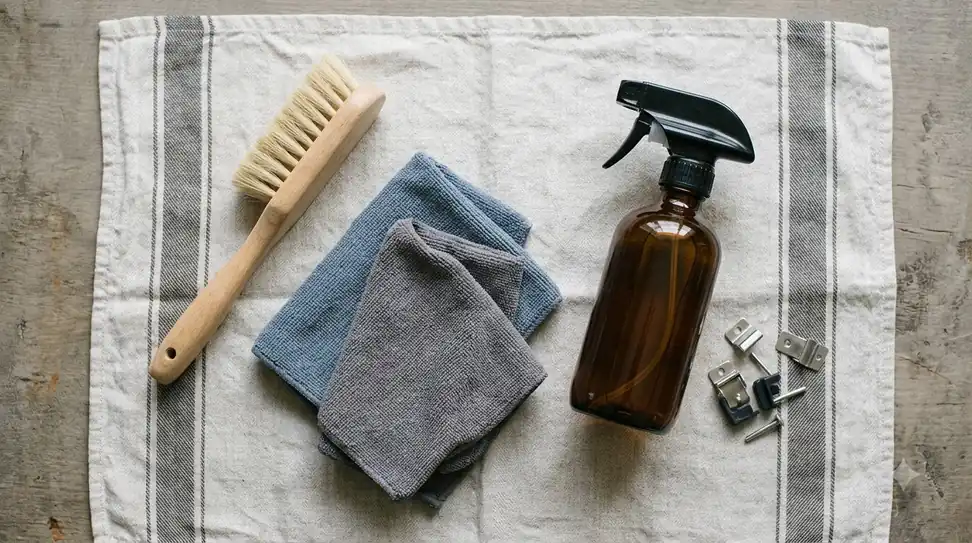
For a Haier thermoelectric model with the removable rear fan filter described in its support instructions, unplug the wine cellar before cleaning. Locate the filter on the back and press down on the two upper tabs to release it. Haier describes two cleaning options: use a vacuum hose to remove dust, hair, and debris, or wash the filter by hand with warm, soapy water. If washing, rinse it well and allow it to air-dry completely before reinstalling it. Do not remove other rear panels or reach into the fan assembly.
Keep the exterior and air openings clean. Unplug the appliance before cleaning accessible vents, and use a soft brush or vacuum without pushing debris deeper into the grille. Do not spray water or cleaner into an opening or use sharp tools near wiring or fan blades. Refit the dry filter securely. If the unit still warms with clear openings, a fan, sensor, or another component may need service. Haier’s warm-wine and not-getting-cold troubleshooting page gives the model-specific filter steps; follow them only if your cellar has that filter design.
Measure the Temperature and Allow Recovery Time
Judge cooling by a temperature reading over time, not by how cold the interior air feels when the door opens. Haier advises waiting at least 30 minutes after first plugging in a thermoelectric cellar before adjusting its controls, while Whirlpool’s wine-cellar guidance notes that a large addition of warm bottles can take several hours to stabilize.
Use a separate appliance thermometer near the middle of the cabinet, away from a cooling plate, vent, or rear wall. In a dual-zone unit, measure both compartments. Keep the door closed, and record the room temperature, setpoint, cabinet reading, and time. Repeat after a few hours under similar conditions to distinguish slow recovery from a temperature that is not moving toward the target.
Allow for the bottles as well as the air. A thermometer can respond quickly to a brief door opening, while wine changes temperature more slowly. If many room-temperature bottles were added, give the interior several hours to settle, keep the door closed as much as practical, and avoid adding more warm bottles during recovery. Do not reset the controls repeatedly because the display has not changed right away.
For longer-term wine storage, a steady temperature matters more than chasing a very cold number. Vinotemp’s general wine-storage guidance cites approximately 55°F (13°C), but the best setting for a particular Haier cellar depends on its supported range, the room temperature, and whether it has one or two zones. Compare the measured temperature with the model’s expected capability in its actual location: a thermoelectric cellar may be operating within the example Haier publishes for a warm room, while a compressor model that keeps warming despite clear vents and a closed door deserves further diagnosis.
Know When a Repair Call Is the Right Next Step
Arrange service when the basic checks do not restore cooling, when the unit repeatedly loses power, or when there are signs of an electrical or mechanical fault. Before calling, gather two temperature readings—the room and cabinet temperatures—plus the model number, selected setting, and a short description of what happens after power is restored.
Stop troubleshooting and unplug the unit if the cord is damaged, the plug or outlet becomes hot, you smell burning, hear repeated electrical clicking, or a breaker trips again after one reset. Do not open the sealed cooling system, test live wiring, bypass a thermostat, or attempt to add refrigerant. A thermoelectric model that has power but cannot lower the temperature may have a fan, heat-transfer, or control problem; a compressor model that runs continuously without cooling may need refrigeration-system diagnosis. These are possibilities for a technician to evaluate, not instructions to replace parts based on sound alone.
When contacting Haier or an authorized service provider, share the complete model and serial numbers. Explain whether the fan runs, whether the cabinet is freestanding or built-in, whether the door seal is even, and how the temperature changed. Keep the repair decision model-specific. Separate brand guides can help compare symptoms, including Allavino wine fridge not cooling, Magic Chef wine fridge not cooling, and Kalamera wine fridge not cooling. The broader Brand Troubleshooting section is useful for finding storage-care instructions without treating every cooler as mechanically identical.
If the wine has become warmer while the appliance is being assessed, move the bottles to a location with a stable, suitable temperature rather than repeatedly opening the malfunctioning unit. Keep them away from direct sunlight and heat sources. Once the cooler is repaired, allow its temperature to stabilize before returning the collection, and avoid overloading it with warm bottles in one batch.
Frequently Asked Questions
The five questions below cover two areas that often get missed during first checks: display behavior at startup and differences between thermoelectric and compressor designs.
Why does the display show a warmer temperature right after I plug in the cooler?
On the thermoelectric model covered by Haier’s temperature-control instructions, the LED first displays the room temperature after the unit is plugged in. The internal temperature appears afterward, so the first number is not necessarily a reading from the wine compartment.
Can I use a Haier thermoelectric wine cellar to chill food?
No. Haier says its thermoelectric wine cellars are not designed or recommended for food storage. The interior may not be cold enough for that purpose, so use an appliance designed for food refrigeration instead.
Does a Haier thermoelectric wine cellar use conventional refrigerants?
Haier says its thermoelectric cooling technology does not use CFC-, HCFC-, or HCF-type refrigerants. That is a separate design distinction from a compressor-based cooling system.
Why does Haier mention vibration in its thermoelectric cooling information?
Haier notes that the low-vibration design helps keep bubbles from forming in stored wine. That feature is one reason the quiet operation of a thermoelectric cellar can be normal rather than a sign that the unit is inactive.
Is a compressor wine cellar supposed to run all the time?
Whirlpool says the motor in its wine cellars may run about 40%–80% of the time under normal room conditions, with longer operation in warmer conditions. That is Whirlpool-specific guidance, not a Haier run-time specification, so use the Haier manual and temperature readings to judge a Haier unit.
A Haier wine fridge that is not cooling may have a room-temperature limitation or a straightforward airflow, setting, or door problem, but persistent warming deserves a proper diagnosis. Identify the model, record actual temperatures, complete the safe checks, and use Haier’s model-specific instructions before arranging service.
More in Storage & Fridge Care
 How Long Can You Store Wine in a Wine Fridge? Protect Bottle QualityUpdated Nov 20, 2026
 Can You Store Beer in a Wine Fridge? Keep Both Drinks FreshUpdated Nov 20, 2026
 Is It Worth Repairing a Wine Fridge? Spot the Cheap Fixes Before You ReplaceUpdated Nov 20, 2026
 Wine Fridge Condensation: Identify Causes and Fix Moisture ProblemsUpdated Nov 20, 2026
 Wine Fridge Too Cold: Protect Your Wine and Fix the TemperatureUpdated Nov 20, 2026
 How to Reset Wine Fridge: Restore Cooling and SettingsUpdated Nov 20, 2026