

We may earn a commission when you buy through links on this page, at no extra cost to you. Learn more.
A Magic Chef wine fridge not cooling usually points to a power or temperature-setting problem, restricted ventilation, a door that is not sealing properly, or insufficient recovery time after a restart. Start by checking the electrical supply, temperature controls, room conditions, and door gasket before assuming a component has failed. Many cooling problems have straightforward causes that can be corrected without replacing parts. More serious symptoms, including continuous operation without cooling or abnormal compressor noises, require professional diagnosis.
A wine cooler needs more than a working power supply to maintain a stable interior temperature. Its cooling system also depends on adequate airflow, suitable room conditions, a properly closing door, and enough time to bring the cabinet and its contents down to the selected temperature. Magic Chef makes several wine and beverage cooler designs, so the correct troubleshooting procedure depends partly on the model. The following checks provide a practical starting point while distinguishing model-specific instructions from general refrigeration advice.
Start With Power and Temperature Controls
A Magic Chef wine cooler that receives electricity but does not reach its selected temperature may have an incorrect setting or an interrupted power supply. Confirming these two basics first helps separate an operating problem from a refrigeration fault.
Begin by checking whether the cooler’s display and interior light operate. If the display is completely blank, inspect the plug and outlet before investigating the cooling system. Test the receptacle with another working appliance, provided the outlet and electrical connection appear safe. Also inspect the household circuit breaker for a tripped circuit. A loose connection, interrupted supply, or blown fuse can prevent the cooler from operating even when its controls appear undamaged.
Next, check the selected temperature. A setting that is warmer than intended can make the cooler appear defective even though its cooling system is responding correctly. On the Magic Chef MCWC8DCT3 countertop model, the adjustable range is 46°F to 64°F. Its down button decreases the selected temperature, while its up button increases it. The available range is different on other Magic Chef wine and beverage models, so the controls should be interpreted using the correct model instructions.
Pay attention to the difference between the target temperature and the current cabinet temperature. The MCWC8DCT3 briefly flashes the selected setting before returning to its actual interior temperature reading. For example, selecting 50°F does not mean the cabinet has already reached 50°F. The displayed temperature should gradually approach the setting as the appliance operates.
A separate refrigerator thermometer placed around the middle of the cabinet can help confirm whether cooling is taking place. Record the reading, leave the door closed, and observe whether the temperature changes over several hours. A cabinet that is slowly getting colder may simply be recovering. A reading that remains unchanged or continues rising deserves further investigation.
Check Ventilation and Room Temperature
Restricted ventilation is one of the first installation problems to investigate when a wine cooler runs continuously without reaching its selected temperature. The space around the cabinet and the temperature of the surrounding room can directly affect cooling performance.
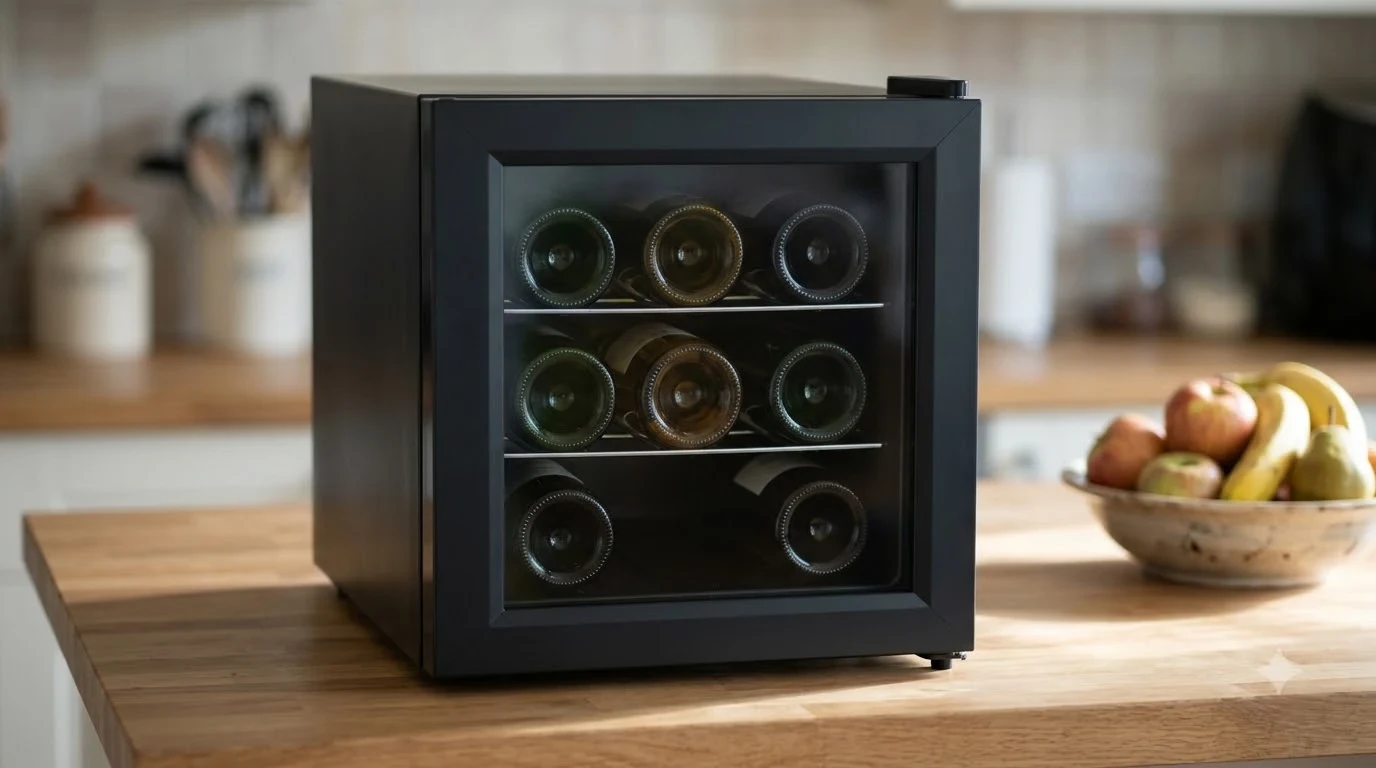
The Magic Chef MCWC8DCT3 manual specifies five inches of clearance at the back and sides of the appliance. That space allows the cooler to release heat rather than allowing warm air to collect around its exterior. Placing this countertop model directly against a wall, inside a tight cabinet, or beside another heat-producing appliance can interfere with its ability to maintain the desired interior temperature.
Room temperature matters just as much. The MCWC8DCT3 manual recommends an ambient temperature between 60°F and 83°F. Temperatures below 46°F or above 86°F can hinder its performance. Direct sunlight, a nearby stove, a radiator, or a hot kitchen environment can therefore make a seemingly functional wine cooler struggle to maintain its setting.
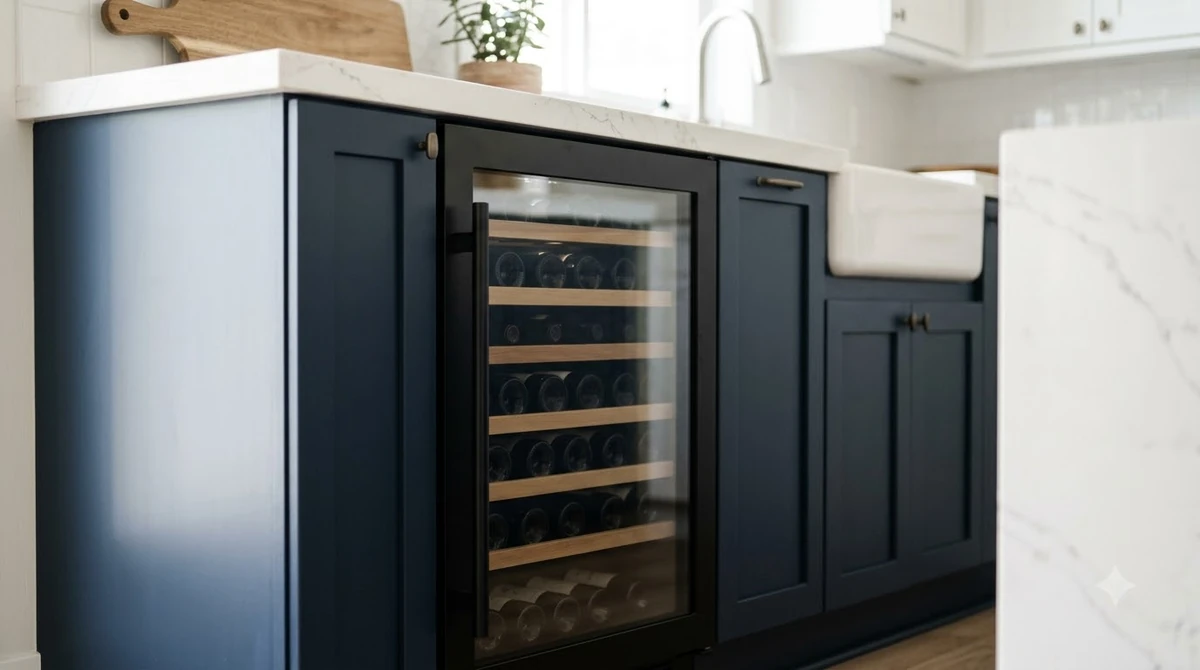
Installation requirements are not identical across the Magic Chef range. The MCWC8DCT3 is a freestanding countertop appliance and should not be recessed or built into cabinetry. The larger MCWBC24DZ1, by comparison, is designed for either built-in or freestanding installation. That distinction matters because a freestanding appliance and a purpose-built undercounter appliance may use different ventilation arrangements.
Use these measurements as model-specific reference points rather than universal specifications for every Magic Chef wine fridge:
| Measurement | MCWC8DCT3 specification | Practical meaning |
|---|---|---|
| Temperature setting | 46°F–64°F (8°C–18°C) | Available thermostat adjustment range |
| Rear and side clearance | 5 inches | Required ventilation space |
| Recommended room temperature | 60°F–83°F (15°C–28°C) | Preferred surrounding conditions |
| Performance limits | Below 46°F or above 86°F | Conditions that hinder cooling performance |
| Empty-cabinet cooling time | Approximately 3–4 hours | Expected initial temperature recovery |
| Restart delay after power loss | 3–5 minutes | Required waiting period before restarting |
Before moving an appliance, check its installation instructions and make sure the new location provides the specified ventilation. For a freestanding unit, clearing the rear and side spaces may be enough to improve performance. For a built-in model, inspect the intended ventilation openings and make sure a cabinet panel, floor covering, or stored item is not obstructing them.
Tip: Record the cooler’s model number and measure the available clearance before changing its position. This prevents you from applying the five-inch MCWC8DCT3 requirement to a different Magic Chef model with another installation design.
Inspect the Door Seal and Interior Airflow
A wine cooler cannot maintain a consistent temperature if warm room air continually enters the cabinet. A door that does not close completely, a dirty gasket, or blocked interior ventilation can produce the same basic symptom: the appliance operates, but the bottles remain warmer than expected.
Start by inspecting the door when it is closed. Check whether a bottle, shelf, or misplaced rack prevents the door from sitting flush against the cabinet. Make sure the cooler is level and that nothing protrudes beyond the shelf arrangement. Even a small obstruction can leave a gap through which warm air enters.
Examine the rubber gasket around the entire door perimeter. Look for dirt, sticky residue, visible cracks, flattened sections, or areas that have pulled away from the surrounding surface. A damaged or poorly seated gasket allows cold air to escape while warmer air enters. The MCWC8DCT3 manual specifically identifies an improperly sealing gasket as a possible cause of excessive interior temperature.
Clean a dirty gasket with a soft cloth and lukewarm water, then dry it before closing the door. Avoid aggressive chemicals and abrasive cleaning tools that could damage the rubber. If the gasket is torn, permanently deformed, or no longer makes contact with the cabinet, consult Magic Chef about the correct replacement part for the specific model.
Frequent door openings also affect cooling performance. Each time the door opens, warmer room air replaces some of the cooler air inside the cabinet. Repeated openings make the appliance work harder, especially when the surrounding room is already warm. Check the temperature through the display rather than repeatedly opening the door to inspect the bottles.
Finally, examine the interior vent or fan cover. Bottles and shelves should not obstruct the airflow path. Some compact coolers have a visible fan mask, while other designs circulate air through different internal arrangements. Avoid placing bottles directly against an opening or blocking the path between shelves. If dust has accumulated around an accessible ventilation opening, switch the appliance off, disconnect its power, and clean the exterior vent carefully. The MCWC8DCT3 manual specifically recommends vacuuming its vent when dust or other material restricts airflow.
Allow Enough Time After Setup or a Restart
A wine cooler does not reach its target temperature instantly after installation, a power interruption, or a substantial change in its contents. Giving the appliance an appropriate recovery period helps prevent unnecessary resets and mistaken diagnoses.
The MCWC8DCT3 installation instructions recommend allowing approximately three to four hours of cooling before adding wine bottles. Its operating instructions also state that an empty cabinet may take around three to four hours to reach the selected temperature. The troubleshooting guide separately identifies four hours as the time required for the appliance to cool down completely after being disconnected for a period.
Restart timing is another important detail. When the MCWC8DCT3 is unplugged or loses power, its manual instructs the owner to wait three to five minutes before restarting it. Attempting to turn it back on immediately can prevent the appliance from starting properly. Follow the instructions for the particular model rather than repeatedly unplugging and reconnecting it in an attempt to force cooling.
Loading warm bottles adds another complication. The cooler must bring down the temperature of both the cabinet and its contents. A fully loaded unit containing bottles at room temperature may take considerably longer to settle than an empty cabinet. Do not interpret the initial temperature reading after loading as proof that the cooling system has stopped working.
It is also important to distinguish the temperature of the air from the temperature of the wine itself. Air temperature inside the cabinet can change more quickly than the temperature of a full bottle. Consequently, a display may move toward the selected setting while the contents are still recovering. A stable thermometer reading over time provides more useful information than a single measurement taken shortly after a restart.
After correcting a setting or moving the cooler to a better location, keep the door closed and allow the temperature to stabilize. Avoid repeatedly changing the thermostat because every adjustment makes it more difficult to determine whether the previous correction helped. If the temperature continues rising after the appropriate recovery period, move the bottles to another suitable storage location while investigating the problem.
Recognize Fan, Sensor, and Compressor Problems
If power, settings, ventilation, and door sealing are all satisfactory, a mechanical or electrical fault becomes more likely. Fans, temperature sensors, control boards, and compressor or sealed-system components can all contribute to inadequate cooling.
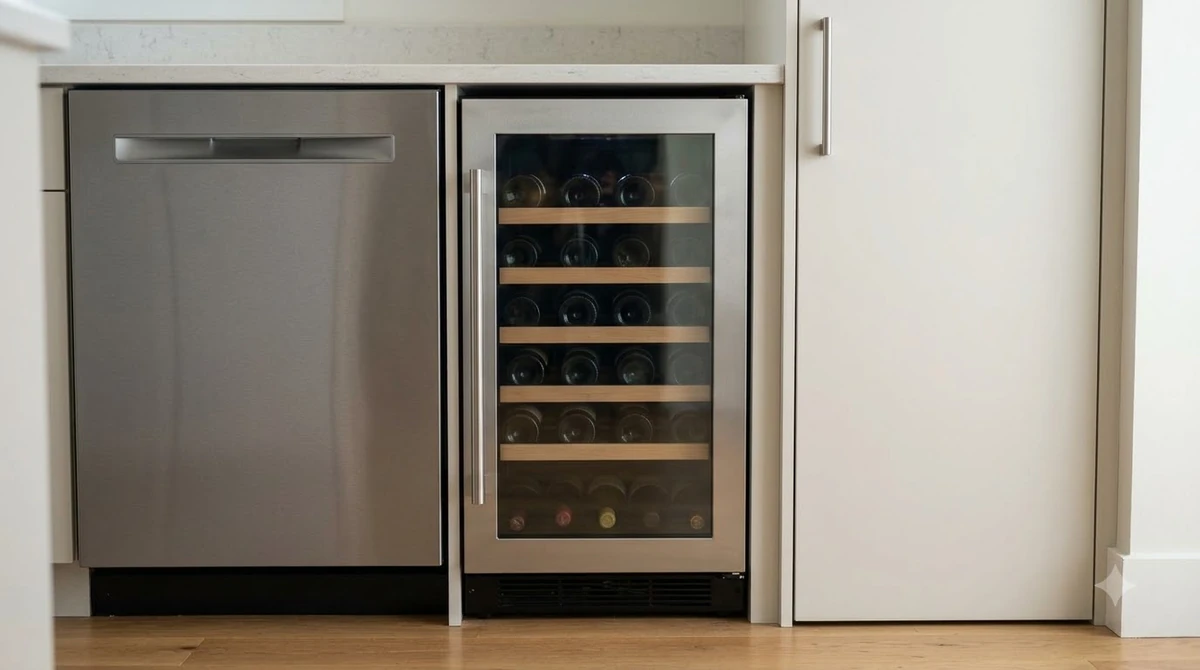
Start by noting what the appliance does while it is operating. A cooler that runs continuously without becoming colder may be struggling to remove heat. A sudden change in fan noise, a lack of expected airflow, or repeated starting and stopping can also provide useful diagnostic information. However, noise alone does not identify a failed component. Different Magic Chef models have different cooling arrangements, and normal operating sounds can vary between them.
One possible source is a fan or airflow problem. Some wine coolers use fans to circulate air inside the cabinet or move heat away from the cooling components. If a fan stops working, the cabinet may develop uneven temperatures or struggle to cool. On a dual-zone model such as the Magic Chef MCWBC24DZ1, an unexpectedly warm compartment while the other zone operates normally is another reason to investigate the cooling system.
A temperature sensor fault can produce a different pattern. The appliance may receive inaccurate temperature information and run for too long, stop prematurely, or fail to respond properly to control adjustments. A faulty control board can also interrupt communication between the thermostat, sensor, and cooling components.
Compressor and sealed-system problems are generally more serious. A compressor that cannot start, a cooling system that runs without producing sufficient cooling, or abnormal clicking during attempted operation can indicate a component fault. Sub-Zero’s separate wine-storage troubleshooting guide distinguishes condenser cleaning from fan-motor and compressor problems, illustrating why these symptoms require different diagnostic approaches.
For additional guidance on the distinction between safe preliminary checks and professional diagnosis, consult this wine cooler troubleshooting and repair checklist. It identifies fan, temperature sensor, control-board, compressor, and sealed-system issues among the possible causes of inadequate cooling.
Do not open electrical panels, disconnect internal wiring, or attempt to access refrigerant tubing. Sealed refrigeration systems require specialized tools and technical knowledge. Continuing to operate equipment that is repeatedly clicking, overheating, or failing to cool may also make an existing fault worse. When those symptoms appear, switch to the appropriate safe shutdown procedure in the owner’s manual and arrange a professional inspection.
Choose the Right Repair and Support Option
Once the basic checks have been completed, the next step is to decide whether the cooler needs further owner-level maintenance or a professional repair. A clear record of the symptoms and model information makes that decision easier and helps prevent unnecessary part replacements.
Before contacting support, write down the model number, serial number, selected temperature, and actual cabinet temperature. Record the surrounding room temperature as well. These details can help distinguish between an environmental problem and a cooling-system failure. Also note whether the problem started after moving the appliance, loading new bottles, cleaning it, or experiencing a power interruption.
It helps to describe the appliance’s behavior accurately. For example, explain whether the display operates normally, the temperature rises despite a colder setting, the fan appears to stop, or the compressor repeatedly clicks. If the cooler has two temperature zones, record both readings separately. A pattern of one warm compartment and one normally cooling compartment may point toward a different problem than a complete loss of cooling.
Magic Chef’s support resources include manual downloads, FAQs, contact details, and service-request options. Locate the instructions for the exact model before ordering parts or attempting additional troubleshooting. The Magic Chef MCWC8DCT3 owner’s manual is a useful example of how much installation, temperature-control, and recovery information can be specific to an individual wine cooler.
Warranty coverage should also be checked before authorizing a repair. The appropriate coverage depends on the appliance, purchase information, and applicable warranty terms. Confirm whether a proposed repair is covered before agreeing to replacement parts or labor. Keeping the original purchase documentation and a copy of the model information can simplify this process.
When comparing troubleshooting procedures across brands, remember that another manufacturer’s installation rules do not automatically apply to Magic Chef. The checks for an Allavino wine fridge not cooling may overlap with the checks described here, but ventilation arrangements and control settings can differ. The same applies to a Haier wine fridge not cooling problem. For other appliance brands and storage-care topics, see Brand Troubleshooting.
A useful repair decision comes down to the evidence. If the problem disappears after correcting the setting, clearing the ventilation opening, or restoring a proper door seal, further repairs may not be necessary. If the appliance remains warm despite correct installation and adequate recovery time, professional diagnosis is the more sensible next step.
Frequently Asked Questions
These answers cover several additional details that can help owners understand Magic Chef wine cooler operation and prepare for a support request.
Can the Magic Chef MCWC8DCT3 display differ from the actual cabinet temperature?
Yes. The MCWC8DCT3 owner’s manual allows for a small difference of approximately ±2°C between the LCD reading and the actual interior temperature. This is equivalent to approximately ±3.6°F. A separate thermometer can help confirm the cabinet’s temperature when the display reading seems unusual.
How many bottles can the Magic Chef MCWC8DCT3 hold?
The MCWC8DCT3 is designed to accommodate eight standard, unopened wine bottles. Bottles with unusual shapes or opened bottles may need to be positioned at different angles, which can reduce the usable capacity.
Can I operate the MCWC8DCT3 in an RV or with an inverter?
No. The model’s installation instructions specifically state that it is not designed for RV installation or inverter operation. Its specified electrical connection is a grounded household outlet rather than an alternative power arrangement.
Does the MCWC8DCT3 require a dedicated grounded electrical outlet?
Yes. Its manual specifies a properly installed, grounded three-prong outlet supplying 100–120 volts AC at 60 Hz. It also advises against using an extension cord because it can negatively affect appliance performance.
What documentation do I need for a Magic Chef wine cooler warranty claim?
The MCWC8DCT3 manual states that a dated sales receipt or invoice is required for warranty service or a refund. Its stated warranty provides one year of parts and labor coverage, subject to the terms and exclusions in the warranty document. Confirm the coverage applicable to your exact model before arranging a repair.
A Magic Chef wine fridge that stops cooling does not automatically need a new compressor or replacement appliance. Checking power, controls, ventilation, room temperature, and door sealing can identify many common problems. When those checks do not restore cooling, an accurate temperature record and model-specific information will help a qualified technician determine the right repair.
More in Storage & Fridge Care
 How Long Can You Store Wine in a Wine Fridge? Protect Bottle QualityUpdated Nov 20, 2026
 Can You Store Beer in a Wine Fridge? Keep Both Drinks FreshUpdated Nov 20, 2026
 Is It Worth Repairing a Wine Fridge? Spot the Cheap Fixes Before You ReplaceUpdated Nov 20, 2026
 Wine Fridge Condensation: Identify Causes and Fix Moisture ProblemsUpdated Nov 20, 2026
 Wine Fridge Too Cold: Protect Your Wine and Fix the TemperatureUpdated Nov 20, 2026
 How to Reset Wine Fridge: Restore Cooling and SettingsUpdated Nov 20, 2026