

We may earn a commission when you buy through links on this page, at no extra cost to you. Learn more.
how to store wine at home starts with keeping bottles in a cool, dark place where the temperature stays steady. Aim for about 55°F for long-term storage, keep cork-finished bottles on their sides, and protect every bottle from direct sunlight, vibration, and strong odors. A dedicated cellar is not necessary for most everyday wines, but the right location matters if you plan to hold a bottle for months or years. The best setup depends on how soon you expect to open it.
Wine storage is less about building an elaborate collection room and more about avoiding a few conditions that can damage flavor before the cork comes out. A shaded closet may work well for bottles you will drink soon, while an age-worthy Cabernet Sauvignon or vintage Champagne needs a more controlled environment. Use the following steps to match the storage method to the bottle and your home.
Keep the Storage Temperature Cool and Steady
The most useful home storage target is about 55°F, or 13°C, for red, white, sparkling, and fortified wine. A steady temperature matters more than chasing a perfect number every hour; repeated warming and cooling can be more damaging than a location that sits a few degrees above or below the target.
Wine Enthusiast calls temperature the most important factor to control and identifies about 55°F as a suitable point across wine styles. Decanter cites 12°C, about 53°F, as a classic cellar temperature and says 8°C to 15°C, roughly 46°F to 59°F, can work without sharp swings. See Wine Enthusiast’s wine storage advice and Decanter’s home storage guidance for these cellar basics.
Heat speeds up unwanted chemical changes. A bottle beside a radiator, above a refrigerator, or on a sunny windowsill can develop cooked aromas; prolonged warmth can push out the cork and admit oxygen. Freezing is harmful too: wine expands as it freezes and can force out the closure. Check the storage spot during the hottest part of a summer day, not only on a cool morning.
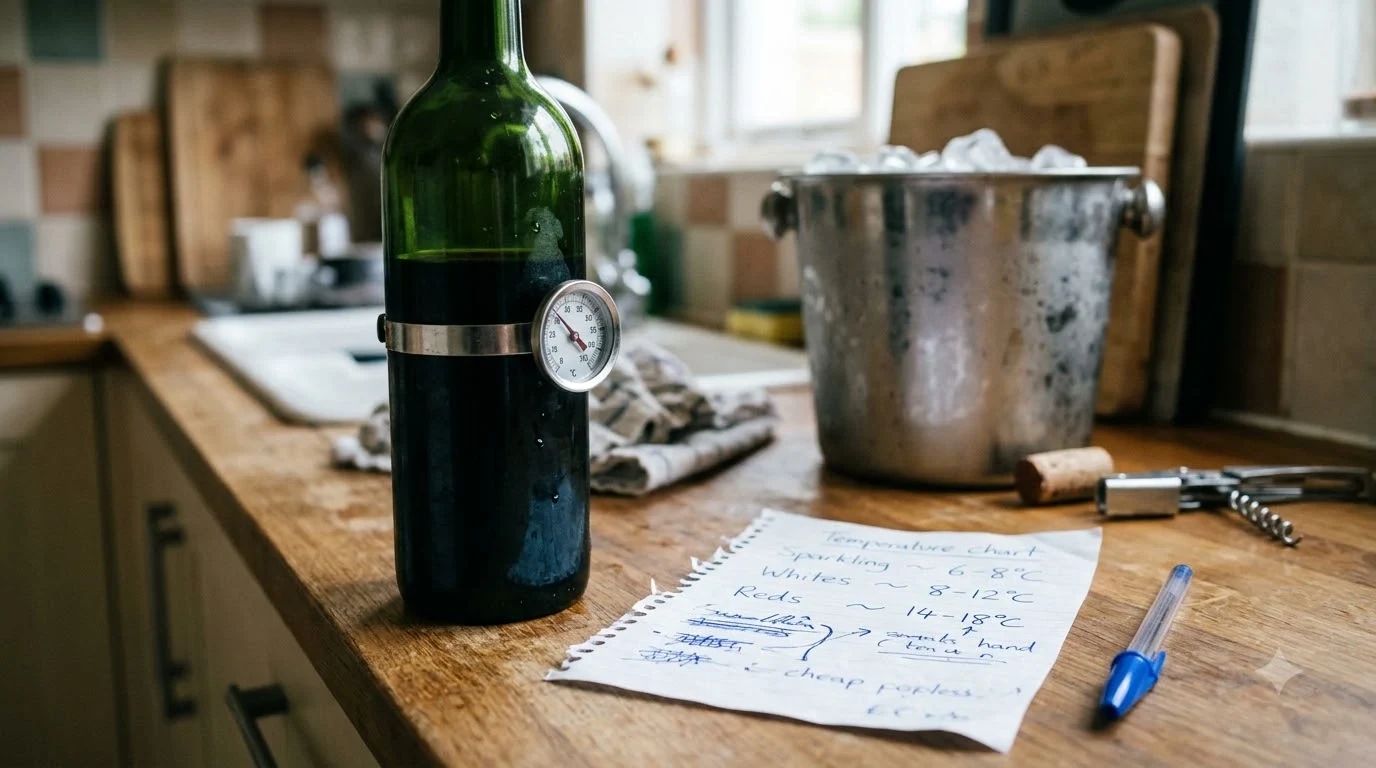
Tip: Put a simple thermometer beside the bottles for several days, including a warm afternoon and overnight. A location that stays close to 55°F is a better choice than one that reaches a cellar-like temperature at night but heats up sharply every afternoon.
Choose the Coolest Dark Location in Your Home
For a modest collection, a dark closet, interior pantry, or cool basement corner is often better than a decorative kitchen rack. Choose a place with little direct sun, few temperature changes, and limited handling.
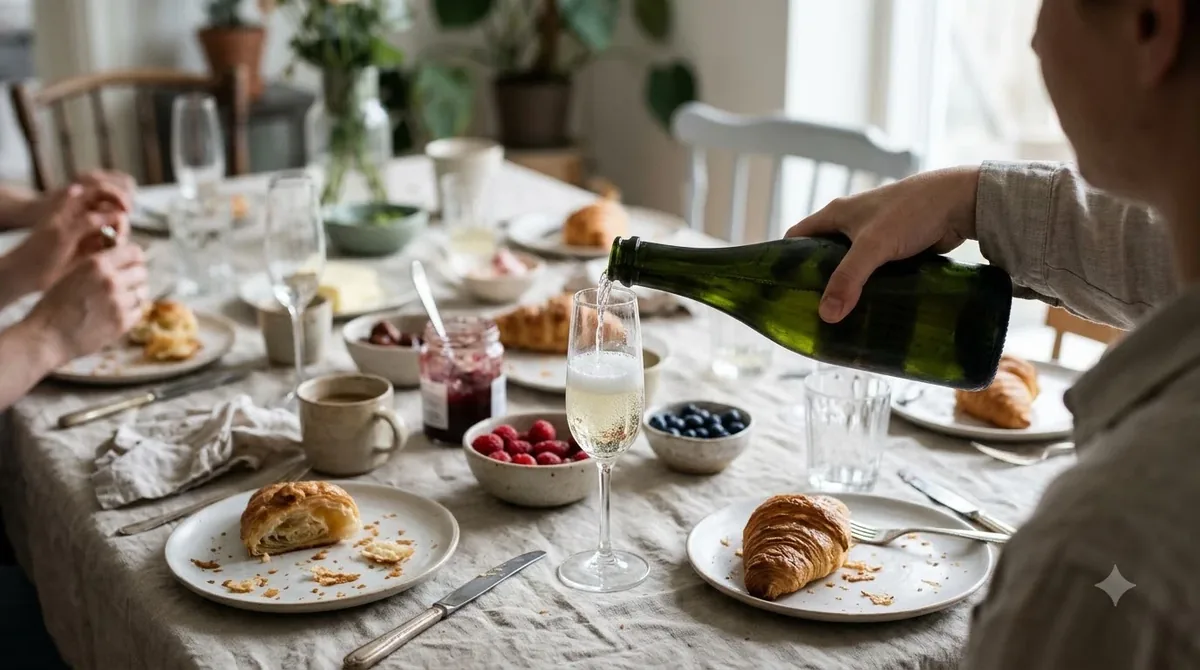
Think about the room’s routine. Kitchens warm up from ovens and dishwashers, garages can heat up by day and cool at night, and laundry rooms add appliance vibration. Decanter cautions against kitchen storage because cooking creates fluctuations; Wine Enthusiast recommends a closet or pantry for everyday bottles. An interior closet away from a hot water heater can work well in an apartment without a basement.
In a small home, try a low cabinet on an interior wall, away from a heating vent. Avoid the top of a refrigerator, a window ledge, or a shelf over the stove. If every room is warm, keep only near-term bottles at home and find a steadier location for longer storage. Think about how the room behaves across a full day: a shaded hallway may be more stable than a bedroom that receives afternoon sun. The guide to how to store wine without a cellar covers other apartment-friendly options.
Lay Cork-Finished Bottles Down and Manage Humidity
Store traditional cork-finished bottles horizontally for extended keeping. Contact with the wine helps the cork stay moist and maintain its seal; screw-cap bottles do not need this position for cork care.
Humidity matters most during long storage. Wine Enthusiast gives roughly 50 to 80 percent relative humidity as a useful range: very dry air can contribute to cork shrinkage and oxidation, while excessive dampness can loosen labels and encourage mold. A few bottles do not require a humidifier; control becomes more relevant in a dedicated cellar or cabinet. If labels are becoming damp or the cork ends look unusually dry, investigate the room rather than spraying or wetting the bottles. Do not place open water trays beside wine as a substitute for measured humidity.
A damp room is not automatically a good cellar: musty odors, visible mold, and wet walls can damage cases and labels. For a collection kept through several seasons, a small hygrometer can reveal persistently dry or damp air. Screw caps, synthetic closures, and glass stoppers do not depend on cork moisture, but still need stable temperature and darkness.
Protect Wine From Light, Vibration, and Strong Odors
Light, movement, and strong smells can undermine storage even in a cool room. Use a dark cupboard, prevent bumps, and separate bottles from chemicals, smoke, and scented materials.
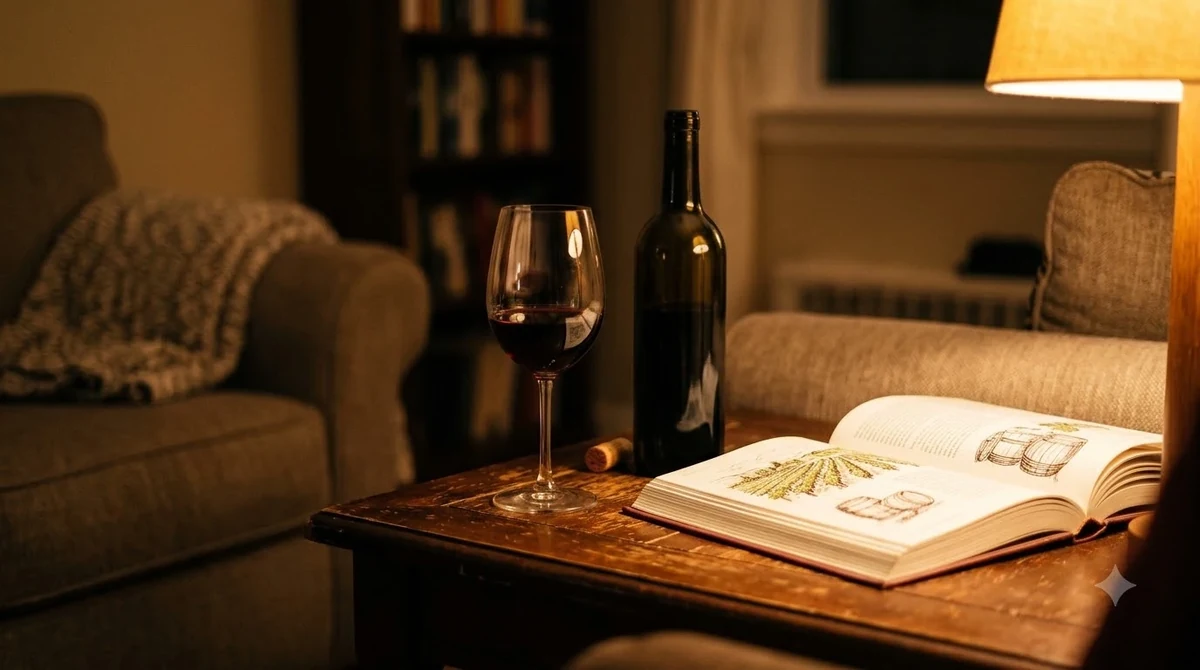
Ultraviolet light can trigger reactions that damage aroma and flavor, a fault known as light strike. Dark glass offers some protection but does not make direct sun safe. White wines can be especially vulnerable because they generally have less tannin protection than reds. A solid-door cupboard is the simplest defense; a cloth over an exposed rack is a backup, not a substitute for a cabinet.
Repeated vibration can disturb sediment. Avoid the top of a washing machine, a shelf beside a subwoofer, or a cabinet that rattles when a door closes. Keep wine away from paint, solvents, cleaning products, gasoline, and trash. Wine Enthusiast notes that surrounding odors can affect wine over time, particularly through cork closures; keep the area neutral instead of using air fresheners. Also avoid a spot directly beside a sunny window even if curtains are usually drawn: curtains are opened, guests switch on lights, and sunlight can reach a bottle unexpectedly. A closed cabinet gives more reliable protection than relying on household habits.
Decide Whether a Wine Refrigerator Is Worthwhile
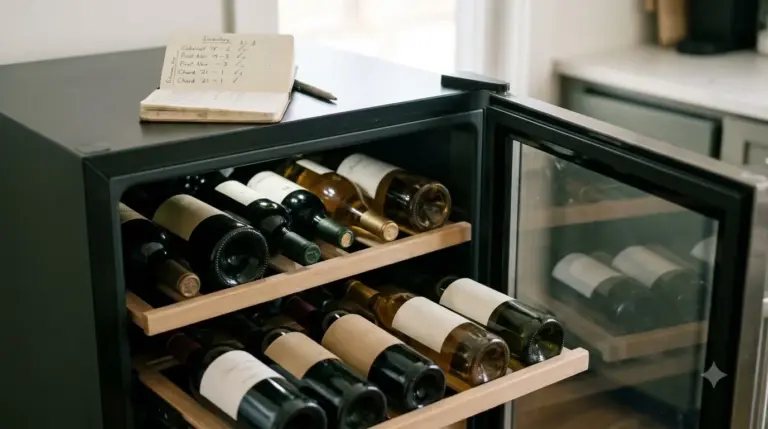
A wine refrigerator helps when no room stays cool and dark or when you are keeping bottles to age. A pantry may suit a few near-term bottles; valuable wines held for years need better temperature control.
A kitchen refrigerator is designed for food, not long-term wine storage. VinePair reports that many run around 35°F to 38°F, colder than the 55°F wine target, and its cited sommelier recommends using one only for bottles planned for the coming week. The article contrasts food-fridge humidity near 30 percent with about 70 percent for wine storage. A kitchen fridge is useful for a short chill, not a cellar substitute.
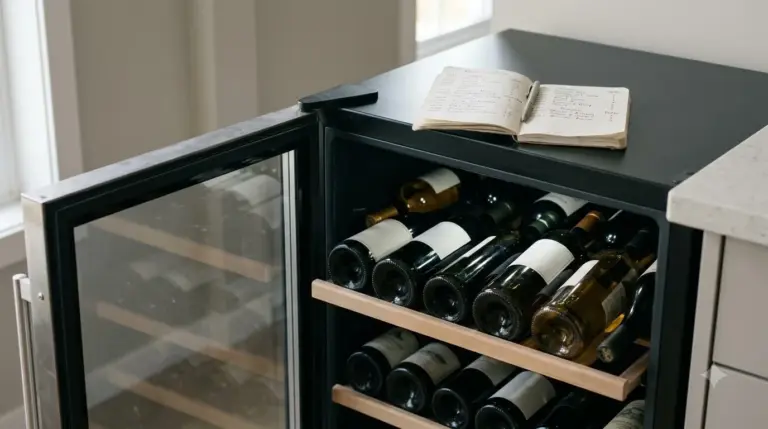
A dedicated unit holds a more suitable temperature and often limits light, vibration, and odor. Estimate your bottle count and decide whether the collection is mostly for near-term drinking or long-term cellaring. A single-zone unit near 55°F suits mixed wines kept together; a dual-zone model separates storage from serving temperatures. Check that the unit can maintain its set temperature in the room where it will stand, that its shelves fit the bottle shapes you buy, and that the door seals properly. A cooler placed next to an oven or in direct sun has to work harder and may not hold conditions as consistently. For mixed beverages, see whether you can store beer in a wine fridge.
| Storage detail | Useful figure | How to apply it |
|---|---|---|
| General wine storage target | About 55°F / 13°C | Use this as the central target for reds, whites, sparkling, and fortified wines. |
| Traditional cellar reference | 12°C / 53°F | Decanter cites this as a classic cellar temperature. |
| Broader cellar temperature range | 8°C–15°C / 46°F–59°F | Decanter says this range can work when temperature changes are controlled. |
| Relative humidity | About 50%–80% | Wine Enthusiast gives this range for helping corks stay moist without excess dampness. |
| Typical kitchen refrigerator | 35°F–38°F | VinePair describes this as too cold for long-term wine storage. |
| Typical food-fridge humidity | About 30% | VinePair contrasts this with approximately 70% for a wine-storage area. |
Separate Everyday Bottles From Wines You Plan to Age
Most wines are made to be enjoyed young, not stored for a decade. First decide whether the bottle is for near-term drinking or has the structure to develop with age.
Fresh whites, rosés, sparkling wines, and many uncomplicated reds are usually bought for near-term enjoyment. Careful cellaring will not necessarily improve them. Keep them cool and dark, and follow a producer’s drinking-window advice rather than assuming every bottle improves with time.
Age-worthy wines need the same conditions for longer: about 55°F, darkness, moderate humidity, and little movement. A bottle intended to mature for three or four years, ten to fifteen years, or longer should not sit in a warm kitchen cabinet. Decanter recommends leaving bottles undisturbed, while Wine Enthusiast explains that stable cellar conditions help age-worthy wines develop tertiary aromas and texture. See how to age wine at home for the difference between a real aging plan and simply setting a bottle aside.
For bottles held beyond a few months, record the producer, wine name, vintage, purchase date, and intended opening period. A separate inventory reduces handling and helps prevent a bottle from being forgotten. A prestigious label does not guarantee decades of aging potential; grape variety, acidity, tannin, sweetness, alcohol, and vintage all influence development. For example, a structured Cabernet Sauvignon from a producer’s cellar-release program may merit a longer plan than a fresh, uncomplicated white intended for early drinking. Ask a knowledgeable wine merchant about the intended drinking window before purchasing several bottles to hold.
Store Opened Bottles With Less Air Exposure
After opening, oxygen is the immediate storage problem. Reinsert the cork or use a suitable closure promptly, refrigerate the bottle, and finish it within a style-appropriate period.
As a general guide, still wine lasts about three to five days in the refrigerator after opening. Sparkling wine keeps about one to three days with a proper stopper; fortified wines can last several weeks, and bag-in-box wines roughly four to six weeks. These are typical windows, not guarantees: the remaining volume, closure, and air exposure all matter. A delicate older Pinot Noir may fade faster than a sturdy fortified wine.
Limit air contact. Pour a glass and close the bottle immediately, as Wine Enthusiast recommends. A vacuum pump can remove some air from still wine, and transferring a small remainder to a clean, smaller bottle reduces empty space. For sparkling wine, use a pressure-retaining stopper, not a vacuum device. Store opened bottles upright in the refrigerator to prevent spills.
Storage and serving temperatures are different. A refrigerator preserves an opened bottle, but may leave a red too cold to show its aromas. Serve light reds around 55°F to 60°F, full reds at 60°F to 65°F, light whites and rosés at 45°F to 50°F, full whites at 50°F to 55°F, and sparkling wine at 40°F to 50°F. Sweet whites are often served around 43°F to 50°F. Take bottles out of the refrigerator shortly before pouring and allow them to warm gradually; avoid leaving them beside a hot stove or in direct sun. For more reference points, see Wine Storage & Serving Temps.
Frequently Asked Questions
Can wine be stored upright if it has a screw cap?
Yes. A screw cap does not rely on a moist natural cork to maintain its seal, so the bottle does not need to lie on its side for cork hydration. Keep it in the same cool, dark, low-vibration location used for other wines, especially if you plan to hold it for more than a few weeks.
Does a wine bottle need to be completely still while it ages?
Absolute immobility is unnecessary, but repeated vibration and handling are best avoided. A bottle moved during a house clean is not automatically ruined; return it to a stable place. Older reds with sediment may benefit from standing upright before opening so the sediment can settle. This is a preparation step before serving, not a reason to keep every bottle upright during long-term storage.
Can wine be kept in its original cardboard case?
Yes, a clean case shields bottles from light and casual handling if the area is dry and odor-free. Keep it off damp concrete and away from a wall with condensation. Cardboard blocks light; it does not regulate temperature.
Is a wine bottle ruined if the cork has pushed outward?
A raised or leaking cork can signal heat or pressure, but does not prove the wine is undrinkable. Look for seepage, sticky residue, or a low fill level, then assess the aroma and flavor after opening. Cooked or sharply oxidized character suggests storage damage.
Should wine be stored near food or household supplies?
Nearby food is not automatically a problem, but avoid persistent odors from paint, solvent, gasoline, smoke, or cleaning chemicals. Natural cork is not completely airtight. A pantry shelf away from chemicals is better than a utility closet full of scented products.
Good home wine storage does not require a custom cellar. A cool, dark, quiet place will protect many everyday wines; reserve a wine refrigerator or professional storage for bottles intended to age for years. Protect the wine you have, and open it at the right time.
More in Storage & Fridge Care
 How Long Can You Store Wine in a Wine Fridge? Protect Bottle QualityUpdated Nov 20, 2026
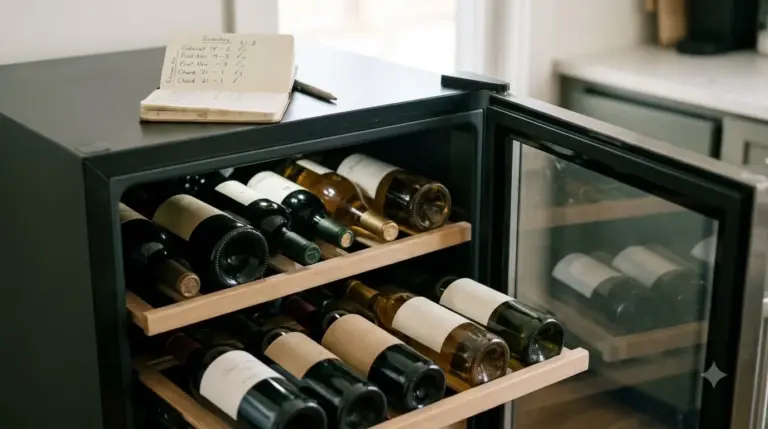 Can You Store Beer in a Wine Fridge? Keep Both Drinks FreshUpdated Nov 20, 2026
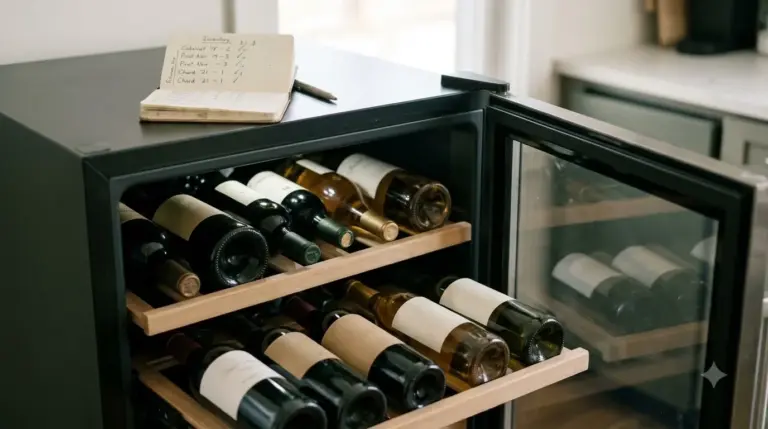 Is It Worth Repairing a Wine Fridge? Spot the Cheap Fixes Before You ReplaceUpdated Nov 20, 2026
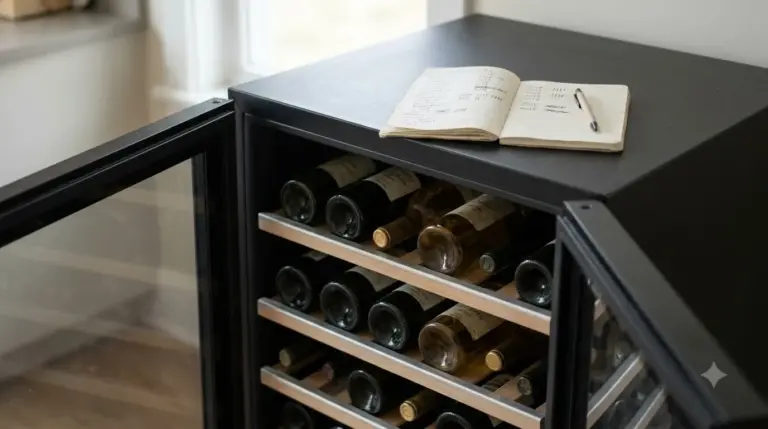 Wine Fridge Condensation: Identify Causes and Fix Moisture ProblemsUpdated Nov 20, 2026
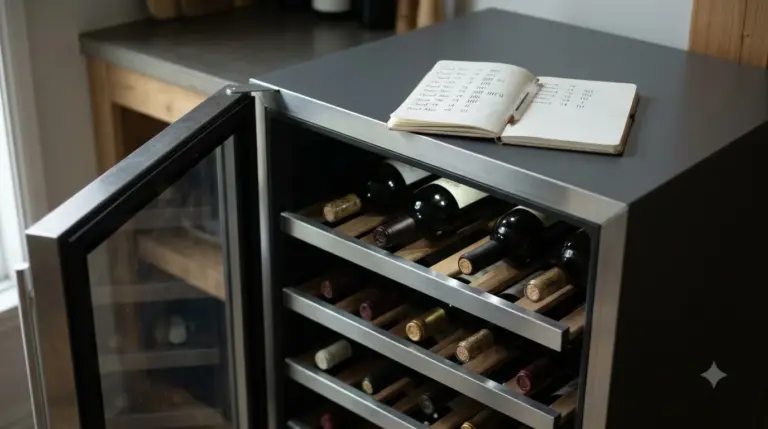 Wine Fridge Too Cold: Protect Your Wine and Fix the TemperatureUpdated Nov 20, 2026
 How to Reset Wine Fridge: Restore Cooling and SettingsUpdated Nov 20, 2026