

We may earn a commission when you buy through links on this page, at no extra cost to you. Learn more.
For a vintec wine fridge not cooling issue, first verify its power, temperature setting, ventilation, and door seal before arranging service. A warm cabinet can result from a simple setting or airflow problem, but a failed fan, sensor, control, or sealed cooling component requires qualified diagnosis. Use the instructions for your exact model because Vintec cabinets differ in size, zones, installation, and controls.
A wine cabinet needs a stable environment, not the very cold conditions of a household refrigerator. The checks below move from simple observations to service decisions, so you can protect the bottles while avoiding repairs that should be left to a technician.
Start by confirming the temperature problem
First establish whether the cabinet is actually warm, rather than relying on a setpoint or a brief reading after the door has been opened. Compare the display with a separate thermometer and look for patterns across the cabinet before changing several settings at once.
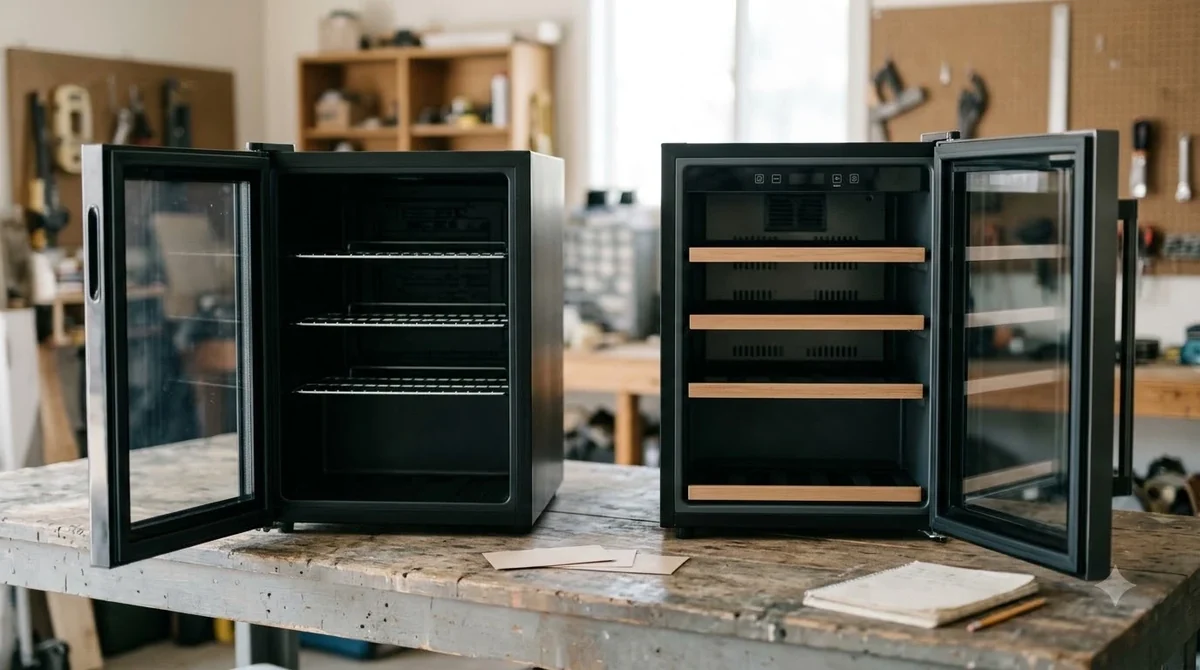
Find the model number and control display. Vintec’s serial plate lists the model number, product number code (PNC), and serial number, but its position varies by appliance category. The model number locates the manual; the PNC helps identify spare parts. Photograph the plate and display before contacting support. Place a reliable refrigerator thermometer among the bottles, away from a cooling surface, air outlet, or door. Wine warms or cools more slowly than cabinet air, so one immediate reading is not conclusive. Record the room temperature, displayed setting, and thermometer reading, then repeat after the closed cabinet has rested for several hours.
Check more than one shelf in a multi-zone or gradient cabinet. Separate compartments may intentionally have different settings, so a warmer section is not automatically faulty. If every zone is warm, start with shared power and ventilation; if one alone is warm, record its reading and setpoint for comparison. This distinction helps a technician tell whether the problem affects the whole cabinet or a particular cooling zone.
Keep the door closed while readings settle. A recent load of room-temperature bottles adds heat, and repeated opening slows recovery. Note when the cabinet was loaded so a technician can distinguish a temporary warm-up from a continuing fault. A brief air-temperature change after opening the door is less useful than a consistent pattern measured under closed-door conditions.
Check the power supply and control settings
A Vintec cabinet cannot cool if it has lost power, entered an unintended setting, or is receiving the wrong temperature command. Check the outlet and controls in a safe order, then compare the selected temperature with the setting recommended for your model and intended use.
Confirm that the plug is seated and the outlet works; a lamp can help test the outlet. Do not substitute an extension cord or power strip unless the manual allows it. If the display is blank, check the home’s breaker once; if it trips again, leave the cabinet disconnected and arrange qualified electrical service. When the display is lit, record its temperature, alarm, or error code. A lit display does not prove the cooling circuit is working. Look for a control lock or special mode, but use the model manual for button combinations because features differ. Change one setting at a time.
Review the set temperature and zone assignment. A single-zone cabinet has one target; a multi-zone model may hold separate sections for storage or serving. For long-term storage, about 55°F is a useful reference. EuroCave recommends around 12°C for aging and gives 10–14°C as its storage range; Vintec’s available settings depend on the model. Treat storage temperature as a stability target, not a demand that every wine be held at its serving temperature.
| Storage reference | Temperature | Context |
|---|---|---|
| General cellar target | About 55°F (13°C) | Stable long-term storage benchmark |
| EuroCave aging target | 12°C (53.6°F) | Its stated ideal temperature |
| EuroCave storage range | 10–14°C (50–57°F) | Its recommended range |
| Household refrigerator comparison | About 40°F (4°C) | Colder and drier than a wine cabinet |
Tip: Before changing the setting, write down the displayed temperature, the selected setpoint, and any visible alarm. That simple record makes it easier to tell whether a later change improved the cabinet.
If the setting is correct but the cabinet remains warm, do not keep lowering it to force cooling. A setting cannot repair blocked ventilation, a failed fan, a sensor fault, or a sealed-system problem.
Restore ventilation and check the door seal
Restricted airflow and warm air entering through a poorly closed door can undermine cooling even when the control setting is correct. Inspect the cabinet’s installation space, vents, shelves, bottle arrangement, and door gasket without removing panels or reaching into electrical components.
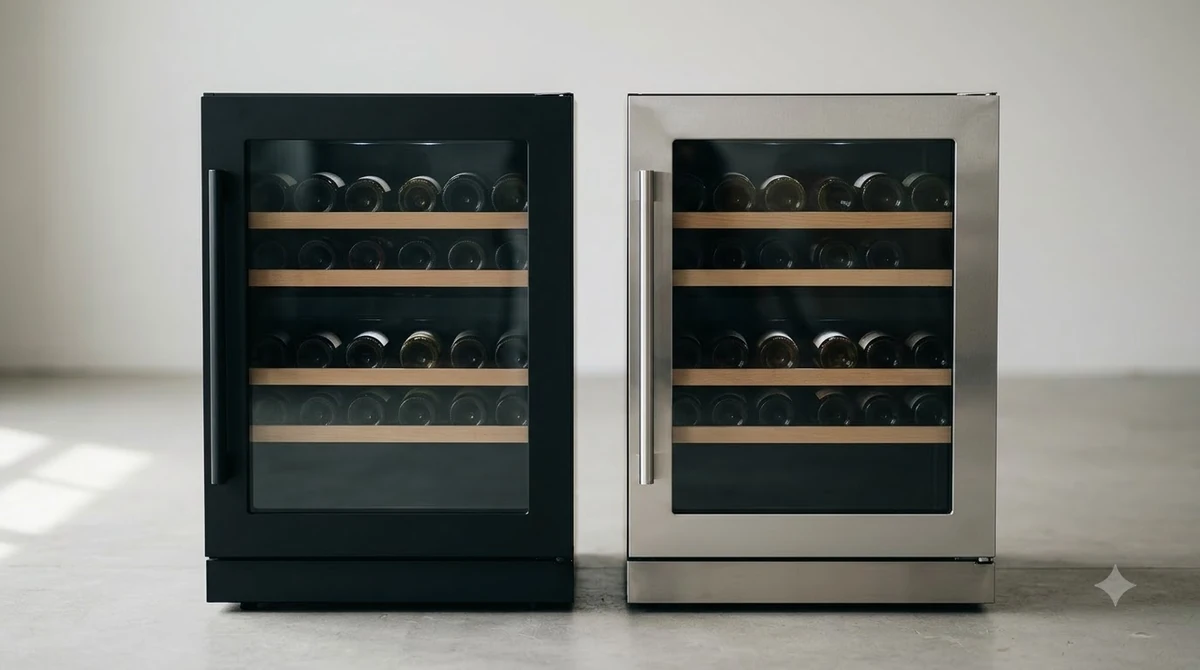
Identify whether the model is freestanding or built in. Freestanding cabinets generally need clearance around the appliance, while built-in designs may vent through the front. EuroCave explains this distinction, but use the Vintec manual for exact clearances. Do not enclose a freestanding unit unless its design permits it. Look for blocked intake or exhaust openings: a cabinet beside a wall, packed into a narrow recess, or next to an oven may struggle to release heat. Restore the specified clearance and make sure a kick plate or front grille is not covered by a rug or stored items. Only clean or remove parts the manual identifies as user-accessible.
Inspect the full door gasket. It should be clean, flexible, and touch the frame evenly. A displaced bottle, misaligned shelf, or debris can prevent closure. Wipe accessible surfaces with a soft damp cloth, then look for a torn or detached seal; use the correct model-specific replacement. Make sure bottles and shelves do not cover internal air openings or interfere with the door. Leave space around outlets and returns, and do not press bottles against a fan cover. Wider Champagne and Burgundy bottles may need a different shelf arrangement so the door can close fully.
After clearing vents and confirming the seal, close the door and monitor the reading. Movement toward the setpoint suggests airflow or leakage may have contributed; no change means an internal fault still needs consideration. Allow the cabinet to settle before judging the result, and avoid repeated door openings during this observation period.
Consider the room, bottle load, and normal operating behavior
The air around a wine fridge affects how much heat it must remove, and a fresh load of bottles can temporarily slow the temperature’s return. Before treating normal cycling or a warm room as a breakdown, compare the installation with the operating conditions in the model manual.
Check for a sunny window, radiator, range, or dishwasher nearby. Heat and trapped exhaust air make cooling harder. Reduce direct sun and keep the room within the ambient operating range in the Vintec instructions; no single limit applies to every model. A cabinet fitted below a counter also needs the clear intake and exhaust route specified for its installation type. Do not judge the appliance’s performance without considering the heat around it.
Consider recent events: a full restock, long door opening, or repeated access adds warm air. Keep the door closed and compare readings after several hours. A temperature that keeps rising, rather than recovering, is a useful service clue. Record whether the change followed a delivery, a long period with the door open, or a change in room temperature.
Some compressor sound and cycling are normal. EuroCave notes that noise varies with the model and installation; a quiet interval does not prove failure, and a running sound does not prove effective cooling. Record new clicking, grinding, or fan scraping. Door condensation can reflect humid room air meeting a cold surface, not necessarily a cooling fault. Water pooling, heavy frost, or moisture near controls needs attention. Never chip ice with a knife or use a hair dryer; follow the model’s defrost instructions.
Understand frost, airflow, and warning codes
Frost, a warm zone, or an alarm can help narrow the problem, but none identifies a failed part on its own. Record exactly what you see and use the model-specific manual to interpret alerts before attempting any reset or defrost procedure.
If an error code appears, photograph it before switching off the cabinet. Vintec directs owners to the correct manual or customer care for code interpretation. Codes can differ by product family, so do not rely on a list for another model or clear the alert before recording it. Note any section that stays warmer than its target or any changed fan sound. On a multi-zone model, record the affected zone, shelf, display reading, thermometer reading, and whether a fan can be heard. Leave fan covers and wiring in place.
Frost may follow a door left open, a leaking seal, or repeated humid-air entry. Heavy ice that blocks airflow, or frost that quickly returns, needs model-specific defrost instructions or service. Some cabinets defrost automatically; do not copy another brand’s procedure.
Distinguish slow recovery from no cooling at all. Improvement after clearing a vent or sealing the door points toward an installation or air-leak issue; no change supports a service call. A technician may need to test the fan, sensor, controller, compressor, or refrigerant circuit.
Know when to arrange professional repair
Stop at external checks if the cabinet remains warm, repeatedly trips a breaker, shows a persistent error, or makes an unusual mechanical sound. Electrical parts and sealed refrigeration components are not owner-maintenance items; an authorized technician can diagnose the fault without turning a simple problem into a safety risk.
Arrange service if the cabinet cannot approach its setpoint after external checks, a zone stays too warm, or frost and alarms return. A burning smell, damaged wiring, repeated breaker trips, or liquid near electrical parts calls for prompt qualified help. Do not open the rear cover, test live wiring, bypass switches, or touch refrigerant components.
Before booking, gather the model, PNC, and serial number. Note the purchase date, setpoint, measured temperature, room conditions, error code, and checks completed. Vintec’s product support page provides model-based manuals and a repair route; contact details vary by country, so select the support site for your region. Ask whether a Vintec-approved technician will handle the repair and whether warranty coverage may apply. Avoid ordering a sensor, fan, or control board from symptoms alone; diagnosis and part numbers depend on the model. The guides to Allavino wine fridge not cooling and Magic Chef wine fridge not cooling cover other brand families. Before service arrives, make sure the technician can reach the cabinet’s ventilation area and have your notes and photographs ready. This preparation saves time without requiring you to remove a cover or inspect an electrical component.
While waiting for repair, protect bottles from heat and temperature swings. Move valuable wine to another cabinet or a cool, dark place near 55°F. Wine Enthusiast’s storage overview explains why stability matters and why a typical 40°F household refrigerator is too cold and dry for long-term storage. Avoid sunlight, heaters, and repeated moves between warm and cold spaces.
Frequently Asked Questions
These answers add a few wine-storage details beyond the appliance checks. The exact operating instructions still come from the model-specific Vintec manual.
What humidity level should a wine cabinet maintain?
EuroCave recommends relative humidity around 60 to 80 percent for wine aging. Air that is too dry can dry corks, while excessive humidity can encourage mold on labels or corks. This is a storage-environment reference, not a cooling-system diagnostic.
Does vibration matter if the cabinet still cools?
Wine-aging storage aims to limit vibration as well as temperature swings. Repeated movement can disturb sediment in bottles and is one reason wine cabinets are designed differently from everyday kitchen refrigerators. Check that the cabinet stands level and is not touching a vibrating appliance or wall.
Why does the listed bottle capacity differ from my collection?
Wine-cabinet capacity is commonly calculated using standard 750 ml Bordeaux-shaped bottles. Wider Burgundy or Champagne bottles, magnums, and display shelves can reduce the number that fits. Arrange bottles without forcing shelves or obstructing the door and vents.
Should cork-finished bottles be stored on their sides?
For long-term storage, horizontal positioning keeps wine in contact with the cork and helps prevent the cork from drying. EuroCave recommends this position for cork-closed bottles. Follow the rack design and bottle-loading instructions supplied with the cabinet.
Can every Vintec cabinet be set to one aging temperature?
Not every wine cabinet is intended for the same role. A maturing cabinet is generally designed for a stable temperature around 12°C, while a serving cabinet may use two or three zones or a temperature gradient to prepare different wines for drinking. Identify the cabinet type before choosing a target.
A Vintec cabinet that is not cooling may need an unobstructed vent, a closed door, or a corrected setting, but a persistent fault should not be ignored. Record actual temperatures and error details, then use the correct manual before booking service. For additional guidance, see Haier wine fridge not cooling and Brand Troubleshooting.
More in Storage & Fridge Care
 How Long Can You Store Wine in a Wine Fridge? Protect Bottle QualityUpdated Nov 20, 2026
 Can You Store Beer in a Wine Fridge? Keep Both Drinks FreshUpdated Nov 20, 2026
 Is It Worth Repairing a Wine Fridge? Spot the Cheap Fixes Before You ReplaceUpdated Nov 20, 2026
 Wine Fridge Condensation: Identify Causes and Fix Moisture ProblemsUpdated Nov 20, 2026
 Wine Fridge Too Cold: Protect Your Wine and Fix the TemperatureUpdated Nov 20, 2026
 How to Reset Wine Fridge: Restore Cooling and SettingsUpdated Nov 20, 2026