

We may earn a commission when you buy through links on this page, at no extra cost to you. Learn more.
Sub zero wine fridge dimensions depend on the model, with legacy configurations ranging from 15 1/8 inches wide for the compact 315W to 30 inches wide for the larger 430. Undercounter models generally measure around 34 inches tall, while full-height wine storage units can reach 80 or 84 inches. Width, height, depth, cabinet opening requirements, and door clearance must all be considered before choosing an installation location. The model number is the most reliable starting point for finding the correct measurements.
Sub-Zero wine refrigerators are designed for different storage capacities and kitchen layouts. A compact undercounter appliance can fit beneath a countertop, while a tall integrated wine storage unit can accommodate a substantially larger collection. However, an appliance’s exterior measurements do not automatically tell you how large its cabinet opening should be or how much room the door needs. Understanding these differences helps prevent installation problems, protects ventilation, and ensures that wine shelves remain accessible.
Understanding Sub-Zero Wine Refrigerator Size Categories
Sub-Zero wine storage appliances generally fall into two practical installation categories: undercounter units and taller built-in or integrated units. Their dimensions differ considerably, with compact models designed for smaller spaces and full-height configurations intended for larger wine collections.
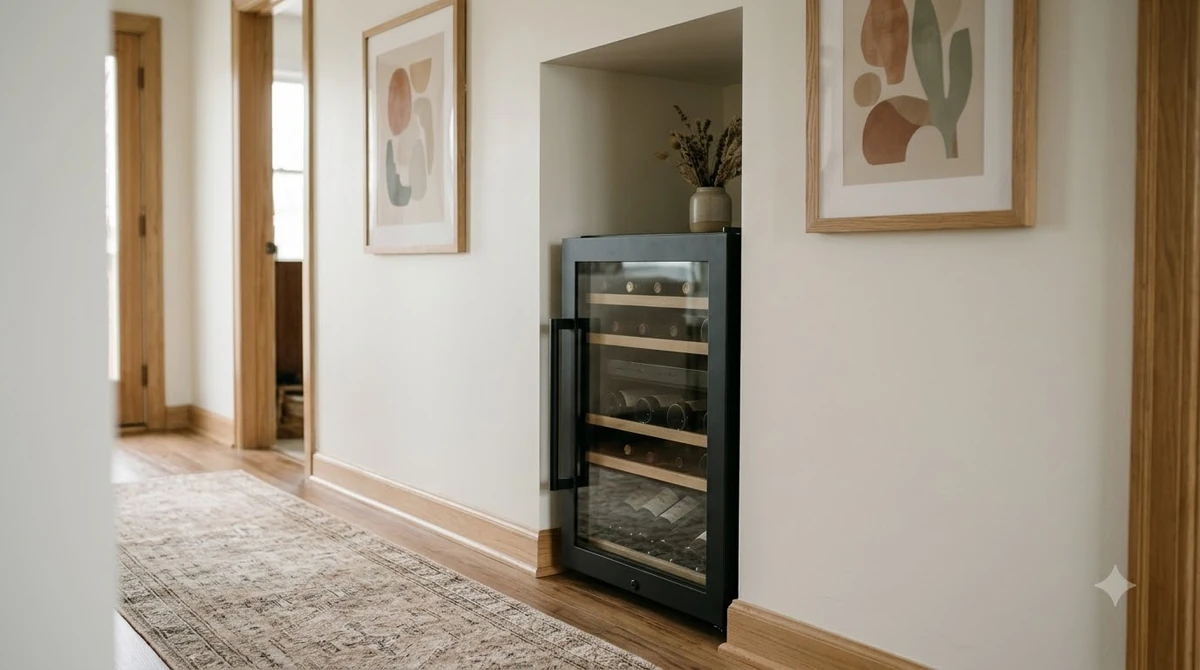
Undercounter appliances are typically around 34 inches tall. This makes them suitable for kitchen cabinetry, beverage stations, and dedicated entertaining areas where the refrigerator needs to sit below a countertop. The legacy 315W and 424 are examples of this category, although their widths and bottle capacities differ.
Taller wine storage appliances have a different footprint. The legacy 427 and 427R measure 80 inches tall, while the 430 reaches 84 inches. These appliances are intended for larger installations and require considerably more vertical space. Their widths also vary, so a 27-inch opening suitable for a 427 cannot automatically accommodate a 30-inch Model 430.
Depth is another important consideration. Several legacy Sub-Zero wine storage models have an overall depth of 24 inches, but the freestanding 424FS measures 24 5/8 inches deep. Handles, door movement, nearby cabinets, and the actual installation arrangement can increase the space required beyond the basic appliance depth.
It is also important to distinguish older model numbers from current product offerings. Sub-Zero maintains separate documentation for legacy appliances and other product generations. Measurements in the examples below describe the models listed in its legacy 400 Series design guide, not a universal specification for every Sub-Zero wine refrigerator.
Sub-Zero 315W, 424, and 424FS Dimensions
The legacy undercounter models offer three different approaches to wine storage. The 315W is a narrow single-zone appliance, the 424 is a larger built-in dual-zone model, and the 424FS provides a freestanding alternative with slightly different exterior dimensions.
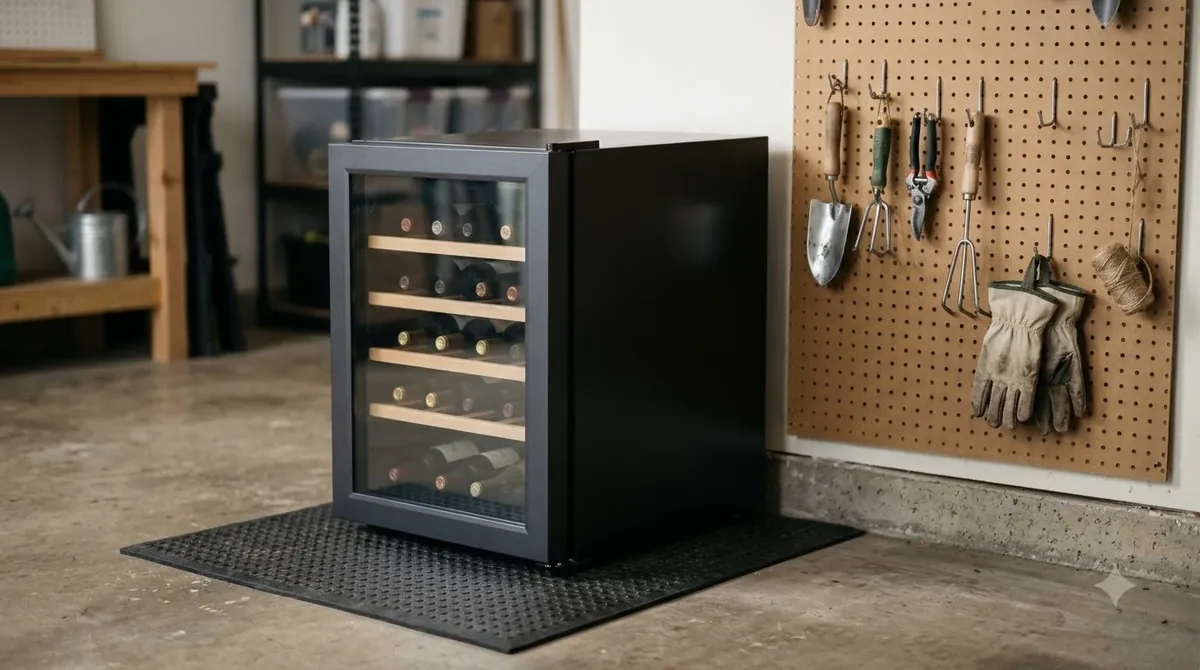
The Model 315W is particularly useful when width is limited. It measures 15 1/8 inches wide, 34 1/16 inches high, and 24 inches deep. Its stated capacity is 26 standard 750 ml bottles. Because it is a single-zone model, it is also different from the dual-zone 424 in terms of temperature organization.
The Model 424 offers greater capacity in a wider cabinet footprint. Its exterior dimensions are 23 7/8 inches wide, 34 inches high, and 24 inches deep. The design guide lists a capacity of 46 standard bottles, making it a different storage proposition from the narrow 315W.
The Model 424FS is intended for freestanding installation rather than a conventional surrounding-cabinet arrangement. It measures 24 1/4 inches wide, 34 3/16 inches high, and 24 5/8 inches deep. Although its capacity is also listed as 46 bottles, its exterior dimensions are not interchangeable with those of the built-in 424.
The following figures come from Sub-Zero’s legacy 400 Series design guide. They provide a useful comparison when identifying an older appliance or evaluating an existing installation.
| Model | Width | Height | Depth | Capacity |
|---|---|---|---|---|
| 315W | 15 1/8 in. | 34 1/16 in. | 24 in. | 26 bottles |
| 424 | 23 7/8 in. | 34 in. | 24 in. | 46 bottles |
| 424FS | 24 1/4 in. | 34 3/16 in. | 24 5/8 in. | 46 bottles |
| 427 | 27 in. | 80 in. | 24 in. | 132 bottles |
| 427R | 27 in. | 80 in. | 24 in. | 78 bottles |
| 430 | 30 in. | 84 in. | 24 in. | 147 bottles |
These are overall appliance dimensions, not a universal list of cabinet cutout dimensions. Installation requirements can differ from exterior measurements, even when two models appear nearly identical. For example, the built-in 424 is 34 inches tall, but its specified minimum installation height is 34 1/4 inches.
For homeowners replacing an older refrigerator, measuring the existing opening is only the first step. Identify the model number and compare the actual installation guide before ordering a replacement. A small difference in width, depth, or height can affect cabinet modifications and door alignment.
Full-Height Sub-Zero Wine Storage Dimensions
The legacy 427, 427R, and 430 are taller wine storage configurations designed for substantially larger collections or combined refrigeration needs. Their widths range from 27 to 30 inches, and their heights reach 80 to 84 inches.
The Model 427 measures 27 inches wide, 80 inches high, and 24 inches deep. Its stated capacity is 132 standard 750 ml bottles. This configuration provides two temperature zones, making it suitable for organizing different wine styles within the same appliance.
The Model 427R shares the same overall dimensions: 27 inches wide, 80 inches high, and 24 inches deep. However, it has a different internal arrangement. The design guide lists 78 wine bottles and a separate refrigerator capacity of 5.3 cubic feet, along with two refrigerated drawers. This makes it important not to assume that identical exterior dimensions mean identical storage capacity.
The Model 430 is the larger example in this group. It measures 30 inches wide, 84 inches high, and 24 inches deep. Its stated capacity is 147 standard bottles. The additional width and height make it a different installation proposition from the 427 and 427R.
When planning for one of these appliances, measure the entire vertical opening rather than only the visible door area. Account for the finished floor, overhead cabinets, surrounding trim, and the required access to the appliance. An 84-inch refrigerator cannot be treated as an 80-inch installation simply because both products have similar widths.
Capacity also deserves attention. The 427 holds more wine than the 427R despite sharing its external measurements. The 430 has the highest listed bottle capacity among these three examples, but its larger cabinet footprint may require additional remodeling.
Cabinet Cutout Dimensions and Installation Clearances
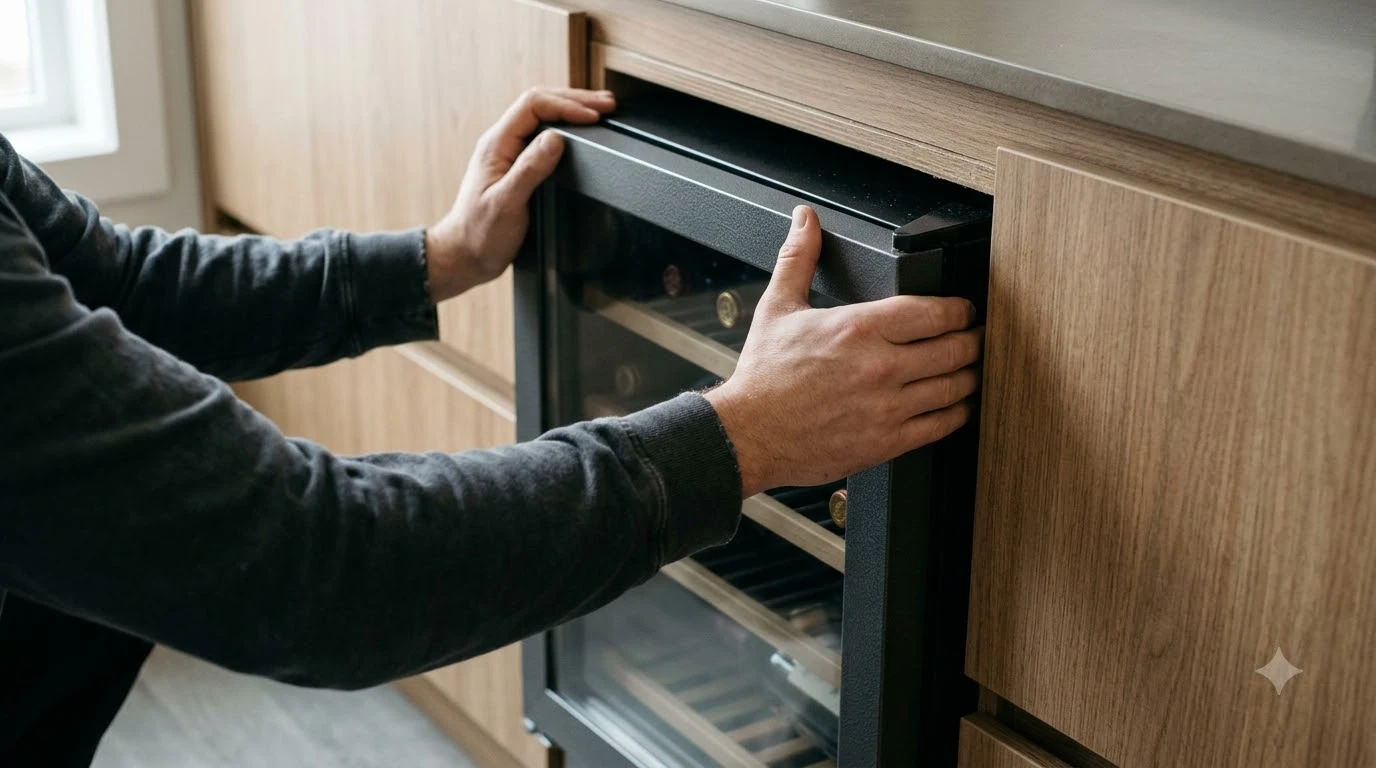
Cabinet opening dimensions are separate from the refrigerator’s overall measurements. A successful installation must account for the specified rough opening, door swing, electrical location, ventilation, and access to internal shelves.
For the legacy Model 424, Sub-Zero specifies a finished rough opening width of 24 inches and a rough opening height of 34 1/2 inches. Its overall appliance dimensions are 23 7/8 inches wide and 34 inches high. This difference demonstrates why using the refrigerator’s exterior measurements as the cabinet template can cause problems.
The 315W has its own opening requirements. Its specified rough opening width is 15 1/4 inches, and its rough opening height is 34 1/2 inches. Although its exterior width is 15 1/8 inches, the cabinet must accommodate the manufacturer’s separate installation dimensions.
Door clearance is equally important. The legacy 424 requires 25 3/8 inches of door swing clearance according to its design guide. Its minimum clearance at a 90-degree opening is 26 inches. These figures are especially relevant when the refrigerator is positioned beside a wall, island, or perpendicular cabinet run.
Corner installations introduce another consideration. Sub-Zero specifies a minimum 3-inch filler for the covered legacy models to allow the door to open to 90 degrees. Without adequate space, the door may not open far enough for convenient shelf extension and bottle removal.
Why a 90-degree opening matters
Wine refrigerator shelves need room to move outward. If the door cannot open sufficiently, the shelf edges may interfere with the door frame or nearby cabinetry. Even when the refrigerator physically fits into the opening, restricted movement can make everyday access inconvenient.
Before installation, measure the distance between the refrigerator door and nearby walls, cabinet handles, and fixed furniture. Consider the handle projection as well as the door itself. The correct clearance depends on the specific model and the installation arrangement.
Tip: Measure the finished cabinet opening at its narrowest point, then compare the result with the exact model’s installation drawing. Record width, height, depth, door swing, and electrical location separately. Do not order cabinetry based only on the refrigerator’s advertised exterior dimensions.
For replacement projects, a refrigerator with nearly identical exterior dimensions may still require different cabinet preparation. Consult the original installation documentation before making permanent changes to surrounding cabinetry.
Depth, Ventilation, and Electrical Requirements
Depth and ventilation determine whether a wine refrigerator can operate properly after installation. A cabinet may provide enough room for the appliance body but still restrict its door, electrical connection, or ventilation components.
Many legacy Sub-Zero wine storage models in the 400 Series design guide have a stated depth of 24 inches. The freestanding 424FS is an exception at 24 5/8 inches. These measurements are useful for preliminary planning, but they do not eliminate the need to consider the surrounding installation and door hardware.
Sub-Zero describes front ventilation as a feature of its covered wine storage appliances. This arrangement supports built-in installation, but decorative panels must not obstruct the ventilation surfaces or prevent removal of louvered components. Cabinet construction should follow the manufacturer’s instructions rather than relying on assumptions about airflow.
Electrical planning is another part of the installation. The legacy 400 Series design guide specifies a 115 V AC, 60 Hz, 15-amp electrical supply and a separate circuit for the covered models. It also specifies a grounded three-prong connection. The outlet must be positioned according to the individual installation drawing.
Do not assume that an existing outlet is correctly positioned simply because it powers another refrigerator. A receptacle directly behind an appliance can interfere with available depth, while an incorrectly located connection may prevent the refrigerator from sliding fully into place.
The anti-tip bracket is also an important installation component. Sub-Zero’s legacy guide identifies it as necessary to prevent the appliance from tipping forward. This requirement should be addressed during cabinet preparation rather than after the refrigerator has been loaded with bottles.
For a detailed reference, consult the official Sub-Zero product specifications and manuals. The manufacturer’s documentation provides access to model-specific design guides and installation instructions, including information for legacy products.
How to Measure Your Space Before Choosing a Model
Accurate measurements help determine whether a particular Sub-Zero wine refrigerator will fit without major cabinet changes. The process should include the opening, floor, ceiling, surrounding walls, door movement, and electrical access.
1. Measure the opening width
Use a tape measure to determine the width between the finished cabinet sides. Measure near the top, middle, and bottom because cabinetry can be slightly uneven. Use the smallest measurement when evaluating whether the opening satisfies the installation requirement.
For reference, the legacy 424 has a 24-inch specified rough opening width, while the 315W requires 15 1/4 inches. A difference of several inches can determine whether a compact unit or a wider undercounter model is suitable.
2. Measure the available height
Measure from the finished floor to the bottom of the countertop or overhead cabinet. Include any flooring that will be installed later. This is particularly important when replacing an appliance during a kitchen renovation.
The legacy 424 has an overall height of 34 inches but requires a minimum installation height of 34 1/4 inches. The 427, meanwhile, is 80 inches tall and has a specified minimum height requirement of 79 1/2 inches in its design guide. These figures illustrate why installation dimensions must be evaluated separately.
3. Check the available depth
Measure from the front of the finished cabinetry to the back wall. Identify pipes, electrical outlets, wall trim, and other objects that could reduce the available space. Compare this measurement with the model’s depth and the manufacturer’s installation drawing.
A nominal 24-inch cabinet depth does not automatically guarantee a suitable installation. The door, handle, and electrical connection may affect how the refrigerator sits relative to the surrounding cabinets.
4. Test the door swing
Consider which direction the door will open and whether a wall or cabinet blocks its movement. The legacy 424 requires a 25 3/8-inch door swing clearance, and its design guide specifies a 90-degree opening for proper shelf access.
Also consider how people will move around the refrigerator when the door is open. A kitchen island, dining chair, or nearby appliance can make a technically correct installation inconvenient in everyday use.
5. Identify the exact model number
Find the model and serial number on the existing appliance or its documentation. Sub-Zero provides separate product specifications for different model families, including 400 Series and Designer Series wine storage products.
Use the model number to obtain the correct installation drawing rather than selecting dimensions based on appearance. If the refrigerator is being replaced, compare the existing appliance and the proposed replacement side by side before approving cabinet work.
Installation Planning, Wine Capacity, and Long-Term Storage
Choosing the right dimensions is only one part of creating a practical wine storage area. Bottle capacity, shelf arrangement, temperature zones, access, and the location of the appliance also affect how well the refrigerator serves a household.
Capacity figures generally refer to standard 750 ml bottles. Actual storage can vary according to bottle shape and size. Champagne bottles, Burgundy bottles, larger-format bottles, and irregularly shaped containers may occupy more shelf space than standard Bordeaux-style bottles.
For example, the legacy 424 is rated for 46 standard bottles, but a collection containing many wide sparkling wine bottles may not fit in the same arrangement. The 427 has a stated capacity of 132 bottles, while the 430 is listed at 147. These figures provide useful comparisons, but they should not be treated as a guarantee for every bottle combination.
Temperature organization is another consideration. The legacy 315W is a single-zone appliance, while the 424, 427, and 430 are described as dual-zone wine storage models. The 427R adds a separate refrigerator compartment and drawers, making it different from a wine-only cabinet.
Think about the types of wine that will be stored. Red wines, white wines, and sparkling wines can require different serving temperatures, so a dual-zone arrangement may be helpful for households that keep several styles available. Long-term storage and serving temperatures are not necessarily the same, however, and the temperature settings should reflect the intended use.
Proper bottle positioning also matters. Traditional cork-sealed bottles are generally stored horizontally so the cork remains in contact with the wine. Shelves should allow sufficient room for bottles to rest securely without being forced against the door or neighboring containers.
Ambient conditions around the refrigerator deserve attention. Avoid placing the appliance in a location exposed to excessive heat or direct sunlight. Follow the manufacturer’s installation requirements for ventilation and surrounding cabinetry, and keep the front ventilation area unobstructed.
For households maintaining a larger collection, leave room for future storage needs rather than choosing a model based solely on the number of bottles currently owned. A 46-bottle undercounter unit and a 147-bottle full-height appliance serve very different purposes. The best option is the one that balances the collection size with available floor and cabinet space.
Maintenance can also affect performance. Dust, blocked ventilation, door-seal problems, and temperature-control issues can interfere with cooling. If a refrigerator has stopped maintaining its expected temperature, investigate the operating condition separately from its physical installation. Our guide to a sub zero wine fridge not cooling explains common cooling problems and the checks that can help identify them.
When comparing other wine refrigerator installations, the Vintec wine fridge dimensions guide offers another useful reference for understanding how manufacturers organize different cabinet sizes and installation configurations.
Frequently Asked Questions
These common questions cover additional measurement details, model identification, and installation considerations that can help with a Sub-Zero wine refrigerator project.
Are Sub-Zero wine refrigerators available with reversible doors?
Door-handling options depend on the specific appliance and model configuration. The legacy 400 Series guide instructs buyers to specify left-hand or right-hand door swing for several models. Confirm the available hinge arrangement before ordering, particularly when installing the refrigerator next to a wall or another appliance.
Can a Sub-Zero wine refrigerator be installed beside another Sub-Zero appliance?
Some combinations require additional planning. The legacy design guide identifies an optional heater kit for certain Model 427 and 427R installations beside an existing Integrated Sub-Zero unit when the space between the appliances is 2 inches or less. The kit helps prevent moisture from forming between the units.
Do Sub-Zero wine refrigerators require special high-altitude doors?
Some legacy wine storage configurations offer high-altitude glass doors for installations at or above 5,000 feet. The 400 Series design guide identifies these as special-order options for applicable models. The Model 315W is an exception because its high-altitude glass door is standard equipment.
Can Sub-Zero wine refrigerators accommodate magnum bottles?
The legacy 400 Series design guide describes shelves designed to accommodate standard 750 ml bottles, half bottles, and magnums. However, accommodating larger bottles can change the number that fits on a shelf. Check the shelf arrangement and dimensions before planning storage around a collection containing many large-format bottles.
How much room should be allowed for electrical wiring?
The legacy 400 Series design guide specifies a minimum of 36 inches of wiring routed into the designated electrical area when connecting the appliance to a home security system. This is a separate planning consideration from the standard power connection. The applicable installation drawing identifies the designated electrical area for each model.
Sub-Zero wine refrigerator dimensions vary significantly between compact undercounter units and full-height storage models. Confirm the exact model number, exterior measurements, cabinet opening, door clearance, and electrical requirements before starting an installation. Using the manufacturer’s model-specific documentation is the most reliable way to achieve a proper fit and maintain convenient access to your wine collection.
More in Storage & Fridge Care
 How Long Can You Store Wine in a Wine Fridge? Protect Bottle QualityUpdated Nov 20, 2026
 Can You Store Beer in a Wine Fridge? Keep Both Drinks FreshUpdated Nov 20, 2026
 Is It Worth Repairing a Wine Fridge? Spot the Cheap Fixes Before You ReplaceUpdated Nov 20, 2026
 Wine Fridge Condensation: Identify Causes and Fix Moisture ProblemsUpdated Nov 20, 2026
 Wine Fridge Too Cold: Protect Your Wine and Fix the TemperatureUpdated Nov 20, 2026
 How to Reset Wine Fridge: Restore Cooling and SettingsUpdated Nov 20, 2026