

We may earn a commission when you buy through links on this page, at no extra cost to you. Learn more.
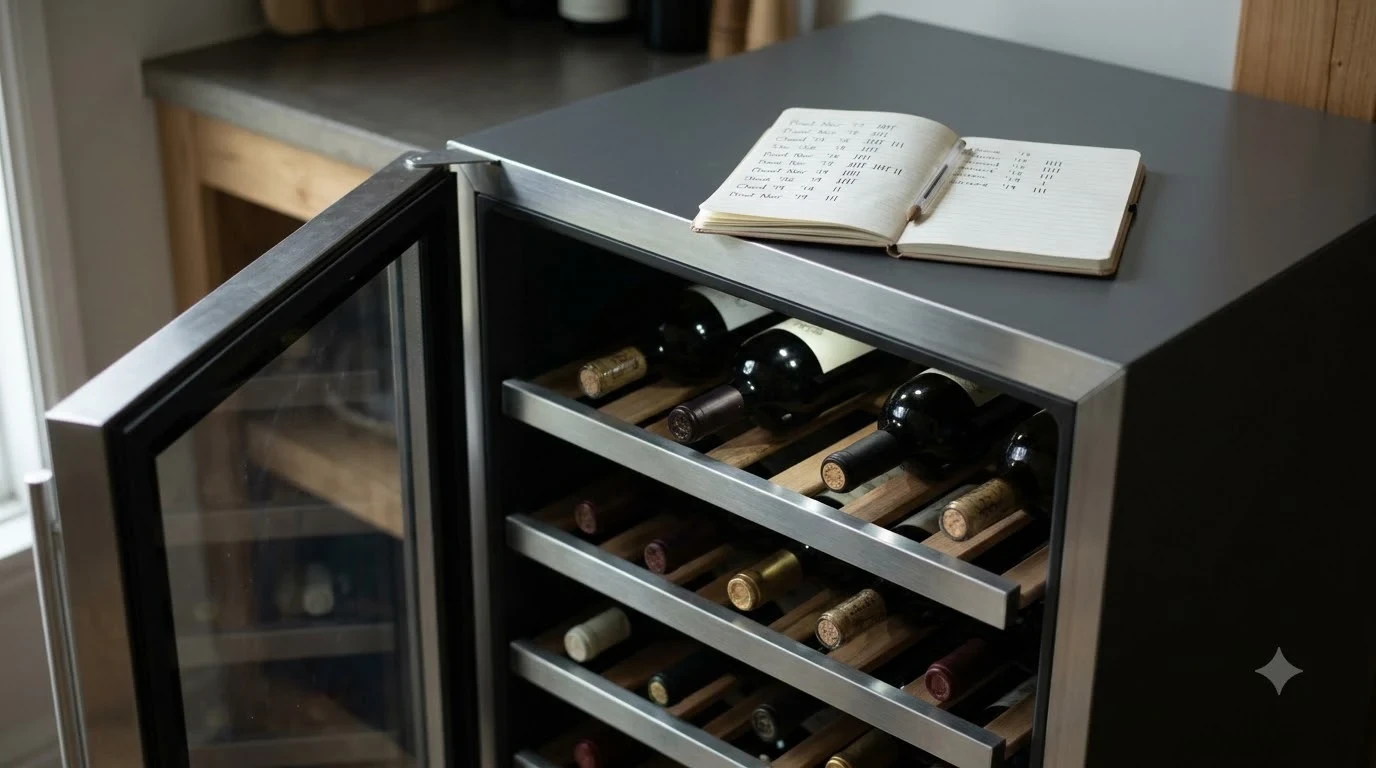
An edgestar wine fridge not cooling is often caused by poor ventilation, an unsuitable room temperature, a door that is not sealing, or a control setting that needs checking—not necessarily a failed compressor. Start by identifying the exact model and cooling system, then check its power, display, placement, and door before considering an internal fault. EdgeStar’s thermoelectric and compressor models do not behave identically, so the right waiting time and clearance depend on the unit.
A wine cooler can seem warm for several different reasons: a newly installed cabinet may still be pulling down to temperature, a fan may be moving warm air out of the wrong space, or a room that is too hot may be overwhelming the cooling system. The checks below begin with the simplest causes and explain when the symptom points to a repair that should be handled by a qualified technician.
Identify the EdgeStar Model and Cooling System
The first step is to determine whether the cabinet uses a compressor or thermoelectric cooling. That distinction changes what you should hear, how long the unit may take to cool, and which signs are normal rather than evidence of a breakdown.
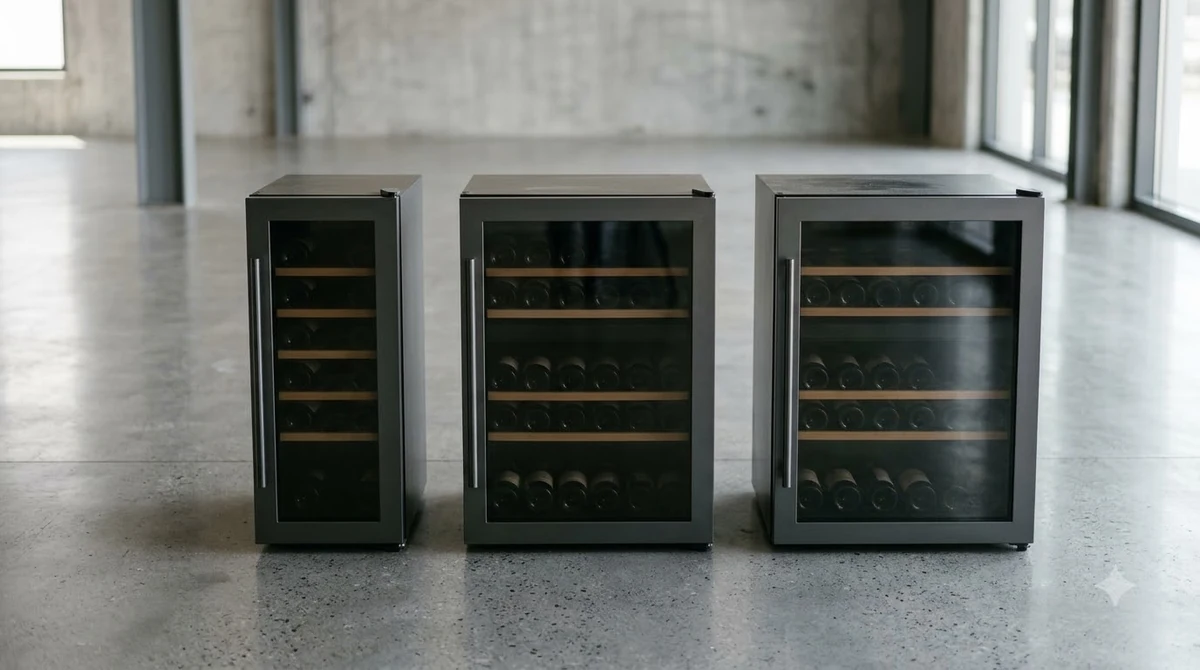
Find the model number on the rating label, commonly located on the back of the cabinet, and compare it with the owner’s manual. EdgeStar has sold thermoelectric TWR models such as the TWR325ESS and compressor-based CWR models such as the CWR1211SZ and CWR263DZ. Do not assume that a clearance figure or operating-temperature range printed for one model applies to every EdgeStar wine refrigerator.
A thermoelectric unit transfers heat through a solid-state module and uses fans to remove heat. The TWR325ESS manual says its fans run continuously and that reaching the lowest temperature can take 24 hours or longer. That steady fan sound is expected on this model; room heat, sunlight, and a heavy bottle load can still limit performance.
A compressor model uses a sealed refrigeration circuit and may cycle its compressor and fans as the temperature changes. A short pause can be normal, but repeated clicks without a start or long operation without cooling deserves attention. Use the model number when looking up parts and service instructions because EdgeStar cabinets can have different sensors, fan layouts, clearances, and cooling components.
Check the Outlet, Temperature Setting, and Display
When the cabinet is completely warm, begin with the power supply and control panel. A blank display, a dark run light, and no fan activity suggest a different problem from a powered cabinet that displays a temperature but cannot reach its set point.
Confirm that the plug is seated in a working, grounded wall outlet. EdgeStar manuals caution against extension cords and power strips; the CWR1211SZ manual specifies 115 volts at 60 hertz. Do not use a damaged cord, loose receptacle, or missing ground pin. Check a tripped household breaker once; if it trips again, call an electrician or appliance technician.
If the model has separate set and current displays, compare them rather than treating them as the same reading. The CWR1211SZ manual says a small difference between those displays is normal. Confirm that the intended set point is selected, and check both controls on a dual-zone cabinet.
Give the cabinet time to respond; the display can change before the shelves and bottles cool. The CWR1211SZ manual lists a 41°F–65°F range and recommends at least 24 hours to acclimate. If the cabinet remains dead after the outlet and breaker check, arrange service rather than cycling the power repeatedly, and diagnose any error code with the list for that precise model.
Restore Room Conditions and Rear Ventilation
Heat and blocked airflow are among the most common reasons an EdgeStar cabinet runs but fails to reach its target. Move the cooler away from direct sun and heat-producing appliances, then compare the installation with the clearance figures in the manual for the exact model.
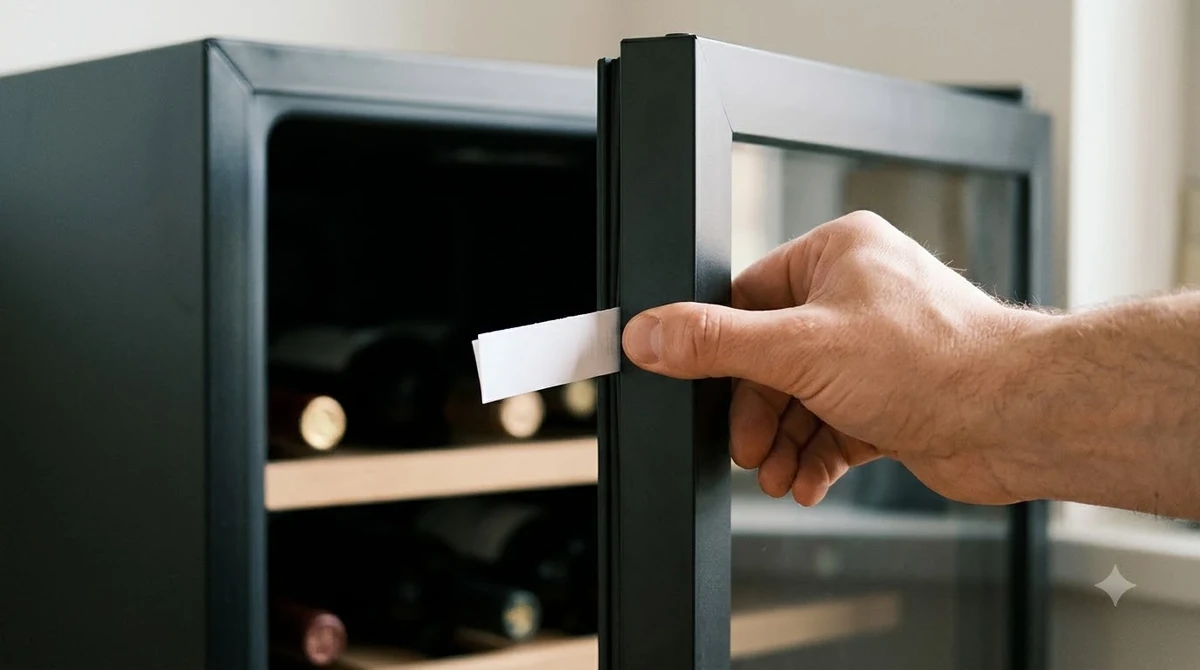
The CWR263DZ owner’s manual specifies ambient temperatures above 50°F and below 95°F; the CWR1211SZ manual gives the same range. By contrast, the TWR181ES manual recommends a room at 78°F or cooler for maintaining temperature. These are model-specific instructions, not one universal range for the brand.
| Model or manual | Room or clearance guidance | Cooling detail |
|---|---|---|
| EdgeStar CWR1211SZ | Ambient temperature above 50°F and below 95°F; clearance listed as at least 2/5 inch at rear, 1/5 inch at top, and 1/5 inch at sides | Temperature range 41°F–65°F; allow at least 24 hours to acclimate |
| EdgeStar CWR263DZ | Ambient temperature above 50°F and below 95°F; built-in clearance of 1–2 inches behind, 1/4 inch above, and 1/4 inch at sides | Compressor model; stand upright for at least 24 hours before plugging in after transport |
| EdgeStar TWR325ESS | At least 2 inches on each side and 4 inches behind | Thermoelectric; allow 24 hours or more to reach the lowest temperature; fans run continuously |
| EdgeStar TWR181ES | Recommended room temperature 78°F or cooler | Frequent cycling can result from heat, frequent door opening, a poor gasket seal, or inadequate ventilation |
These measurements belong to the named models, not the entire brand. The CWR263DZ can be built in when its stated gaps are observed, while the TWR325ESS needs 2 inches at each side and 4 inches behind. A front grille can look clear while rear heat exhaust is still blocked.
Check for a wall, panel, counter overhang, or stored item blocking the grille or fan outlet. The CWR263DZ manual warns against placing the cooler behind a closed cabinet door. Keep the unit away from ovens, grills, dishwashers that discharge heat, and direct sunlight; do not place another appliance on top. A level, firm surface helps the door close correctly. The site’s Brand Troubleshooting section provides the same basic checks for other storage appliances.
Inspect the Door Seal, Bottle Load, and Frost
A door that looks closed may still allow warm, humid room air to enter. Check the gasket around the full perimeter, make sure bottles and shelves do not obstruct the door, and leave enough room for interior air to circulate around stored wine.
Look for a gasket that is twisted, dirty, torn, flattened, or pulled away. Clean it with a soft cloth and mild solution, then dry it. Inspect all four edges, paying particular attention to the hinge side and lower corners. Ask EdgeStar support about a gasket that will not sit correctly; do not glue or heat it yourself.
Check that bottles, shelf rails, or accessories do not prevent full closure. The CWR1211SZ troubleshooting guide lists a dirty or incorrectly installed gasket, an unlevel cabinet, and incorrectly installed shelves as possible causes of a door that will not shut. Adjust the feet only as the manual directs.
A large load of room-temperature bottles adds heat, while tightly packed shelves can restrict circulation. Let warm drinks reach room temperature before loading, leave space around the air paths, and close the door promptly. Frost can also restrict airflow; EdgeStar manuals list humidity, frequent door opening, and unsuitable ambient conditions as possible causes. Defrost only as the model directs: remove bottles, disconnect power, let the ice melt with the door open, dry the interior, and never chip ice with a sharp tool.
Tip: Take a quick photo of the control display and record the inside temperature before changing several things at once. After correcting the door or airflow problem, close the door and check again at consistent intervals; this makes it easier to tell whether the adjustment helped.
Allow Enough Cooling Time and Restart Correctly
A newly installed or recently moved wine cooler may need a settling period before it can cool reliably. Allow the full model-specific recovery time, and avoid rapid off-and-on cycling while the refrigeration system is trying to stabilize.
For compressor models, the CWR263DZ and CWR1211SZ manuals call for at least 24 hours upright before connection after transport, allowing compressor oil to settle. The TWR325ESS thermoelectric manual says to allow 24 hours or more to reach its lowest setting; warm rooms and heavy loads can extend recovery. Its fan runs continuously, so judge progress by the measured temperature, not fan shutdown.
If you switch a CWR263DZ off, its manual says to wait at least 5 minutes before restarting it. Do not repeatedly unplug and reconnect a cooler to force it to run; follow the model’s own restart instructions.
Track the cabinet with an appliance thermometer placed near the stored bottles, away from a cold wall or evaporator cover. Record readings at the same time each day. A warm reading right after loading is inconclusive; an unchanged temperature after proper recovery and airflow is stronger evidence for service.
Recognize Fan, Compressor, and Control-System Faults
Once power, room temperature, clearance, settings, and the door seal have been checked, the remaining causes may involve a fan, sensor, control board, compressor start component, or sealed refrigeration system. These are diagnostic categories, not parts to replace based on sound alone.
Listen for the pattern, not just the volume. The TWR325ESS fan runs continuously, while the TWR181ES chart identifies frequent cycling in rooms above its recommended 78°F and when the door seal or ventilation is poor. A compressor may hum or click briefly as it cycles; a new rattle can mean the cabinet touches another surface or is not level.
If a thermoelectric cabinet is warm and its fan is silent, a fan or control fault is possible, but do not open the electrical enclosure. The cooling assembly includes fans, cooling fins, a module, and control electronics; a technician can test those parts safely.
A compressor that will not start may have a faulty starting device, overload protector, wiring, control board, or compressor; one that runs without cooling may point to a fan, sensor, control, or sealed-system fault. Refrigerant work and compressor replacement require specialized equipment and a qualified technician. Disconnect power if you smell burning, see smoke, notice a damaged cord, or feel electricity on the cabinet. EdgeStar warns against bypassing the ground pin or repairing a plugged-in unit. As with a magic chef wine fridge not cooling or a haier wine fridge not cooling, rule out basic causes before leaving electrical and refrigeration work to a professional.
Protect Stored Wine and Arrange Service When Needed
While you troubleshoot, protect the bottles from repeated temperature swings. Move valuable or especially temperature-sensitive bottles to another reliably cooled location if the cabinet remains warm, and keep a simple record of the readings and symptoms for the service provider.
A stable environment matters more than forcing the display to its coldest number. Keep bottles away from sunlight and heat while the cabinet is assessed, and use a thermometer instead of repeatedly opening the door. For a dual-zone model, record both compartment readings.
Before contacting support, record the model and serial numbers, set and measured temperatures, room temperature, and run time since the last change. Note fan or compressor activity, error codes, frost, and the clearance around a built-in cabinet. These details help separate an installation issue from an internal fault.
Contact EdgeStar support or a qualified technician if the cabinet remains warm after its recovery period, a breaker trips again, the fan fails, the compressor repeatedly clicks without starting, or an error code persists. Have the model and serial numbers ready; the CWR1211SZ manual says both appear on the rear rating label and are needed for warranty service. An allavino wine fridge not cooling guide may explain similar airflow checks, but its parts, sensor codes, and clearances do not apply automatically to EdgeStar. Use the exact EdgeStar manual for installation and repair requirements.
Frequently Asked Questions
These answers cover a few model-specific details that often come up after the basic checks are complete.
Should an EdgeStar wine cooler run all the time?
Some thermoelectric models, including the TWR325ESS, keep their fans running to dissipate heat. Its manual describes thermoelectric cooling as quiet, with the fans accounting for the operating sound. A new grinding noise or fan-blade contact is different from the steady airflow sound and should be checked.
Why does the display show a different temperature from my thermometer?
The CWR1211SZ control panel can display temperatures in either Fahrenheit or Celsius. Its manual explains that holding the up and down temperature buttons together for about 5 seconds changes the scale. Confirm the selected scale before comparing the display with a thermometer.
Can I use an extension cord for an EdgeStar wine fridge?
EdgeStar owner manuals advise against extension cords and power strips for the cited models. The CWR1211SZ manual also specifies an outlet that cannot be switched off by a wall switch or pull chain. Ask an electrician to install a suitable grounded receptacle if the cord cannot reach safely.
How long should a compressor wine cooler stand after moving?
The CWR263DZ and CWR1211SZ manuals specify at least 24 hours upright before connecting power after transport, allowing the compressor oil to settle. The CWR263DZ manual also says to use two or more people to move and install the cabinet. Follow the instructions for the exact model if the unit was tilted during a move.
Does frost mean the cooling system has failed?
Not necessarily. EdgeStar manuals list humidity, low ambient temperature, and frequent door opening as possible reasons frost forms, even on models with automatic defrost. The TWR181ES manual also notes that its water pan can collect condensation in high humidity; disconnect power and wipe the pan if it becomes full.
Most EdgeStar cooling complaints are worth checking for airflow, room heat, door closure, and setup time before assuming an expensive internal failure. Identify the model, follow its own clearance and restart instructions, and arrange qualified service when the cabinet remains warm or shows an electrical or refrigeration fault.
More in Storage & Fridge Care
 How Long Can You Store Wine in a Wine Fridge? Protect Bottle QualityUpdated Nov 20, 2026
 Can You Store Beer in a Wine Fridge? Keep Both Drinks FreshUpdated Nov 20, 2026
 Is It Worth Repairing a Wine Fridge? Spot the Cheap Fixes Before You ReplaceUpdated Nov 20, 2026
 Wine Fridge Condensation: Identify Causes and Fix Moisture ProblemsUpdated Nov 20, 2026
 Wine Fridge Too Cold: Protect Your Wine and Fix the TemperatureUpdated Nov 20, 2026
 How to Reset Wine Fridge: Restore Cooling and SettingsUpdated Nov 20, 2026