

We may earn a commission when you buy through links on this page, at no extra cost to you. Learn more.
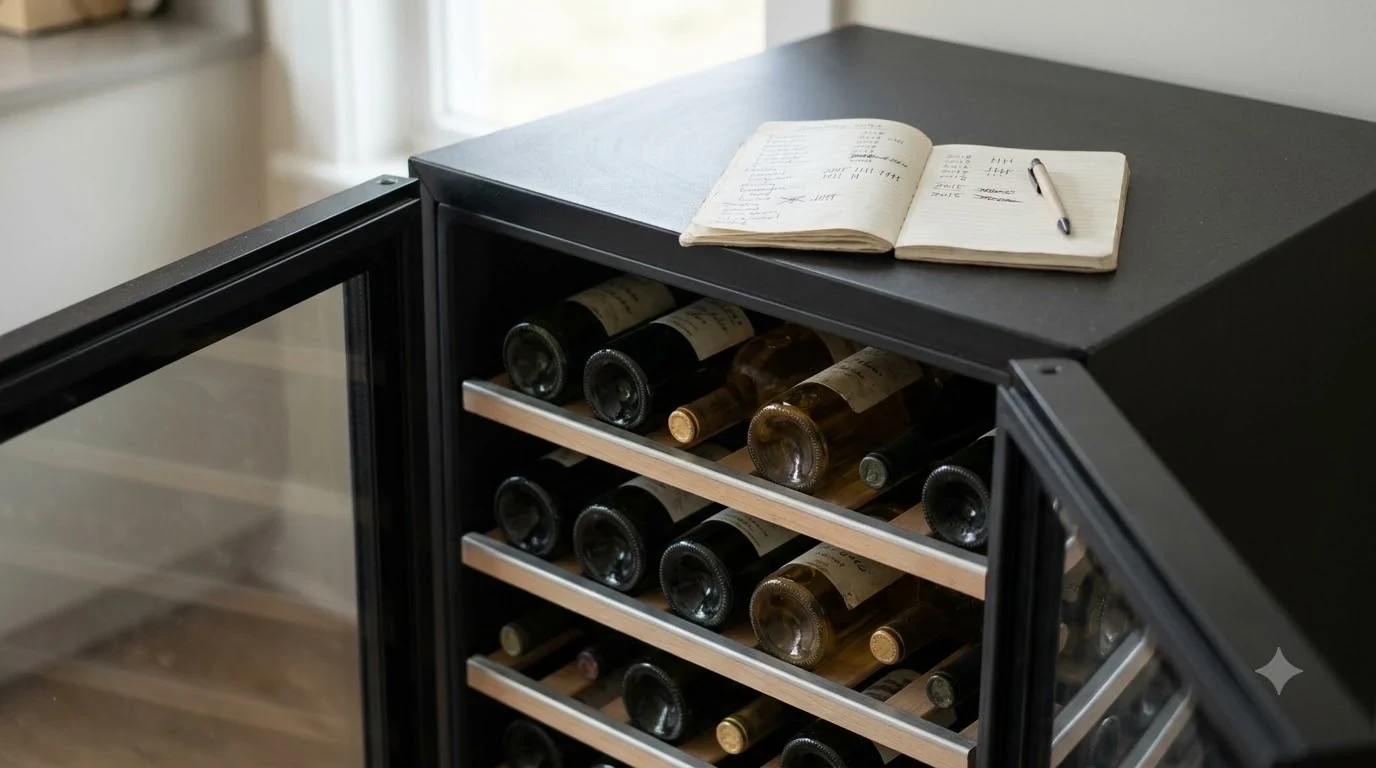
A kitchenaid wine fridge not cooling is often caused by restricted airflow, frequent door openings, a poor door seal, or a control setting—not automatically a failed compressor. Start with the power supply, temperature setting, base grille, and door closure before considering a repair. Many temperature complaints can be traced to installation or usage conditions, while a unit that still cannot cool after those checks may need a qualified appliance technician.
A wine cellar has a different job from a kitchen refrigerator: it should hold a steady environment rather than chill groceries quickly. The right troubleshooting sequence protects the bottles, avoids unnecessary part replacements, and helps distinguish a temporary temperature rise from a mechanical fault. KitchenAid models vary, so use the instructions for the exact model when a control, grille, or cleaning step differs.
Start With Power, Controls, and the Actual Temperature
First establish whether the wine cellar has power and whether its displayed or measured temperature is genuinely too warm. A blank display, an incorrect setting, and a powered unit that runs but cannot cool point to different problems.
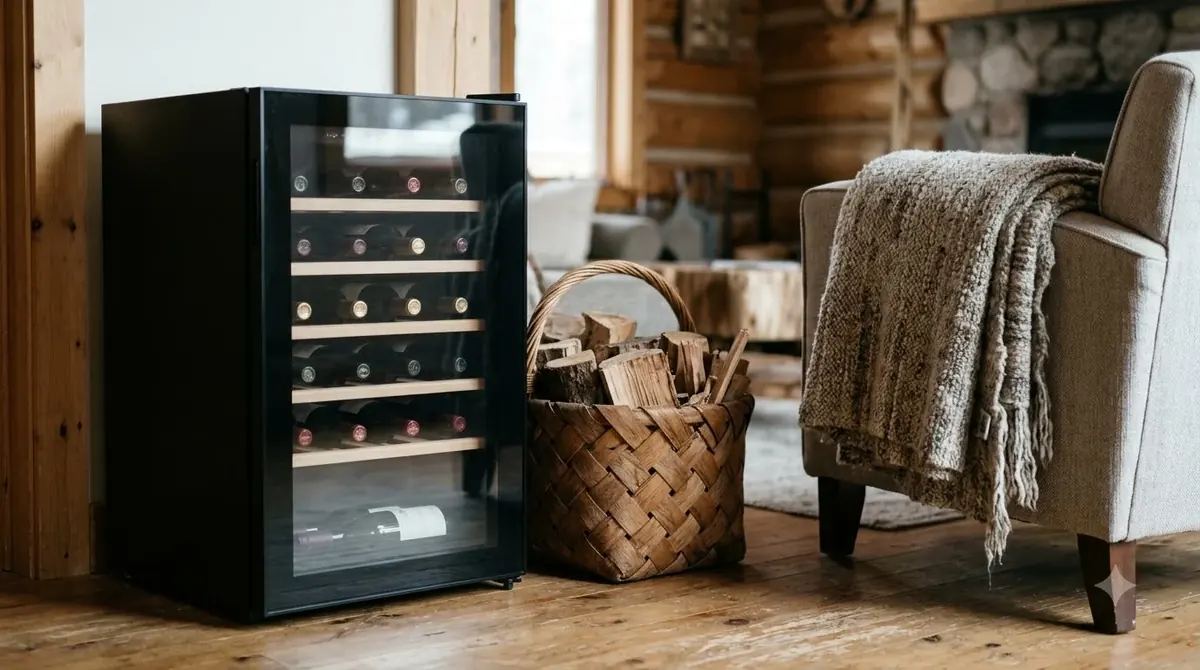
Check that the power cord is fully seated and that the outlet works. A lamp plugged into the same outlet can check the receptacle without opening the appliance. If the breaker trips again after one reset, have the circuit checked. Do not remove the grounding prong, use an adapter, or run the cellar through an extension cord. If the outlet works but the controls remain blank, the fault may be in the control or appliance wiring.
Next, confirm the cellar is switched on and review the setpoint. Touch controls can be easy to change accidentally while loading bottles or cleaning the door. On some models, the display shows the selected temperature rather than the temperature at every point inside the cabinet. For a clearer picture, place an independent refrigerator thermometer near the middle of the compartment, away from the door glass and direct light. Compare its reading with the setpoint after the door has remained closed for several hours.
A reading a degree or two above target immediately after opening the door does not prove a failure. Record the setpoint and thermometer reading, then check again later with the door closed. Avoid repeatedly lowering the setting: KitchenAid says its presets suit normal household use, while a colder setting can make the motor run longer. Note any unresponsive display or setting that will not hold for the technician.
Restore Airflow Around the Base Grille
Restricted airflow is one of the first physical problems to rule out on a KitchenAid wine cellar. The manufacturer specifically warns that a blocked base grille can prevent proper airflow and stop the appliance from cooling as intended.
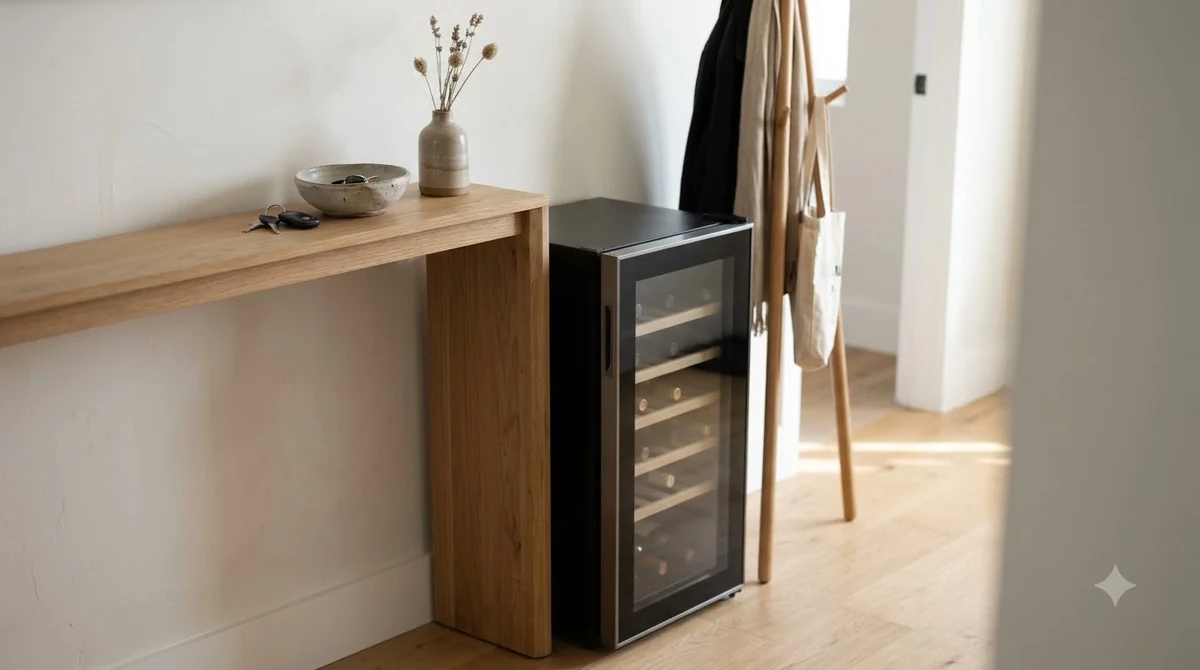
Inspect the grille along the lower front. Remove objects, rugs, cabinet trim, dust, or pet hair covering the openings, and make sure a cabinet door does not block the intake or exhaust path. Keep bottles and supplies away from the grille. Built-in and freestanding models can have different ventilation requirements, so check the exact installation diagram before moving the unit or changing cabinetry.
Also consider what is around the wine cellar. A location beside an oven, dishwasher exhaust, radiator, or sunny window can raise the air temperature around the cabinet. KitchenAid says the motor may run about 40% to 80% of the time at normal room temperatures, and it can run even more in warmer conditions. That means a long run cycle on a hot day is not, by itself, proof of a broken compressor. It is a reason to check the room conditions and the ventilation path first.
KitchenAid also advises against installing its wine cellar in a location where the ambient temperature will fall below 55°F (13°C). That is an installation-condition warning, not the recommended wine-storage setpoint. If the appliance is in a garage, enclosed porch, or other space that gets very hot or cold, compare the room conditions with the limits in the model’s manual. For more detail, follow the KitchenAid wine-cellar troubleshooting guidance before changing an installation.
Check the Door Seal, Level, and Bottle Loading
A door that looks shut may still allow warm room air to leak into the cabinet. Inspect the gasket, the shelves, and the bottle positions because even a small obstruction can keep the door from closing evenly.
Inspect the rubber gasket for dirt, sticky residue, tears, folds, or sections pulled away from the door. KitchenAid recommends cleaning the gasket and the surface it touches; its product help also says a thin coat of paraffin wax can be applied afterward. Use a soft cloth and a cleaner permitted by the manual. If the gasket is split, permanently distorted, or no longer makes contact, cleaning will not restore the seal.
Check that the wine cellar is level from side to side and front to back; KitchenAid says an unlevel unit may not seal. Make sure a rack has not shifted and that no tall bottle, packaging, or accessory holds the door open. On a recently installed unit, remove any remaining shipping material near the door and hinges. Close the door slowly and look for an even fit around all four edges.
Frequent openings let warm room air into the cabinet. KitchenAid recommends collecting the bottles needed at one time, keeping labels visible, and closing the door promptly. If the seal looks sound but the door sits unevenly, do not bend the hinges or force it; have the alignment checked for that model.
Set a Sensible Temperature and Allow Recovery Time
A wine cellar needs time to recover after a temperature adjustment, a long door opening, or the addition of many warm bottles. Use a storage-appropriate setting and judge the result over hours, not minutes.
KitchenAid says adding many warm bottles or beverages can raise the cabinet temperature for several hours. Avoid loading every rack at once and immediately setting the control to its coldest position. Add bottles in smaller batches when practical, keep the grille clear, and do not pack shelves so tightly that vents or the door are obstructed.
For long-term storage, Wine Enthusiast’s wine-storage temperature guidance recommends a steady 53°F to 57°F for red, white, sparkling, and fortified wines. For short-term storage of less than six months, it describes 50°F to 59°F as suitable. These are wine-storage guidelines, not a promise that every KitchenAid model can reach every temperature in every room; confirm the model’s operating range and zone limits in its manual. The table separates appliance operating notes from wine-storage targets: the 55°F warning refers to room air around the appliance, not the bottle setpoint.
| Condition or target | What the number means | Practical response |
|---|---|---|
| 40%–80% motor run time | KitchenAid’s approximate range at normal room temperatures | Long operation alone does not confirm a fault; check airflow and room heat. |
| Several hours | Possible recovery period after adding many warm bottles or beverages | Keep the door closed and monitor the temperature before making another adjustment. |
| Below 55°F (13°C) ambient | KitchenAid’s stated lower room-temperature installation warning | Review the model’s permitted installation environment. |
| 50°F–59°F | Wine Enthusiast’s short-term storage range for less than six months | Use a stable setting within the cellar’s supported range. |
| 53°F–57°F | Wine Enthusiast’s recommended long-term storage range | Aim for consistency rather than repeated setpoint changes. |
Wine Enthusiast notes that red, white, sparkling, and fortified wines can share one stable storage temperature; serving temperatures are a separate decision. A single-zone cellar can suit a mixed collection, while a dual-zone model provides separate settings. Check the manual before assuming both zones share a control or recover at the same rate.
Recognize Cooling-System Warning Signs
Once power, airflow, setting, and door closure have been checked, pay attention to the pattern of symptoms. A steady operating sound can be normal, but repeated clicking, short cycling, or a warm cabinet that does not improve calls for a closer diagnosis.
Listen outside the appliance with the door closed. Note whether the motor cycles normally, runs for long periods, clicks repeatedly, or stays silent as the temperature rises. Sound alone cannot identify a failed compressor; fans, controls, and start components can produce similar symptoms. Record when the noise occurs and whether the cabinet temperature changes.
For the specific KitchenAid KUWA244PSS00 wine and beverage cooler, Sears PartsDirect lists airflow restrictions, door sealing, temperature-control problems, and sealed-system faults among the possible causes of poor cooling. Its model-specific troubleshooting page recommends professional service when the compressor is extremely hot and the cabinet does not cool, when repeated clicking or short cycling occurs, or when there is a localized frost-pattern problem. Those signs are not a universal diagnosis for every KitchenAid model, but they are strong reasons not to keep experimenting with the controls.
Do not remove electrical panels, test live wiring, handle compressor start components, or open refrigerant lines. Sealed-system work requires specialized equipment, and electrical parts remain hazardous. If the powered unit stays warm after the basic checks and recovery period, arrange service with the model number, temperature readings, and symptom notes.
Protect the Wine While You Arrange the Next Step
If the cabinet cannot hold temperature, protect the bottles first and troubleshoot second. A temporary move to another stable, cool, dark location is preferable to leaving valuable wine in a warming enclosure while waiting for a repair appointment.
Choose a reasonably constant location rather than moving red bottles to a warm shelf and whites to an ordinary refrigerator for long-term storage. Wine Enthusiast recommends 53°F to 57°F for red, white, sparkling, and fortified wines. Avoid sunlight and repeated moves. Lay cork-finished bottles horizontally; for aging beyond three years, Wine Enthusiast says humidity control matters, with 50% to 75% relative humidity as its suggested range.
When contacting service, give the model number, approximate appliance age, setpoint, thermometer reading, and what you found at the grille and gasket. Mention whether the issue followed a power interruption, move, large restock, or hot spell. Request a diagnosis before authorizing a control, fan, compressor, or sealed-system replacement; parts listed for another KitchenAid model may not fit yours.
Brand-specific troubleshooting can help compare symptoms without assuming every cellar is built alike. See the guides to allavino wine fridge not cooling and magic chef wine fridge not cooling, or use the site’s storage-care troubleshooting resources to protect bottles while the unit is out of service. Match advice to the actual model rather than buying a generic part based on a similar symptom.
Tip: Keep a simple temperature log for one day: write down the setpoint, the independent thermometer reading, room conditions, and door openings. A short record is more useful to a technician than a single reading taken just after the door has been opened.
Frequently Asked Questions
Can I store wine in a regular refrigerator while the cellar is repaired?
Yes, a standard refrigerator can serve as a short-term alternative if the other option is a hot room. Wine Enthusiast notes that colder temperatures slow or halt wine development, but a brief stay in a regular refrigerator does not turn wine into vinegar. Avoid using that colder environment as a substitute for a stable long-term cellar.
What if only one zone of a dual-zone cellar is too warm?
Compare the two zone settings and note whether the unaffected zone still holds its target. A one-zone problem can involve a zone-specific control, sensor, air path, or cooling component, depending on the design. Give the technician both zone readings rather than assuming the entire appliance has failed.
Should a wine cellar be filled to its advertised bottle capacity?
Follow the rack layout and loading limits in the owner’s manual rather than forcing extra bottles into the cabinet. Wine Enthusiast suggests choosing a storage solution with at least 25% more capacity than the collection currently needs, leaving room for future additions. A less crowded cabinet is also easier to load without obstructing the door or any designed airflow path.
How long can I keep an opened bottle while the cellar is out of service?
Refrigerated still wines generally keep for about 3 to 5 days after opening, while sparkling wines typically keep for 1 to 3 days. Close the bottle securely and keep it cold in a regular refrigerator if the wine cellar is not working. These are general quality windows, not a substitute for checking the wine before serving.
Does every KitchenAid wine cellar use the same temperature control and parts?
No. KitchenAid sells different wine-cellar configurations, and the model number determines which manual, control layout, and replacement parts apply. Sears PartsDirect’s KUWA244PSS00 page identifies a temperature-control component for that specific model, which should not be treated as a universal part number for other KitchenAid cellars.
A KitchenAid wine cellar that runs warm does not automatically need a compressor replacement. Check power, controls, the base grille, room conditions, and the full door seal first, then allow enough time for the cabinet to recover. When warning signs persist, give a qualified technician your model number and temperature log so the repair can be based on evidence.
More in Storage & Fridge Care
 How Long Can You Store Wine in a Wine Fridge? Protect Bottle QualityUpdated Nov 20, 2026
 Can You Store Beer in a Wine Fridge? Keep Both Drinks FreshUpdated Nov 20, 2026
 Is It Worth Repairing a Wine Fridge? Spot the Cheap Fixes Before You ReplaceUpdated Nov 20, 2026
 Wine Fridge Condensation: Identify Causes and Fix Moisture ProblemsUpdated Nov 20, 2026
 Wine Fridge Too Cold: Protect Your Wine and Fix the TemperatureUpdated Nov 20, 2026
 How to Reset Wine Fridge: Restore Cooling and SettingsUpdated Nov 20, 2026