

We may earn a commission when you buy through links on this page, at no extra cost to you. Learn more.
How to store wine without a cellar comes down to keeping bottles in a cool, dark, stable location, away from sunlight, heat, vibration, and strong odors. A temperature near 55°F works well for most wines, while a closet, interior pantry, or dedicated wine refrigerator can provide suitable storage without a basement. Keep natural-cork bottles on their sides for extended storage, monitor temperature changes, and reserve ordinary kitchen refrigerators for short-term chilling rather than long-term aging.
A traditional wine cellar offers consistent conditions, but most households do not have a naturally cool underground room. That does not mean wine must sit on a kitchen counter or be consumed immediately after purchase. A few practical adjustments can create a suitable storage environment in an apartment, house, or small living space. The best approach depends on how many bottles you own, how long you intend to keep them, and the temperatures your home experiences throughout the year.
Choose a Cool, Stable Temperature for Wine Storage
The most important starting point is temperature stability. Aim for approximately 55°F for long-term storage, and prioritize a location that remains consistently cool rather than one that repeatedly warms and cools throughout the day.
Wine changes gradually inside a sealed bottle. Warm conditions accelerate chemical reactions involved in aging, potentially causing a wine to develop too quickly and lose its freshness. Excessive heat can also damage its aromas, fruit character, and overall balance. The Australian Wine Research Institute discusses research showing that wine stored at 30°C for 12 months developed faulty flavors and declining quality. Exposure above 40°C can produce visible and sensory changes within days. Its technical explanation of wine transport and storage conditions provides further detail about these temperature risks.
These findings explain why choosing the coolest room is not necessarily enough. A location that reaches 60°F overnight but climbs to 85°F every afternoon may be worse than a slightly warmer room that maintains a steady temperature. Repeated temperature changes can cause the liquid inside a bottle to expand and contract, potentially contributing to cork movement, leakage, and unwanted oxygen exposure.
For practical home storage, use a simple thermometer to compare potential locations. Check readings in the morning, afternoon, and evening over several days. Repeat the process during a warmer period if your home experiences substantial seasonal changes. A small digital thermometer with minimum and maximum readings makes this process easier.
| Storage factor | Practical target | What to avoid |
|---|---|---|
| Temperature | About 55°F | Frequent heat and cold cycles |
| Relative humidity | Approximately 50–80% | Extremely dry or persistently damp conditions |
| Light | Dark or very dim surroundings | Direct sunlight and prolonged strong lighting |
| Bottle movement | Minimal vibration | Constant shaking or mechanical vibration |
| Bottle position | Horizontal for natural corks | Long-term upright storage when cork moisture is a concern |
| Air quality | Clean, odor-free surroundings | Paint, solvents, fuel, and strong household odors |
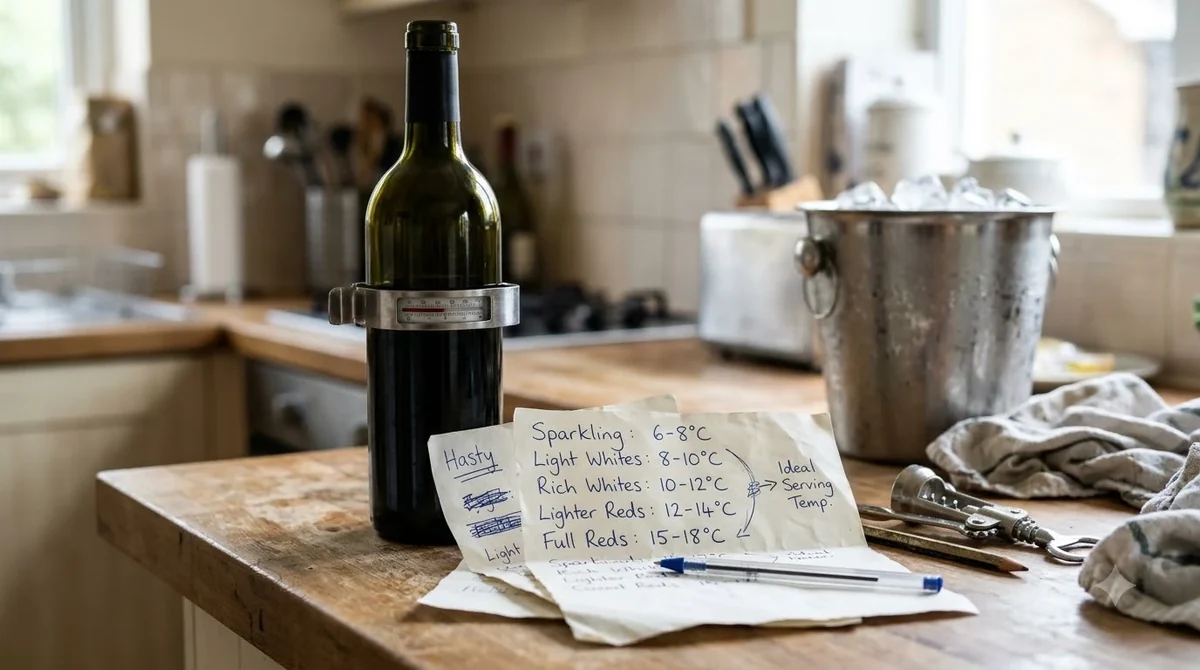
The temperature target is the same for most red, white, rosé, sparkling, and fortified wines. There is no need to create separate storage temperatures simply because you own several wine styles. Serving temperature is a different matter: a bottle stored at 55°F can be chilled further before pouring, depending on its style.
For everyday bottles that will be opened within a few weeks, a moderately cool interior cupboard may be adequate. For wines intended to mature over several years, greater temperature control becomes more important. If your home regularly becomes hot, consider a dedicated wine cabinet rather than relying on an ordinary room.
Tip: Place a thermometer in your chosen storage location before filling it with bottles. Record the minimum and maximum readings over at least three days. Consistency matters more than finding a location that briefly reaches an ideal temperature.
Find the Best Room or Storage Spot in Your Home
The best location without a cellar is usually an interior closet, enclosed pantry, or naturally cool storage room with little temperature variation. Choose a space away from exterior walls exposed to strong afternoon sunlight and keep bottles away from household equipment that produces heat or vibration.
An interior closet is often a practical solution because it blocks direct light and experiences fewer temperature swings than an exposed shelf. A bedroom closet, hallway cupboard, or storage cabinet can work well if it stays reasonably cool. The bottom shelf may be preferable to an upper shelf because warm air tends to rise, although the actual temperature should determine the final placement.
A pantry can also provide useful storage, particularly if it is located away from ovens, refrigerators, and other heat-producing appliances. Avoid assuming that every pantry is suitable, however. Some are built beside kitchen appliances or exterior walls that become hot during summer. A pantry with a consistent temperature is much more useful than one that merely looks dark and enclosed.
Basements and garages require individual assessment. A naturally cool basement can be excellent, provided it is reasonably clean, protected from flooding, and free from persistent odors. A garage is more difficult because temperatures can rise dramatically during the day, especially in warmer climates. Direct sunlight on the garage door and heat from vehicles can make the environment unsuitable for extended storage.
Other locations are generally poor choices. Avoid cupboards above refrigerators, shelves beside ovens, cabinets near radiators, and spaces next to washing machines or clothes dryers. These appliances can introduce heat, vibration, or both. An attic is also usually unsuitable because temperatures can become extremely high during warm weather.
How to assess a potential storage location
Before choosing a permanent spot, evaluate five practical details:
- Temperature: Does the room remain relatively cool during both daytime and nighttime?
- Sunlight: Can direct sunlight reach the bottles through a window or open door?
- Vibration: Is the storage surface close to a washer, dryer, speaker, or mechanical system?
- Odors: Are paint cans, cleaning chemicals, gasoline, or strongly scented products stored nearby?
- Moisture: Is the space reasonably dry without becoming excessively dry for natural cork closures?
Think of a wine storage area as a dedicated cupboard rather than a decorative display. Its purpose is to protect the contents, not to show them off. A simple enclosed shelving unit in a cool interior room may offer better conditions than an attractive open wine rack in a sunny dining area.
Protect Bottles From Sunlight, Humidity, and Vibration
Temperature is the first priority, but light, moisture, vibration, and surrounding odors also affect storage quality. A suitable location should protect wine from direct sunlight, maintain reasonable humidity, and remain undisturbed during normal household activities.
Sunlight contains ultraviolet radiation that can trigger chemical reactions in wine. This exposure can create light-struck characteristics, producing unpleasant aromas and altering the wine’s flavor. White, rosé, and sparkling wines in clear or lightly tinted bottles can be especially vulnerable, although dark glass does not provide complete protection.
Artificial lighting deserves consideration too. A bottle kept beneath a powerful display light for extended periods may receive unnecessary exposure. You do not need to keep a storage cupboard completely unlit every second, but avoid installing bright lights directly above bottles or leaving them illuminated for long periods.
Humidity matters primarily because of natural cork closures. Air that is excessively dry can contribute to cork deterioration and compromise the seal. However, excessive moisture can damage cardboard packaging, paper labels, and wooden shelving. Wine Enthusiast identifies approximately 50–80% relative humidity as a useful range for storage environments.
Most homeowners do not need a specialized humidifier or dehumidifier for a small collection. A simple humidity meter can help identify unusually dry or damp conditions. If a cupboard is naturally stable, there is little reason to make unnecessary adjustments. For a larger collection in a dedicated cabinet, humidity controls can be useful when the surrounding environment requires them.
Vibration is another reason to avoid placing wine beside appliances. Constant movement can disturb sediment in older red wines and is undesirable during extended maturation. A bottle does not need to remain completely untouched, but it should not sit on top of a washing machine or next to a continuously vibrating motor.
Odors also deserve attention. Keep bottles away from gasoline, solvents, paint, strong cleaning products, and other chemicals. A clean, odor-free cupboard is preferable to a garage shelf beside fuel containers or a utility room filled with household chemicals.
One common mistake is assuming that an attractive display rack automatically provides good storage. Open racks may expose wine to sunlight, room lighting, temperature changes, and repeated movement. If you enjoy displaying bottles, use empty display bottles or keep the actual collection in a more protected location.
Store Bottles Horizontally and Understand Different Closures
Natural-cork bottles are traditionally stored horizontally for extended periods because this position keeps the cork in contact with the wine. Screw-cap bottles and many alternative closures do not require the same positioning, so the type of closure should influence how you organize your collection.
A natural cork needs to maintain suitable moisture to preserve its sealing properties. If the bottle remains upright for a prolonged period in a dry environment, the cork may gradually lose moisture. This can increase the risk of air entering the bottle and accelerating oxidation.
A horizontal wine rack solves two problems at once: it keeps natural-cork bottles positioned appropriately and makes better use of limited cupboard space. You do not need an elaborate wooden cellar rack. Simple, stable shelving with individual bottle supports can work, provided bottles cannot roll or fall.
For screw-cap wines, upright storage is generally acceptable because the closure does not depend on contact with the liquid to maintain cork moisture. Synthetic corks and glass closures also differ from traditional natural corks. Nevertheless, horizontal storage remains a convenient way to organize a mixed collection.
Research discussed by the Australian Wine Research Institute adds useful perspective. One study found higher yellow-brown color measurements in upright bottles after 24 months, although the differences were not significant. Another investigation involving a wooded Chardonnay and Riesling found little difference in chemical composition and sensory properties between upright and horizontal storage over 60 months.
These findings show that bottle orientation is not the only factor affecting wine development. Temperature, closure material, light exposure, and storage duration also matter. For practical household storage, horizontal positioning remains a sensible precaution for traditional cork-sealed bottles, especially when the collection will be kept for an extended period.
Organize bottles to reduce unnecessary handling
Place bottles so that you can reach the wine you want without moving several other bottles. Keep everyday wines near the front and longer-term bottles toward the back or on a separate shelf. If you own older wines with visible sediment, avoid repeatedly moving them before serving.
For older red wines, standing a bottle upright for approximately 12–24 hours before opening can help sediment settle toward the bottom. This is a preparation step rather than a long-term storage recommendation.
Use shelf dividers or simple labels to separate reds, whites, rosés, sparkling wines, and bottles intended for special occasions. A small collection does not require elaborate inventory software. A notebook or spreadsheet recording the producer, vintage, purchase date, and storage location can be enough to prevent bottles from being forgotten.
Decide Whether a Regular Refrigerator or Wine Fridge Is Better
A regular refrigerator is suitable for short-term wine chilling and storing opened bottles, but it is not the preferred environment for keeping unopened wine over several months or years. A dedicated wine refrigerator offers more suitable conditions for collections that need consistent temperature control.
Household refrigerators typically operate at temperatures much colder than the approximately 55°F recommended for wine storage. Their frequent door openings, compressor operation, and relatively dry conditions also make them less suitable for extended aging. Food odors can be another concern, particularly when bottles are stored beside uncovered foods or strongly scented ingredients.
That does not mean a regular refrigerator is harmful every time you place a bottle inside. If you plan to drink a white wine, rosé, or sparkling wine within a few days, refrigeration is perfectly practical. It can also help preserve opened wine by slowing oxidation. The important distinction is between temporary chilling and long-term storage.
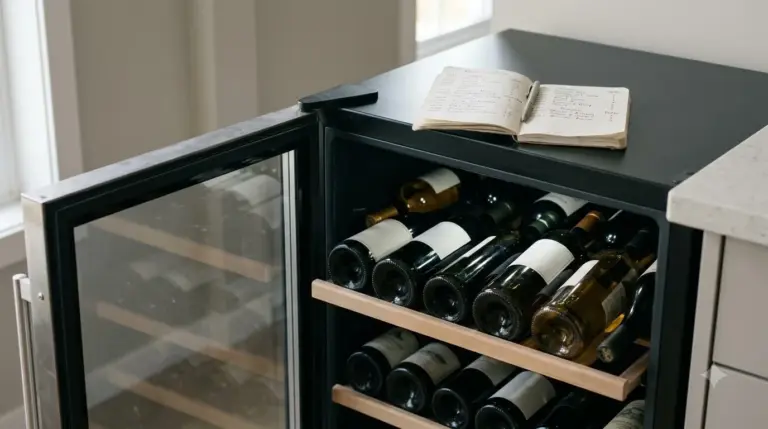
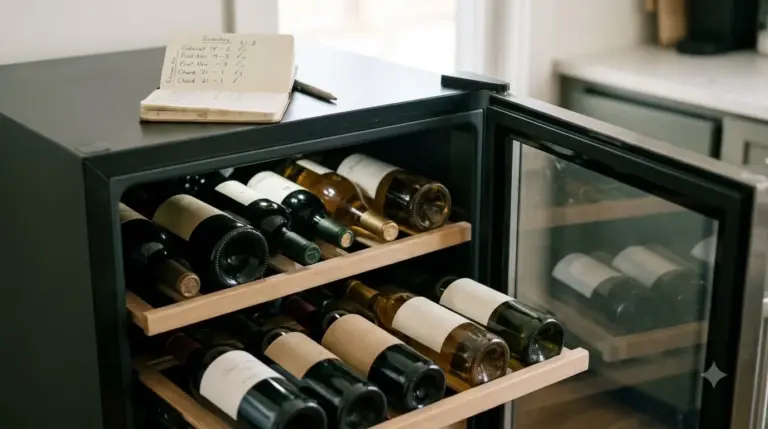
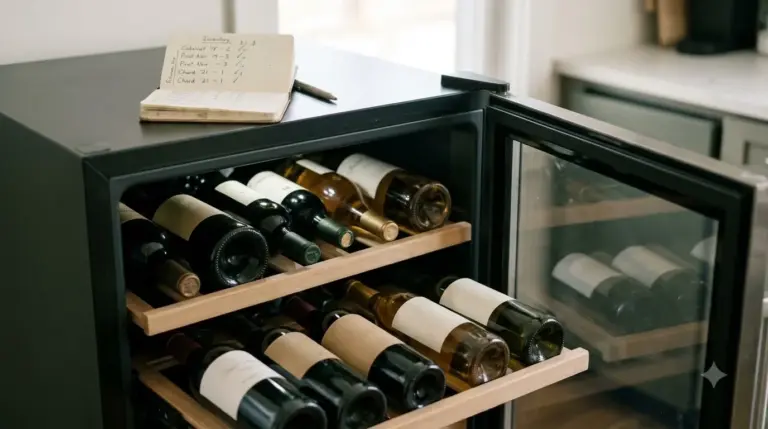
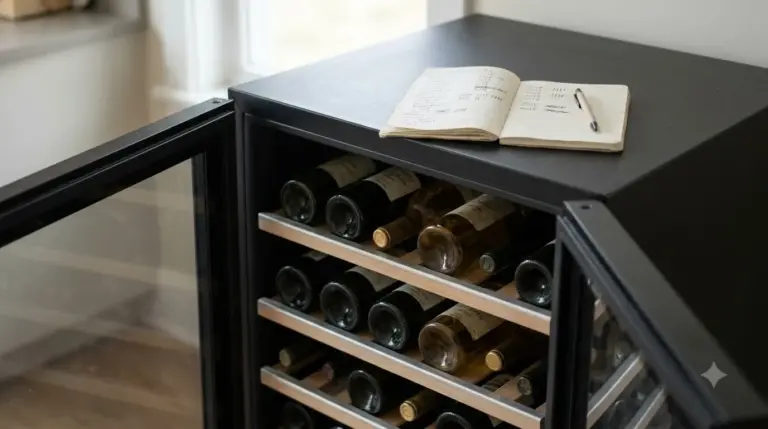
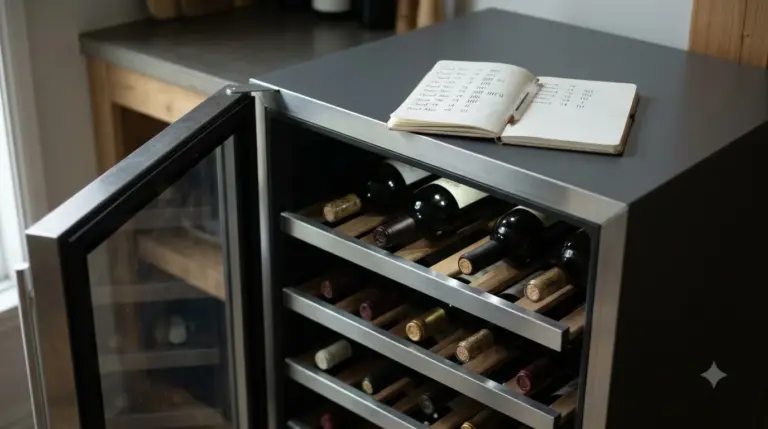
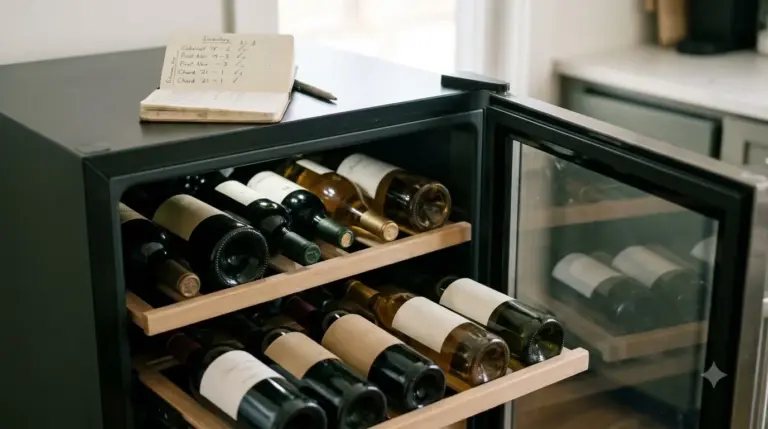
A dedicated wine refrigerator is designed to maintain temperatures more appropriate for wine. Many models also offer reduced light exposure, adjustable shelves, and features intended to limit vibration. Some include humidity management and multiple temperature zones.
For a small collection, a single-zone wine refrigerator can be sufficient. If you mainly want to protect unopened bottles, choose a stable storage setting around 55°F rather than trying to keep each bottle at its eventual serving temperature. A dual-zone model is useful when you want separate areas for storage and ready-to-serve bottles.
Capacity is another consideration. A compact unit may appear sufficient when you own six bottles, but collections tend to grow. Consider the actual number of bottles you expect to store, their shapes, and whether the manufacturer’s advertised capacity assumes standard Bordeaux-style bottles. Wider Burgundy bottles and sparkling wine bottles can reduce practical capacity.
Before buying equipment, compare its operating noise, temperature stability, shelving arrangement, and ability to fit the available space. A wine refrigerator should not be installed in a location that becomes excessively hot or receives direct sunlight, because the appliance will have to work harder to maintain its internal conditions.
For more details about the limitations of ordinary refrigerators, see our guide on how long you can store wine in a wine fridge. If you are considering sharing refrigerator space between different beverages, our article about whether you can store beer in a wine fridge explains the practical differences.
A wine refrigerator is not essential for every household. If your collection consists mainly of wines intended for consumption within a few weeks, a cool and dark cupboard may be entirely adequate. Equipment becomes more useful when your home experiences substantial seasonal temperature changes or you regularly purchase bottles intended for longer aging.
Build a Practical Storage Routine for Everyday and Collectible Wines
The best storage strategy depends on how long you intend to keep each bottle. Everyday wines generally need protection from heat and light, while collectible wines intended for several years of aging benefit from more consistent temperature, humidity, and handling conditions.
Many commercially available wines are produced for relatively early consumption rather than extended cellaring. Keeping these bottles in a cool, dark cupboard is usually more important than investing in expensive equipment. A bottle intended for a weekend dinner does not need the same level of attention as a wine purchased for a special occasion several years in advance.
For wines with genuine aging potential, consistency becomes more important. Cabernet Sauvignon, Syrah, and Nebbiolo can have significant aging potential when produced with suitable structure and quality. High-acidity whites such as Riesling can also develop interesting characteristics over time. However, grape variety alone does not guarantee that a bottle will improve with age.
The Wine Society identifies factors such as original wine quality, vintage conditions, storage environment, and bottle size as influences on the ideal drinking window. A half bottle, for example, generally develops faster than a standard bottle or magnum under comparable conditions.
Do not assume that every expensive bottle deserves ten years of storage. Many wines are designed to retain their fresh fruit character and are best enjoyed relatively young. Consult the producer’s recommended drinking window when available, especially when purchasing a bottle intended for an anniversary or another future event.
Create a simple inventory
A useful inventory does not need complicated software. Record the following information for each bottle:
- Producer and wine name.
- Grape variety or blend.
- Vintage and bottle size.
- Purchase date.
- Storage location.
- Suggested drinking window.
- Any special notes about the closure or previous storage conditions.
Organize the collection by intended drinking date rather than simply by grape variety. This makes it easier to identify wines that should be opened soon and those that can remain in storage. It also reduces unnecessary handling because you will know where each bottle is located.
Check the collection periodically for damaged capsules, visible leakage, pushed corks, or unusually low fill levels. These signs can indicate exposure to heat or a compromised closure. A damaged label does not automatically mean that the wine itself is spoiled, but physical changes should prompt a closer inspection.
If you are storing bottles in a home that experiences hot summers, make a seasonal plan. A cupboard that stays cool in winter may become unsuitable during the hottest months. Move vulnerable bottles to a more stable location before the temperature rises rather than waiting until the room has already become hot.
Opened bottles require a different routine. Replace the closure promptly after pouring and refrigerate the remaining wine. As a general guideline, sparkling wines last approximately 1–3 days in the refrigerator, still wines around 3–5 days, and fortified wines several weeks when properly resealed. Bag-in-box wines can remain usable for approximately 4–6 weeks after opening, depending on the product and storage conditions.
For additional practical advice on choosing storage locations, organizing bottles, and managing different wine styles, explore our guide to how to store wine at home and the broader Wine Storage & Serving Temps resource.
Frequently Asked Questions
Can wine be stored in a bedroom closet without a wine fridge?
Yes. An interior bedroom closet can be suitable if it remains cool, dark, and relatively stable throughout the year. Avoid closets beside exterior walls that receive strong afternoon sunlight or near heating equipment. A closet shelf or simple horizontal rack can accommodate a small collection without specialized equipment.
Can wine freeze if it is stored in an unheated room?
Yes. Wine can freeze when exposed to sufficiently low temperatures, and expanding liquid can push out the cork or damage the bottle. Repeated freezing and thawing is particularly undesirable. Keep bottles in a protected interior location during winter rather than in an unheated shed or exposed garage.
Does an unopened bottle of wine need to be stored away from paint and cleaning chemicals?
Yes. A clean storage environment is preferable to a utility cupboard containing paint, gasoline, solvents, or strongly scented chemicals. Besides avoiding unpleasant surroundings, separating wine from these materials reduces the risk of contamination from spills and protects labels, packaging, and closures.
Does a larger wine bottle age more slowly than a standard bottle?
Generally, larger formats such as magnums develop more slowly than standard 750 ml bottles under comparable storage conditions. The greater volume of wine relative to the closure can influence the pace of development. Half bottles tend to mature faster, so bottle size is relevant when planning a long-term collection.
Can wine be stored in cardboard boxes without a wine rack?
Yes, provided the boxes are clean, dry, sturdy, and kept in a suitable storage location. Original wine cartons can help protect bottles from light and make transportation easier. Avoid placing heavy boxes on top of fragile bottles, and do not use damp cardboard that can weaken and collapse under the weight of the collection.
Storing wine without a cellar is entirely manageable when you prioritize a cool, stable environment, darkness, reasonable humidity, and minimal vibration. An interior cupboard or pantry can protect everyday bottles, while a dedicated wine refrigerator offers additional control for collections intended to mature over several years. Choose the storage method that matches your collection, monitor conditions as the seasons change, and give every bottle a suitable place until it is ready to open.
More in Storage & Fridge Care
 How Long Can You Store Wine in a Wine Fridge? Protect Bottle QualityUpdated Nov 20, 2026
 Can You Store Beer in a Wine Fridge? Keep Both Drinks FreshUpdated Nov 20, 2026
 Is It Worth Repairing a Wine Fridge? Spot the Cheap Fixes Before You ReplaceUpdated Nov 20, 2026
 Wine Fridge Condensation: Identify Causes and Fix Moisture ProblemsUpdated Nov 20, 2026
 Wine Fridge Too Cold: Protect Your Wine and Fix the TemperatureUpdated Nov 20, 2026
 How to Reset Wine Fridge: Restore Cooling and SettingsUpdated Nov 20, 2026