

We may earn a commission when you buy through links on this page, at no extra cost to you. Learn more.
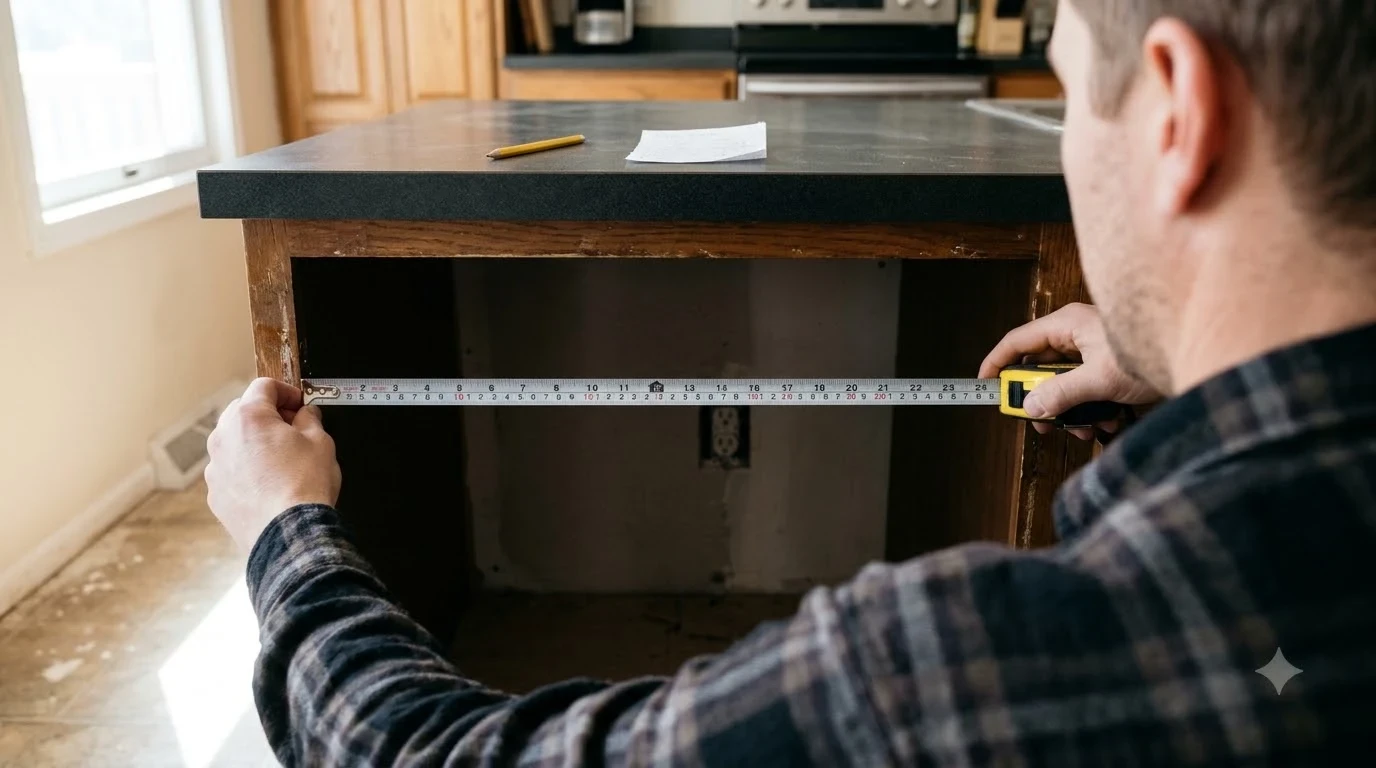
Wine fridge dimensions vary widely, but most units fall into two groups: compact under-counter models that fit a standard cabinet opening, and taller freestanding coolers that need their own floor space. Before you buy, measure the opening or space width, height and depth, then subtract room for ventilation and the door swing. Those three numbers, not the bottle count on the box, decide whether a wine fridge will actually fit.
Shoppers often start with bottle capacity, but capacity is only half the story. A unit that holds 41 bottles can be narrow and tall, or short and deep, and the difference changes where it can go. This guide explains how wine fridge sizes are usually organized, what to measure at home, how built-in and freestanding models differ, and what to check if you hope to swap a wine fridge into a dishwasher space.
How wine fridge sizes are usually organized
Manufacturers normally list three figures for each model: external width, depth and height, along with the capacity in standard 750 ml bottles. Those external numbers matter more than the capacity for planning, because the internal shelving can be arranged in different ways. A single-zone unit may hold more bottles at one temperature, while a dual-zone unit gives up some space to keep reds and whites apart.
Product lines from brands such as Vinotemp show the range well. Its catalog includes a 24-inch panel-ready model, a width that many people choose for an under-counter opening, alongside a 41-bottle single-zone cooler and a 300-bottle garage unit with dual-zone controls. The size gap between those units is large, so the first step is always to pick the cabinet opening or floor space and then look for models that fit it.
Wine fridge depth and why it matters
Depth is the dimension that causes the most problems. Many under-counter and built-in units are designed to sit within the depth of a kitchen base cabinet, but a standard door, handle or power cord can push the unit forward. A freestanding unit usually needs more depth in return for a larger interior, so it can overhang a counter and look crowded in a small kitchen.
Measure the depth from the back wall to the front edge of the cabinet or countertop, not just the cabinet box itself. Then check whether the handle sits flush or sticks out. A unit that is only a fraction of an inch too deep can prevent the door from closing fully, which affects both cooling and the seal. For other fit questions, the fit and sizing guides are a useful reference before you order, and the wider size and space section covers related kitchen measurements.
Counter-depth wine fridge options
Counter-depth models are designed to sit close to the front of standard counters, giving a cleaner look than a deeper freestanding unit. They are usually the better choice in a kitchen where the fridge and wine cooler are meant to look like part of the cabinetry. The tradeoff is interior space: a shallower unit holds fewer bottles per square foot than a deep freestanding one of the same width.
When you compare counter-depth and standard models, look at the front-to-back footprint and not just the width. Two units with the same width can differ by several inches in depth, and that difference is easy to miss on a product page that lists only capacity.
Built-in versus freestanding wine fridges
Built-in units are made to be installed inside a cabinet opening. They usually vent from the front, so they need a clear grille space and cannot be pushed tightly against a wall. Many built-in models are panel-ready, which means they accept a custom cabinet door so the unit blends into the kitchen. Freestanding units vent from the back or top and need space on all sides, but they can be moved, serviced and replaced more easily.
Vinotemp describes its indoor line as offering both built-in and freestanding styles for the kitchen, dining room or cellar. Built-in units suit a kitchen plan you want to keep consistent. Freestanding units suit a room where you may move furniture or where no cabinet opening is available.
Can a wine fridge replace a dishwasher?
Swapping a dishwasher opening for a wine fridge is possible in some kitchens, but it is not a simple plug-and-play change. The space must match the unit’s width, depth and height, and the cabinet must allow the front vents to breathe. The bigger issue is the utility connection. A dishwasher uses water and drainage, while a wine fridge needs a dedicated electrical outlet and enough airflow to keep the compressor running safely.
Before you commit, check the cabinet opening against the manufacturer’s installation drawing, confirm the outlet location, and decide whether the space can be left as a wine fridge long term. If the dishwasher is still needed, a short wine fridge placed in a different base cabinet may be the easier route.
| What to measure | Why it matters | Common mistake |
|---|---|---|
| Opening width | Sets the widest unit that will fit | Measuring at the top only |
| Opening height | Decides whether a tall model fits under the counter | Forgetting the countertop thickness |
| Depth to the wall or door | Controls whether the door closes fully | Ignoring handles and hinges |
| Ventilation clearance | Keeps the compressor from overheating | Pushing a front-venting unit tight to the back wall |
| Outlet location | Determines whether a cord can reach | Assuming a standard outlet is nearby |
Tip: Tape the planned footprint on the floor, then open and close the door in the space. It takes five minutes and catches most fit problems before delivery.
Bottle count versus real storage
Capacity labels are a useful comparison point, but they assume bottles of a standard shape stacked in a standard way. Champagne bottles, wide Burgundy bottles and magnum formats take more room, so a unit listed for a given number of bottles may hold fewer of your own. Think about the bottles you actually buy. If most of your collection is Bordeaux-shaped, a label count will be close. If you collect sparkling wine or large formats, leave room for a bit less than the listed figure.
It also helps to think about how you will load the unit. A rack that slides out is easier to use than a fixed shelf, especially when you are reaching for a bottle at the back. Check whether the shelves are removable, because that makes it possible to store a few taller bottles or a case of sparkling wine when you need the space. Ask how the racks are arranged before you buy, since the layout affects how many bottles you can reach comfortably without moving the rest of the collection.

Frequently Asked Questions
What is a standard wine fridge size?
There is no single standard. Under-counter models are often sized around a 24-inch cabinet opening, while freestanding coolers come in taller and deeper sizes. Always compare the external width, depth and height listed by the manufacturer against your own space.
Do I need a counter-depth wine fridge?
You do not need one, but a counter-depth model is the better choice when you want the unit to sit flush with the counter. A deeper freestanding unit gives more interior room, so the right choice depends on whether looks or capacity matters more in that spot.
Should I choose built-in or freestanding?
Choose built-in if you want a clean, integrated look and have a cabinet opening that matches the unit. Choose freestanding if you need flexibility, plan to move the unit, or do not have a suitable opening. Both types need ventilation space, so check the airflow requirements for each model.
How much room does a wine fridge need around it?
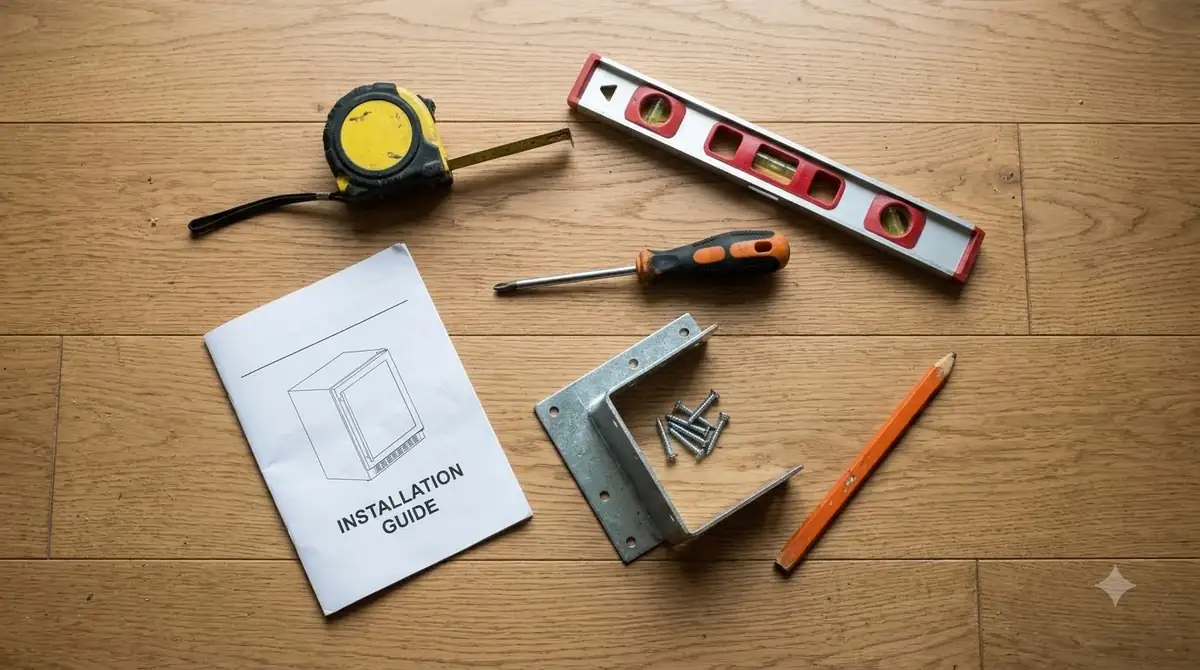
Front-venting built-in units need clear space at the grille, while back-venting freestanding units need room behind them. Read the installation guide for the exact clearance, because a unit that cannot breathe will work harder and may run warm.
A wine fridge fits best when you start with the space rather than the bottle count. Measure the opening, check the depth against the door and handle, confirm the outlet and airflow, and then compare models that fit. For a broader look at how sizing guides are organized, see the fit and sizing guides section, which groups the common measurement questions together.